By José Galicot
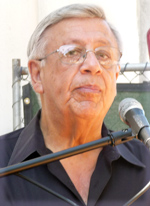
TIJUANA, Mexico — My parents decided I would attend middle school at the Colegio Hebreo Sefaradí in Mexico City. My teenage years there were fantastic. A group of students in second and third grade were great athletes, while those in my group who weren’t as skilled decided to figure out what we could do about it. I believed we were playing too individually and needed to focus on teamwork. We practiced extensively with this new mindset, working hard collectively, and eventually began to win—even against the champions.
I took on a leadership role in my second year of middle school. I became class president and later president of the Student Council, which occasionally allowed me to use the school bus to organize events like fairs. The bus driver would take me, and I enjoyed the feeling of being able to direct someone. By then, I exercised regularly, excelled in my studies, and managed the biology lab. Middle school was a continuous celebration for me.
High School
After middle school, I entered “Preparatoria Número Uno”. However, after such an outstanding middle school experience, the atmosphere there felt hostile, and I was uncomfortable. I kept visiting the Sefaradí school and, along with other high schoolers, decided to create a Zionist organization in a house on 55 Ingenieros Street. This house became the headquarters of the Juventud Sionista Sefaradí (Sefaradí Zionist Youth).
With younger students from the school, we organized Boy Scout-like groups. In these groups, we learned about Zionism, read, studied, rehearsed pioneer dances and songs, and created an organization called Tiferet Zion (“The Splendor of Zion”).
We worked hard, and since we knew little about Judaism, we invited young people from other Jewish organizations to give talks. I remember a young man named David Green, a charismatic storyteller with immense cultural knowledge and persuasive ability. Incidentally, he turned out to be the nephew of David Ben-Gurion, the founder of the State of Israel.
This was how I began to feel Zionist, to love everything Jewish, to understand what the historical legacy meant to me, and to teach others about it.
Zionist Youth
Belonging to Tiferet Zion was a fascinating experience. Those who had left Colegio Sefaradí reconnected with friends and students from eighth and ninth grade, forming youth groups interested in understanding Zionism. We learned, connected, and immersed ourselves in Israel’s dynamics. I was captivated by this world.
I quickly became president of the organization, or nasi hakan (Head of the Nest). Over time, things were going well, but we lacked an ideological foundation. I observed that there were about ten Jewish organizations around us, representing diverse political perspectives—ranging from nearly communist, like Hashomer Hatzair (“The Young Guard”), to socialist, like Ihud Habonim (“The Workers’ Union”), and to far-right religious groups like Betar and the moderate Hanoar Hatzioni (“World Zionist Youth Organization”).
Eventually, we considered joining one of the organizations directly supported by Israel, which sent instructors called sheliajim (emissaries) to work with youth groups. Thus, we started exploring these organizations.
I was drawn to the group Hashomer Hatzair with its leftist leanings. However, one of my co-leaders preferred Ihud Habonim. Ultimately, we decided to join Hanoar Hatzioni—a moderate organization that also happened to have the prettiest girls. Perhaps that last reason convinced us.
About two months later, a meeting was held to elect leaders for the entire organization, and I was chosen as president of Hanoar. I worked hard, continued learning about group dynamics, and met new people. My life became centered entirely around the organization, and high school stopped being my priority.
Most of us were around fifteen years old and were already organizing camps and taking young people to the State of Mexico or Chico, Hidalgo. It amazed us then and still amazes me now that their parents entrusted their children to us because the responsibility was enormous, but we did an extraordinary job. We bought the food, set up the camp, and prepared daily activities for the younger ones, such as games, meals, and other dynamics.
It rained a lot, and we spent much of the camp in the mud, but I found ways to entertain and care for the children, aiming to shape their character and lives gradually.
In the political sphere, I began attending the Zionist Youth Federation, where all the leaders of Jewish youth groups gathered. I was stunned by how beautifully they spoke! They mentioned Marx, Lenin, and Freud. All of them were excellent speakers with incredible skills that I didn’t have then. It was fascinating to listen to them.
When the federation elections arrived, I had grown along with my organization, which was one of the strongest by then. I ran for president and lost six to five; I ran for vice president and lost again, six to five; I ran for secretary and once more lost six to five; and I ran for treasurer and, yet again, lost six to five.
Since each organization was required to hold a position on the board, I was responsible for fundraising for planting trees in Israel. When I was chosen, I stood up and declared: “My organization is the strongest of all; we have worked very hard, and you have come to an agreement in this election. We take the results as a tough blow, but I will not leave. I will work hard and earn your respect, and next year, you will elect me unanimously.” I worked, and the following year, I became president of the Zionist Youth Federation… unanimously.
Trip to Israel
I was invited to Israel for the First World Jewish Youth Conference, an unprecedented event. They asked me to be the speaker representing Latin America. We traveled to Israel, but before that, we toured Europe. There were four of us: a young man from Betar, Nathan Franklin; a young woman from my organization from Cuba; a girl from Hashomer Hatzair; and me.
I delivered my speech in Israel, receiving congratulations from Golda Meir and Ben-Gurion himself. That moment cemented my commitment to Zionism, a dedication that continues to this day as I strive to create and strengthen Jewish communities worldwide.
Upon arriving in Europe, one of the first things we did was visit the “Atomium,” a magnificent sculpture that symbolizes the Brussels World’s Fair in Belgium. After that, we traveled to Germany and then France, and from there, we went to Turkey, where we met my father’s family. I met a beautiful cousin who had never gone out with young people because her society was highly oppressive. She was 18, and we were the first young men she ever interacted with. She liked us. It was an engaging experience to witness the customs of a country like Turkey, where women couldn’t go out alone without being harassed or taunted. Going out without a veil was considered audacious.
From there, we flew to Israel. We arrived at the airport and went straight to the event where I was to deliver my speech. I was on the bus with my suitcases, and of course, I didn’t know Hebrew. On the way, I wrote part of my speech. When I sat at the head table, I was trembling with nerves, and suddenly, I felt someone hug me warmly. To my surprise, it was Golda Meir, the legendary Prime Minister of Israel. Her embrace deeply moved me. Shortly afterward, I met a Mexican man named León Dultzin, a highly regarded figure who had attained the position of Minister without Portfolio in the Israeli government. He was dressed elegantly, contrasting with the local custom of simple attire. When introduced to him, he practically ignored me, and I even sensed a certain disregard in his greeting.
I finished preparing my speech. The speakers began with the representative from the United States, who said he recognized Israel as a land of promise but added that the United States was also the “Land of Milk and Honey.” Ben-Gurion almost lay down on the table, turning his back on the young man, furious at his words.
Then it was my turn. As a good Mexican, I was much more expressive and passionate. When I finished speaking, Ben-Gurion and Golda Meir stood up and came to the podium to congratulate me; I guess I earned their admiration and that of the audience. Television cameras began filming, and journalists started interviewing me. That was when León returned to embrace me and participate in the interviews.
Despite the euphoria, I was anxious because I didn’t know Hebrew, and my clothes and resources were on the bus. I was in an unfamiliar country, and I wouldn’t know what to do if the bus left with my belongings. I became very uneasy, and as soon as I managed to free myself from the people around me, I rushed to the bus, but when I arrived, I found, to my surprise, a long line to get in. I tried to climb in through a window, but a woman grabbed my arm and, with a pronounced European accent, said, “You spoke very well, but you are not acting well.” Embarrassed, I joined the line with the others.
Lighting Lights
Taken from Enlace Judío
I watched a screen displaying a map at the Diaspora Museum in Israel. Images of different historical periods played out from the year 1 of the Christian era. A small light lit up each time a Jewish community was born in a city. It showed how, year by year, communities were established across Europe. Then, in 1492, the lights in Spain went out.
Jews arrived in Turkey before the Turks conquered Constantinople and renamed it Istanbul. In Spain, we contributed to the country’s formation to such an extent that Fernando de Rojas, who wrote the first book in Spanish, La Celestina, was Jewish, not to mention the contributions of Maimonides, Ibn Gabirol, and others.
Then Hitler came and extinguished all the lights in Europe.
I cried and promised myself to light lights and build communities. I became a Shelia in Hanoar Hatzioni. I created the community, or Ken (Nest), in Costa Rica, Guatemala, the youth organization in San Diego, and the community in Tijuana. I also supported Cancún, Puerto Vallarta, La Paz, and Cabo San Lucas communities. As I promised myself, I have helped different communities light their lights.
Jewish Social Center in Tijuana
I married a greatly admired community leader, Ana Raquel—affectionately called Janche—who has been lauded for her Jewish achievements and a life dedicated to teaching. We couldn’t emigrate to Israel because my father had suffered a heart attack, and his small businesses required my attention. I began working at a store in Tijuana, under my uncle José as my boss, earning the generous amount of $18 a week, while my wife earned $50 as a Hebrew teacher. Some people murmured that I married her for her money.
Seeing the pressing need for the community to have a space like the Deportivo Israelita in Mexico City, the Club Israelita in Costa Rica, or the Centro Deportivo in Guatemala, I decided, in my daring youth at 23, to approach the wealthiest members of the community: Mr. Simon Silver Shots, Mr. Adler, Mr. Salomón Misrachi, Mr. Isidoro Lombroso, and Mr. Pedro Dorian. I gathered them for a meeting and proposed creating a space with educational and sports facilities to serve the growing community. In the meeting, they asked how this space would be funded. I cheekily replied, “With your money because I have none.”
They laughed, but the idea caught on. They started raising funds, Mr. Adler took charge, a suitable plot of land was purchased, and construction began on the Centro Social y Deportivo Israelita de Tijuana. It included a swimming pool with a Star of David at the bottom, steam baths, a handball court, a large hall for significant events, a temple, classrooms, a café, a restaurant, and offices.
The impact on the community was significant. Many morally and financially broken immigrants from Europe and Mexico who arrived in Tijuana found dignity in this space. It also allowed them to access areas where, interestingly, they established social connections through card games, which would have been difficult given the diversity of languages—Arabic, Romanian, Yiddish, and Spanish. I was against card games, but I eventually understood that they fostered understanding and relationships.
At the Centro Social Israelita, we established a school for the children of immigrants, regardless of their origins or mixed backgrounds. Janche carefully trained other teachers as they emerged. At the same time, I focused on creating the Organización Juvenil Sionista, as I had done in Costa Rica, Guatemala, and Mexico. It was a system where older youth educated younger ones. Eventually, we had a small bus to bring Jewish children from Chula Vista to Tijuana to join the center.
Migrating to San Diego
In 1982, the Mexican peso underwent a significant devaluation against the dollar. The then-governor of Baja California, Roberto de la Madrid, declared that dollars were prohibited in Tijuana, even though they were the city’s primary currency. He also stated that anyone caught carrying dollars would be treated as if they were carrying marijuana. This alarmed the community. In response, we urgently raised funds to purchase a property in San Diego called “La Casita.” It was like a ranch, and we immediately relocated our educational programs there. The Centro Social Israelita de Tijuana languished due to the absence of youth, while at “La Casita,” the movement grew and flourished.
The U.S. government eventually forced the sale of “La Casita” to make way for a freeway. The youth organization negotiated with the Jewish Academy to donate the proceeds from the highway and build a gymnasium and facilities for the organization, which remain to this day. Over time, through example, scouting, and Zionism, we built the Ken Jewish Community of San Diego, where generations of youth—some now grandparents—have been educated. This structured the second-largest Mexican Jewish community outside Mexico today, not in Guadalajara, Monterrey, or Puebla, but in San Diego, California, with 1,100 families who owe much of their strength and family structure to the Ken (Nest).
Cabo San Lucas
The American consul was the director of my organization in Cabo San Lucas, who was also a Jew. I suggested, “Why don’t you host a Shabbat dinner and invite all the Jews in Cabo?” We gathered a group of retired Americans, some middle-aged Mexicans, and several young Israelis living in the area.
My friend Jack Winer and I posted a sign at the hotel entrance that read, “First Oneg Shabbat in Cabo San Lucas.” We mimeographed some songs and prayers and attended the gathering. The rabbi, Mendel Polichenco, was brought in specifically for the occasion. He began praying to a disconnected and apathetic audience. I didn’t know anyone, and no one knew anyone else. When the rabbi stepped away to perform Netilat Yadaim (handwashing), I asked each attendee for their name and occupation.
The rabbi returned and continued with the prayers, and while that was happening, I asked my friend his name, him, him, and him. Then, when the prayer ended, I stood up and said, “The first community of Cabo San Lucas has been formed unanimously. You are the president, you are the secretary, you are the treasurer…”
But the Israelis were unenthusiastic, so I stood in the middle and asked everyone to rise. When they didn’t respond, I shouted, “Amod dom!” (Stand firm!) in Hebrew. They obeyed, and I said, “Let’s sing Hatikva together.” As soldiers, they were deeply moved by the Israeli anthem and embraced the idea of forming a community. Initially, the rabbi visited once a month. Now, the community has a full-time rabbi. It has grown wonderfully, with around 120 members. A significant donor, a Jewish scientist born in Egypt, contributed a large sum, and on November 29, 2021, we inaugurated a beautiful temple in Cabo San Lucas. The community continues to grow and thrive.
The Battle of Guadalajara
A prosperous, well-established Jewish community existed in the city of Guadalajara. Its enthusiastic members created a beautiful sports club, a school, and a series of excellent institutions. Everyone respected the community.
However, as young people attended universities, they eventually met non-Jewish peers, leading to romances and mixed marriages. Even for those who wanted to convert, obstacles, biases, and prejudices made life difficult for new community couples. This situation caused a bitter conflict between stubborn opponents, practically destroying the community. Many families from Guadalajara migrated to San Diego, Mexico City, and other places, leaving a divided and hurt community.
Given these circumstances and to care for the small group of approximately 30 Jewish children living in Guadalajara, the Zionist youth organization Hanoar Atzioni, based in Mexico, maintains a constant relationship with them and their families, bringing and taking young people to keep them united.
Many principal belligerents emigrated, and a new generation did not have the same feelings. However, they still face prejudicial obstacles when uniting in the religious area. Given this situation, I decided to go to Guadalajara to invite both boards to dialogue. We conducted an analysis that resulted in the possibility of social and cultural alignment. We then formed a committee called “Unidad” (Unity), whose sole objective is to organize activities that bring the groups closer together so they can get to know each other, mingle, and perhaps, in the distant future, the Jewish community in Guadalajara will once again thrive.
*
José Galicot is the founder of Tijuana Innovadora, an organization promoting Tijuana’s economic and cultural achievements. He is recognized as a leader of the Jewish Mexican community on both sides of the border.