By Alex Gordon
HAIFA, Israel — “Russia is the motherland of elephants” is a nonsensical statement that appeared in Soviet jokes in the late 1940s. It appeared as a mockery of the distortion of the history of scientific discovery for political purposes, the result of the Soviet state antisemitic campaign to “fight ‘low worship of the West.”
Soviet ideologists considered the socialist system to be the most advanced, far ahead of the West, and saw the assertion of the superiority of the USSR or pre-revolutionary Russia in science and technology as a binding ideological dogma. The priority of Russian over foreign was manifested in the ugly persecution of talented Jews in literature, art, and science, whom the authorities called “rootless cosmopolitans,” “passportless vagrants,” and “admirers of Western science and culture who rejected everything Soviet and socialist.”
Among the victims of this campaign were my father, a professor of French and German literature at Kiev University, and my mother’s sister, a professor at the Kiev Music Academy, who was then head of the Department of Russian Music History and dean of the vocal faculty of this institution.
Soviet writer Yuri Nagibin summarized this phenomenon in his book Darkness at the End of the Tunnel (1991): “Stalin’s apocalypse was strangely drawn to comicism. This quality of his fully manifested itself in the fight against homeless cosmopolitans and low worship of the West. Defending Russian priority in all spheres of human activity, reached full marasmus. Atom was first split by Ivashka Khmyrev in XII century when chopped wood. The USSR is the birthplace of elephants. These are not anecdotes, after all, but a tiny shift of quite serious assertions of Soviet propaganda of those years.”
In this campaign, the victims were repressed but survived. Ten years earlier, challenging the assertion “Russia is the homeland of priorities” had cost the life of someone who expressed it. That is what this essay is about.
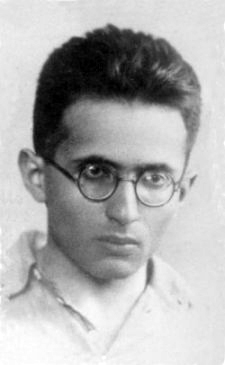
Matvey Bronstein was born on December 2, 1906 in Vinnitsa, in the family of a doctor. There were three children in the family: Matvey’s twin brother Isidor and sister Mikhalina, four years older than them. Matvey did not attend high school. In Vinnitsa he was still too young for grammar school, and in Kiev he was prevented from entering grammar school for several reasons at once: the numerus clausus (which in Kiev was even lower than in the settled areas), the family’s small income, and his too young age. It was decided that Matvey and his twin brother Isidor would study at home and take external exams at the gymnasium.
In 1924 Matvey began to study in the circle of physics amateurs at the University of Kiev. In 1925, two of his papers on the quantum theory of the interaction of X-ray radiation with matter were published in the famous German journal Zeitschrift für Physik; in 1926, three more papers were published.
In 1926, the young physicist moved to Leningrad, where he studied physics and astronomy. In 1930, Bronstein graduated from the Physics Department of Leningrad University and began working at the Ioffe Institute of Physics and Technology of the Academy of Sciences of the USSR. In the fall of 1935, he defended his thesis for the degree of Doctor of Physical and Mathematical Sciences on Quantization of Gravitational Waves and became a professor at Leningrad University and the Leningrad Polytechnic Institute. He worked in quantum theory, astrophysics, semiconductor theory, cosmology, and the theory of quantum gravity. While still a student, Bronstein published several papers on theoretical physics, one of which, containing a solution to the Schwarzschild problem on the surface temperature of stars, was printed in 1929 in Zeitschrift für Physik (the Hopf-Bronstein relation).
In one of his last works, Bronstein refuted a then-officially favored Soviet explanation of the galaxy redshift discovered by Edwin Hubble. Instead of attributing it to the universe’s expansion, starting Soviet authorities claimed it was caused by the aging (decay) of photons—a theory Bronstein disproved.
According to the testimony of Eugenia Kannegieser, Bronstein’s friend, cousin of the poet Leonid Kannegieser, Uritsky’s murderer, who eventually became the wife of the famous English physicist Sir Rudolf Peierls: “He [Bronstein] was exceptionally ‘civilized’ not only in the sense that he read a lot, almost thought about everything, but for a very young man was unusually sensitive to the feelings and sensations of others, very benevolent, but at the same time unwavering.“.
In 1931, he met with Lydia Chukovskaya, daughter of the famous children’s writer Kornei Chukovsky – at that time the wife of literary historian Cesar Volpe. In 1934, the marriage broke up: Chukovskaya left her husband, taking her young daughter. Sometime later, Bronstein, who had long been in love with her, proposed to her, and they married.
On the advice of the Jewish children’s poet Samuil Marshak, he began writing science fiction books for children. The first two stories – “Solar Matter” and “Rays of X“ – were printed in the magazine Koster in 1934 and 1936, respectively. The third story, “The Inventors of the Radio Telegraph,” was also published in the Koster magazine.
Bronstein’s father-in-law Korney Chukovsky characterized his son-in-law in the following way: “During my long life I have known many famous people […], and therefore I have often experienced a feeling of admiration for a human personality. I felt the same feeling whenever I had the chance to meet the young physicist M. P. Bronstein. It was enough to spend half an hour in his company to feel that he was an extraordinary person. He was a brilliant conversationalist, his erudition seemed immense. He knew English, ancient Greek, French literature as well as Russian. There was something of Pushkin’s Mozart in him – boiling, cheerful, charming mind. […] As a children’s writer, I can testify that Bronstein’s books ‘Solar Matter,’ ‘Rays of X,’ and others seem to me to be excellent. They are not mere popular science essays – they are extremely elegant, artistic, almost poetic accounts of the greatness of human genius.” Chukovsky, himself a man of encyclopedic knowledge, exclaimed: “If our entire civilization had perished – Bronstein alone by his own efforts could restore the encyclopedia from A to Z.”
On the night of August 1, 1937, NKVD officers came with a warrant for Bronstein’s arrest to his Leningrad apartment, where he was not present. He was arrested on August 6, 1937 in Kiev, at the home of his parents, and transported to Leningrad. He was included in the “Leningrad Region” firing list of February 3, 1938, approved by the signatures of Stalin and other leaders. According to the version of his wife Lydia Chukovskaya, the arrest was caused by Bronstein’s refusal to correct the book “Inventors of the Radio Telegraph,” which was about the almost simultaneous invention of the radio telegraph by Alexander Popov and Nobel laureate Guglielmo Marconi. He did not recognize Russia’s scientific priority.
On February 18, 1938, Bronstein was sentenced by the Military Collegium of the Supreme Court of the USSR to be shot for “active participation in a counter-revolutionary fascist terrorist organization” and was shot the same day. Petitions to Stalin by leading physicists of the USSR, academicians Sergei Vavilov, Abram Ioffe, Leonid Mandelshtam, Igor Tamm, Vladimir Fok, as well as Marshak remained unanswered.
He was rehabilitated posthumously on May 9, 1957. Years later, Nobel Prize winner in physics, academician Zhores Alferov wrote in a letter to the daughter of Matvey Bronstein’s widow: “Among the losses suffered by the Institute [Ioffe Institute of Physics and Technology] and science, the murder of Matvey Petrovich Bronstein is one of the most tragic and infinitely heavy. We have lost not just a remarkable scientist, writer, person, we have lost for the country the future of an entire scientific field”.
*
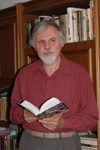
Alex Gordon is professor emeritus of physics at the University of Haifa and at Oranim, the Academic College of Education, and the author of 11 books.