The Boomer Archaeologist: A Graphic Memoir of Tribes, Identity, and the Holy Land by Thomas Evan Levy; Equinox Publishing; (c) 2025; ISBN 9781800-506954, 400 pages; $39.95.
By Rabbi Dr. Michael Leo Samuel

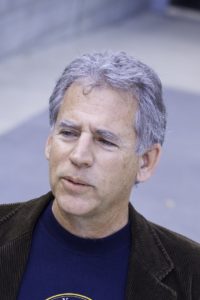
CHULA VISTA, California — Thomas Evan Levy’s The Boomer Archaeologist: A Graphic Memoir of Tribes, Identity, and the Holy Land is a vibrant fusion of personal memoir, archaeological scholarship, and graphic storytelling that vividly excavates the intersections of identity, culture, and scientific innovation.
Illustrated by Lily Almeida, this paperback chronicles Levy’s remarkable five-decade career as a Levantine archaeologist, weaving a rich narrative that blends autobiography with groundbreaking discoveries in the ancient Near East. As a Distinguished Professor at UC San Diego, where he co-directs the Center for Cyber-Archaeology and Sustainability and holds the Norma Kershaw Chair in the Archaeology of Ancient Israel and Neighboring Lands, Levy brings unparalleled expertise to this accessible yet profound work, appealing to history enthusiasts, graphic novel fans, and those curious about the human condition.
On a personal note, I became somewhat familiar with several books he edited and co-authored, such as Archaeology, Anthropology and Cult: The Sanctuary at Gilat, Israel, which explores the Chalcolithic sanctuary at Gilat in Israel’s Negev desert (ca. 4500–3600 B.C.E.). The book combines archaeology and anthropology to study how religion shaped early complex societies. It details excavations from 1975–1992, analyzing artifacts, ceramics, and remains to show that Gilat was a regional cult center in ancient Israel.
The memoir begins in the tumultuous 1960s, a period of social upheaval and countercultural energy that shaped Levy’s early fascination with history and Jewish culture. As a contemporary of Levy, I especially enjoyed reading how he became interested in archeology at a very young age (12), and I became interested in becoming a rabbi around the same time. Each of us had a Bar Mitzvah in 1967 and pursued our mutual ambition to preserve Jewish memory. His youthful adventures in Greece and other places reminded me of some of my own youthful experiences. Each of us became familiar with some of the ancient languages of the Mediterranean.
This coming-of-age story traces his evolution from a curious teenager in the American Southwest to a trailblazing scholar whose excavations in Israel and Jordan have redefined archaeological practice. Key projects, such as the Edom Lowlands Regional Archaeology Project and underwater excavations off Israel’s Carmel coast, highlight his focus on ancient metallurgy, tribal hierarchies, and social evolution from the Neolithic to the Iron Age. These discoveries, illuminated through Almeida’s dynamic illustrations, offer fresh insights into biblical narratives and the roots of societal inequality, connecting ancient artifacts to modern identity politics.
Almeida’s imaginative artwork, with its clean lines and earthy tones evoking desert landscapes and ancient relics, transforms complex archaeological concepts into engaging visuals. Despite the size of the book (381 pages), it took me about an hour to read the entire book.
Detailed panels of dig sites—shovels unearthing pottery, teams analyzing digital scans, and panoramic views of Jordanian wadis—bring Levy’s fieldwork to life, while timelines and maps clarify tribal migrations and cultural shifts. A standout sequence depicts Levy’s pioneering adoption of cyber-archaeology in the 1990s (pp. 259-267), visualized as a bridge between ancient ruins and futuristic holograms, showcasing tools like GIS mapping, LiDAR, and 3D modeling that have revolutionized data collection and site reconstruction. This graphic format, reminiscent of Maus or Fun Home but with a scholarly lens, makes the memoir a captivating hybrid of art and intellect.
Thematically, the book explores tribes, identity, and the Holy Land, using Levy’s career as a lens for broader societal reflections. His Jewish heritage deeply informs his work, as he grapples with the ethics of excavating in politically charged regions and celebrates cultural artifacts—menorahs, prayer books, family heirlooms—as anchors of resilience and continuity. Levy’s pride in his identity and his outspoken stance against antisemitism elevate the narrative, framing archaeology as an act of cultural preservation and resistance against erasure.
Levy observed how the rise of antisemitism on college campuses is a dangerous symptom of a societal collapse (pp. 310-311).
Collaborations with Bedouin communities and reflections on navigating university politics further highlight the fluidity of identity across time and place. He also lamented the death of meritocracy in our colleges.
Levy is certainly correct; it is difficult not to notice how the increasing influence of external factors—such as politics, funding pressures, or ideological biases—on academic institutions as undermining the merit-based principles that once prioritized scholarly excellence and intellectual rigor.
As an archaeologist who has navigated academia for over five decades, Levy expresses concern that universities are shifting away from rewarding talent and hard work, instead prioritizing other considerations that dilute academic integrity. This sentiment ties into his broader discussion of challenges in sustaining rigorous archaeological research amid changing institutional priorities.
Levy also celebrates the “American Dream” through his journey from humble beginnings to academic prominence, while reflecting on its evolution amid modern academia’s challenges. His transdisciplinary approach, blending traditional fieldwork with cutting-edge technology, underscores archaeology’s power to connect past and present. Looking forward, he emphasizes the importance of safeguarding digital cultural heritage, particularly for minority communities, as electronic records become vital for future historians. This forward-thinking vision, paired with his call for younger scholars to innovate, adds a hopeful dimension to the memoir.
The Boomer Archaeologist is a substantial yet engaging work, rich with humor (self-deprecating tales of field adventures), profundity (musings on mortality amid ruins), and visual splendor. Levy’s passion for uncovering the past, combined with Almeida’s expressive art, creates a testament to archaeology’s role in understanding human resilience and cultural heritage.
This memoir is a must-read for anyone interested in history, technology, or the enduring power of cultural artifacts to shape identity and inspire progress in a rapidly changing world.
*
Rabbi Dr. Michael Leo Samuel is an author and spiritual leader of Temple Beth Shalom in Chula Vista, California.
Dear Readers,
I’m thrilled that so many enjoyed my review of The Boomer Archaeologist by Thomas Evan Levy! Our synagogue has been sharing the book with our shut-in members, who are loving its imaginative blend of archaeology and storytelling. We’re planning a discussion after a Shabbat service to explore its themes, like heritage and knowledge, which resonate with our Jewish values. Kudos to Thomas for this engaging autobiographical work!
MLS
Great article. Ordered the book and look forward to reading it.
Great review!
Can’t wait to read the book!
Martin Gilboa, M.D .
Great review. Thank you. I hope it is widely read