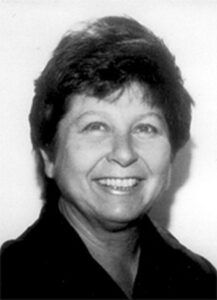
WOODLAND HILLS, California — Last weekend, I said my final good-byes to Gladys. In true Gladys fashion, we even found ourselves joking about her death and funeral. You had to know her to understand how natural that could be.
In fact, we had been talking about her funeral for decades—not because she was eager to leave this world, but because I’ve long encouraged my congregants to plan their funerals, sparing their loved ones the uncertainty of guessing what they would have wanted. Gladys embraced that idea wholeheartedly, and over the years she sent me pages, notes, and clippings she thought might be shared someday.
I used to tease her that if I included everything, her funeral might last several days. Without missing a beat, she told me, “Take a week!” And truthfully, just listing her beloved grandchildren and great-grandchildren could fill more than that.
Today, our hearts are with Deborah and Arthur, David and Krysia, Esther and Gavi, and Ann—and with Gladys’ 15 grandchildren and 27 great-grandchildren. We also remember Elliott, may his memory be for a blessing.
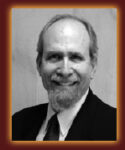
I have been the rabbi of Beth Ami and Shir Ami since 1976—nearly 50 years—and I cannot think of anyone who has left a deeper mark on me, or on this congregation, than Gladys.
She was a visionary. She began the Havurah program at Beth Ami. She championed the cause of women receiving full honors in religious life. She created “One Pure Shabbat,” hoping that even a single perfect 24 hours of Shabbat observance might open the door for people to deeper Jewish living. And she served as Sisterhood President for 11 years.
But Gladys was never satisfied with just doing Jewish things—she longed to truly know. One day, stumped by a crossword puzzle asking who gave the Decalogue, she realized, to her shock, that she didn’t know the answer, uncertain as to what the decalogue was. Here she was, sending her kids to Hebrew school, keeping a kosher home, active in synagogue life—yet she didn’t know Moses! That moment changed her life. She enrolled at the University of Judaism. She loved studying there and after a few years she got a call from the office there telling her she had accumulated so many credits–enough for a Bachelor’s degree, why hadn’t she applied for one. So she applied and got the degree. Then they told her she also has almost enough for a Masters. So she applied and received her Masters.
She became a voracious learner, a gifted teacher, and a trailblazer—offering adult education classes on women in Judaism, on Jewish history through women’s eyes, on reimagining God-concepts.
Her leadership went far beyond Beth Ami. She was one of the driving forces behind the West Valley Jewish Community Center and the creation of the West Valley Kehillah, which united synagogues and organizations and gave rise to the beloved Shtetl Fairs and Exodus Festivals—drawing thousands, including 40,000 at the very first Exodus Festival.
She served on the boards of the Bureau of Jewish Education, the San Fernando Valley Alliance, Kadima Hebrew Academy, the University of Judaism, the West Valley JCC, and the Catholic-Jewish Women’s Conference. She was also the publisher of the Western States Jewish History Journal.
The wider Jewish community honored her repeatedly: the Keter Shem Tov Award from JNF, recognition from Kadima, Volunteer of the Year by Moment magazine in 1994, the Isaiah Award from the Federation for her work on the Exodus Festival, and a nomination as Temple Beth Ami’s “Outstanding Member of the Quarter Century.”
And yet, with all these accolades, when I asked her what she wanted me to say at her funeral, her answer was simple: “Tell everyone I was the luckiest person in the world.”
She felt that way because of her family. She was so proud of them, and so deeply grateful that they carried forward Jewish values and Jewish life. That, she said, was her greatest achievement.
On a personal note, my family’s life and hers often intertwined. When my children were young, she would bring them toys to occupy them during High Holiday services. And for Hanukkah, she gave each of them 8 gifts. At one point, thinking I collected thermometers, she began sending me those. And in earlier days, she even invited me into weekly tennis matches.
I often received envelopes from her covered in whimsical stickers, filled with clippings or paragraphs from her memoirs. Sometimes, in her thrifty way, she would write on the back of old correspondence or financial papers—giving me more information than I ever needed to know!
That was Gladys: practical, witty, generous, endlessly curious, deeply devoted to her people, her faith, and above all, her family.
She wanted us to know she felt lucky. The truth is, we were the lucky ones—to have known her, to have learned from her, and to have been inspired by her life.
*
Gladys Sturman died Sept. 15 at the age of 95. Rabbi David Vorspan of Congregation Shir Ami officiated at the Sept. 18 funeral service at Mount Sinai Memorial Park.