Mark Cohen: Tresspass (with story by Phillip Prodger); Random House; © 2025; 97837913-03544; 188 pages including interview and biographical feature; $55.
By Fred Kropveld

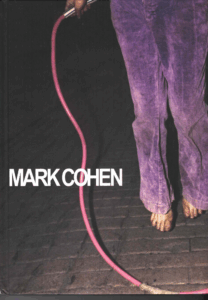 SAN DIEGO — My first impression of Mark Cohen’s retrospective photo-book Tresspass was to reject it immediately. Many of the pictures of body parts were out of focus with faded Kodachrome color. I had to ask myself why these photographs were even worth publishing.
A quick search revealed that Mark Cohen was one of the first acclaimed street photographers in the esteemed company of other notable artists such as Harry Callahan, Ralph Gib Joel Meyerowitz, Dwayne Michaels, Leet Modal, Stephen Shore, John Shovsky, Gary Wingrand, and Robert Frank.
Each photographer had a different flavor of telling a genuine nonverbal story with images. They tried to document what they saw as naturally and authentically as possible. The characters they captured were usually not the best image of ourselves we would want other people to see — a stark contrast to the modern selfie phenomenon and social media presentations.
A flattering portrait often is done in a studio with soft light and a larger lens. Mark Cohen used a small film camera with a 28mm or 50mm lens and an off-camera flash. He pioneered using the flash for contemporary photography. He got very close and violated people’s personal space. What you see is what the subject looked like before they noticed that a photo was being taken. This “trespass” approach is performed legally since the streets are a public space.
The viewer is given an insight to what it was like to live in Wilkes-Barre Pennsylvania, between 1973 and 1987. You don’t have to like his photography and you don’t have to shoot the way he does, but it’s unfair to dismiss his work because you can’t see the story that artist is trying to convey. The time that Cohen captured his subjects was before the Internet.
Before the Internet, people didn’t care nearly as much about being photographed. Now every app and website constantly archives information about us and violates our privacy seemingly indefinitely. We become more sensitive about our own images. If a snapshot of you with your finger up your nose goes viral on Facebook, Instagram, or TikTok you might always be known for that image forever. No releases are required to post your picture on social media sites. Your control over your own image has disappeared with the Internet. Only responsible publishing companies and some honest news sources still require a photo release to publish a picture with a face.
Today’s technology allows for a different kind of street photography with cell phones, camera glasses, covert jewelry. The untraceable and often irremovable images that these devices capture are presented on the Internet in random fashion for our entertainment.
I went out the evening of October 7th to take a picture of the full moon after drafting this review. My intention was to capture the full moon and post it on Facebook for my friends. What happened was a young professional woman in a white linen suit quickly crossed in front of me to get her mail. I quickly readjusted my camera to capture the street scene with amazing results. The picture told the story of someone who just come home from work while still in her work clothes. The street was under construction indicated by a sewer cover in the picture with the yellow paint.
Hurry up and get the mail before the street is repaved! Perusing this book took me on a personal journey to study street photography and has influenced my own skills, techniques, and appreciation for telling a story with photography.
*
Fred Kropveld is a retired businessman living in San Diego. His photos have appeared in San Diego Jewish World.
Fantastic first article! Very well done!