By Michael Adam Cohen in San Diego

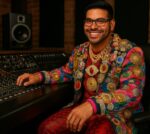
Mark Zuckerberg on one screen, The world and I on another. The Meta logo flickers behind him like a heartbeat of the empire he built. I lean in, glasses catching the glow, feeling the anticipation crackle across the digital divide. As a longtime top two percent rising creator paid pennies by Facebook yet filled with gratitude and admiration for its founder, I entered Meta Connect 2025 not through a physical auditorium but through a digital gateway. Screens shimmered, slight lags rippled through the connection, and thousands of minds tuned in across the globe, united by a single question: What future are we creating together?
What unfolded was not a typical technology conference; it was a global moment of responsibility, reflection, and vision. Interviewing Zuckerberg remotely, I felt the conversation’s human pulse. He was not just CEO; he was a human wrestling with influence, ethics, and the emotional weight of shaping tools billions use.
Zuckerberg appeared framed in cool-blue lighting, the Meta infinity loop pulsing behind him, while I and the world watched from our separate pockets of reality. The anticipation felt electric.
Q: Mark, you’ve built platforms billions inhabit daily. How do you reconcile that scale of influence with the limits of your own understanding as a human?
A: Influence is not control. It is creating systems that empower meaningful choices.
His tone carried a quiet heaviness. The flicker in his webcam reflected a man who knows his decisions shape culture, behavior, opportunity, and the subtle rhythms of human connection.
We dove into AI, AR, and the future of digital presence.
A: Empathy must guide design. Technology has to reflect life’s complexity, not just metrics.
He lifted the new Meta AR glasses—sleek, simple, almost unassuming.
A: Screens take you out of the moment. The right tech brings you in. Experience life fully; do not escape it.
AI, he emphasized, is not the replacement of humanity—it is its reflection, extended.
A: If AI can help someone be a better friend, a better thinker, a more present human being, that is meaningful progress.
I could feel the weight behind his words—responsibility, humility, and a kind of cautious hope.
Q: But personalization can also become a mirror of our biases. How do you prevent AI from becoming an echo chamber?
A: That is the challenge. It requires ethical guardrails, adaptability, and a commitment to nuance.
The room around me felt charged, as if millions were holding the same breath, listening.
Q: Let’s go deeper. Can AI ever truly understand a human life our frustrations, fears, messy joys or will it always be a reflection of the data you feed it?
A: It is a reflection, yes, but the reflection can learn to anticipate needs, remember context, and support human decision-making. The goal is augmentation, not imitation.
His answer lingered, soft yet firm, grounded in a belief that technology must serve humanity, not overshadow it.
Q: But shaping the definition of “meaningful progress” is enormous power. How do you prevent that from becoming paternalistic?
Zuckerberg did not hesitate.
A: By being open. Open systems, open source. We build tools and let millions contribute. Collective intelligence drives evolution, not any single vision.
I could hear conviction sharpen in his voice this was ethos, not branding.
Then we waded into the heart of presence AR, VR, glasses, immersion.
Q: People do not crave devices. They crave understanding, connection, significance. What need are you actually meeting?
A: People crave presence. The right technology brings people deeper into their lives, not further away.
For a moment, the conversation felt less like an interview and more like two thinkers sitting at the edge of the future asking what it means to be fully alive.
Q: Billions use what you build without fully understanding it. At what point does influence become a responsibility too heavy for one company or one person to carry?
A: The weight is real. That is why we build ecosystems that empower others to contribute. No one company can hold this alone. The challenge is designing systems that scale ethically.
Accountability is not a buzzword for him—he carries it like gravity.
We shifted again, toward the existential.
Q: Twenty years from now, when screens fade and AI becomes invisible. Why are you building this? Not for users. Not for revenue. Why you?
His answer was immediate, almost tender.
A: Because connecting people and helping them reach their potential has always been meaningful to me. Products evolve. The purpose stays.
For the first time during the interview, his voice warmed not corporate, not strategic, but personal.
Then I asked the final question. The one no technologist, philosopher, or poet has ever answered fully.
Q: When AI can replicate thought, memory, even empathy, how do we distinguish between what is human and what is code?
Mark paused. A long, contemplative pause.
A: Maybe the point is not distinguishing. Maybe it is learning to integrate both humans and AI in ways that elevate understanding. If AI helps us be better friends, better thinkers, better contributors to the world, it is not replacing humanity. It is reflecting it back at a higher resolution.
A higher resolution. That phrase stayed with me.
As the call wound down, our exchange felt less like an interview and more like a philosophical crossroads—technology, humanity, consciousness, responsibility intertwined.
I thanked him.
Q: This is not just a conversation about tech. It is a conversation about what it means to be human in a digital age.
A: Exactly. And it is a conversation we need to keep having.
When Meta Connect ended, I sat in the quiet glow of my screen feeling gratitude, hope, and responsibility wash over me. The future of technology will not be authored by machines alone it will be shaped by hearts, ethics, courage, and purpose. Leaders who listen, who care, who protect, who innovate with intention will guide us. And in that moment, I was reminded that even from afar, connection, vision, and the elevation of collective consciousness are real and powerful.
Michael Adam Cohen is a freelance writer based in San Diego.