By Alex Gordon in Haifa, Israel
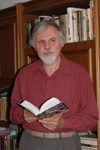
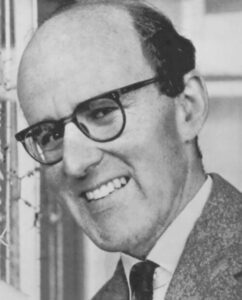
Max Ferdinand Perutz was born in Vienna, the capital of the Austro-Hungarian Empire, on May 19, 1914, just a few months before the start of World War I. His parents were wealthy Jews; his father owned a textile factory in the Czech Republic, and his mother came from the Goldschmidt family of textile industrialists.
At the age of nine, he was sent to an elite school in Vienna, but Perutz himself later testified, “I was a bad student in high school. […] I was unhappy that I had no talent for anything—not Latin, not math, not dancing, not music, not even football. Beside, I was nearsighted and sleepy, and I spoke slowly. A little later, his mother instilled in him a love for skiing, and at 16, he won the school cross-country skiing competition.
“It was the first time I was treated with respect at school,” Perutz recalled. Since then, the gym teacher has given him the highest grade, but those were the only excellent marks. The subject that interested him in school was chemistry. His parents wanted Max to support the family business and study law, but chemistry was more interesting, and he became a student at the Vienna University’s chemistry department.
At university, he became interested in the work of the British physician and biochemist from Cambridge, Frederick Gowland Hopkins, a Nobel laureate in Physiology or Medicine. Hopkins showed that all chemical reactions in living cells are catalyzed by enzymes and that all enzymes are proteins. But the question remained: how do these enzymes work? “We had no idea. They were black boxes,” Perutz later wrote. Max decided to continue his research at Cambridge, but working with Hopkins didn’t work out. Perutz joined the laboratory of Nobel Prize in Physics laureate William Henry Bragg.
In 1938, the Anschluss took place: Austria was annexed by Nazi Germany. Perutz’s parents, as Jews, fled to Switzerland, lost all their money, and were unable to continue financially supporting their son. But Bragg helped him secure a scholarship from the Rockefeller Foundation, which allowed Perutz to finish his dissertation, and he brought his parents to the UK.
Since it was difficult to obtain protein crystals, Perutz chose one of the most easily crystallizable proteins – horse hemoglobin. Most of his career ended up being connected to this oxygen-carrying protein.
At the beginning of World War II, Perutz was interned along with other people of German or Austrian origin and sent to Canada by order of Churchill. Perutz reflected: “I was desperately unhappy. Having been rejected by my own country as a Jew. I now found myself rejected in my adopted country as an enemy.” But a few months later, he was brought back to Cambridge, where, with the help of Bragg, he returned to researching molecular systems.
Perutz pioneered the use of X-ray crystallography to study the structure of proteins, and he shared the Nobel Prize for Chemistry in 1962 with John Kendrew for his work on identifying the structure of hemoglobin. He was Chairman of the Laboratory of Molecular Biology in Cambridge, which has been home to nine Nobel prize winners since the 1950s, perhaps the most famous being James Watson and Francis Crick, who discovered the double-helix of DNA in 1953.
Perutz died in Cambridge on February 6, 2002.
In 1998, Perutz published a collection of essays about scientists and science titled I Wish I’d Made You Angry Earlier: Essays on Science, Scientists, and Humanity. Among these essays was the following: “Friend or Foe of Mankind?” (Fritz Haber, “a man’s fascination with poison gas”), where he attempted to decipher the “structure of the hemoglobin molecule” of world history through the example of Haber.
In 1919, the Nobel Prize in Chemistry for 1918 was awarded to German scientist Fritz Haber “for the synthesis of ammonia from its constituent elements.” Scientists from the Allied countries expressed a strong protest against the decision of the Swedish Academy. They stated that Haber is a war criminal who participated in the creation of chemical weapons.
Fritz Haber, a baptized Jew, a professor at the Kaiser Wilhelm Institute for Physical Chemistry and the University of Berlin, and a member of the prestigious Prussian Academy of Sciences, made one of the most important discoveries in the history of world agriculture on the eve of World War I. One of the main dangers that threatened humanity at that time was considered to be “nitrogen starvation.” The rapid population growth in European countries demanded a constant increase in soil fertility, which meant an ever-increasing amount of nitrogen fertilizers.
Their only natural source was Chilean saltpeter deposits, which were expected to be exhausted in the coming decades, leading to famine in Germany. In August 1914, the war and the naval blockade of Germany began. Entente military experts believed that without saltpeter, the Germans would be unable to produce nitric acid. Then the production of fertilizers, explosives, and gunpowder will cease, ammunition factories will close, and the Germans will be left without bullets and shells, as nitrates, nitrogen salts, are a necessary component of explosives. In six months, Germany would suffer a military collapse, and famine w occur within the country.
However, the blockade did not paralyze German war production or lead Germany to starvation and military defeat. The country was saved by a Jew, Fritz Haber. Even before the war, he devised a method for synthesizing ammonia from hydrogen and atmospheric air at high pressures. When the ammonia obtained from the air was oxidized, nitric acid, fertilizers, and explosives were produced. He fed millions of people thanks to nitrogen fertilizers and killed tens of thousands by using chemical weapons.
On April 22, 1915, Haber first used a poisonous substance – chlorine gas – against French soldiers near the small Belgian town of Ypres: according to German reports, five thousand were suffocated on the spot and ten thousand were incapacitated and disabled. In 1916, he was appointed head of the German Army’s military chemical service. Haber was the first historical example of a scientist who used scientific advancements for the mass extermination of people. In the Weimar Republic, he was highly respected as a prominent scholar, organizer, politician, and a great German patriot.
In an essay about Haber, Perutz wrote the following about the historical significance of his main discovery, the synthesis of ammonia: “Without this invention, Germany would have been without explosives. The long-planned ‘blitzkrieg’ against France would have failed. The war would have ended much sooner, and millions of young people would not have died.
Under these circumstances, Lenin would never have reached Russia, Hitler might not have come to power, the Holocaust might not have happened, and European civilization from Gibraltar to the Urals would have been saved.”
Perhaps millions of people wouldn’t have died. Germany should not have financed and brought Lenin into Russia to organize a revolution there and take that country out of the war. It’s possible that if Lenin hadn’t arrived in Russia, the February Revolution of 1917 wouldn’t have escalated into a Bolshevik revolution, and the entire history of Russia might have taken a different course. Germany would not have been brought to complete exhaustion, ruin, and terrible humiliation by the Treaty of Versailles after its shameful and total defeat in the war. History could have taken a different turn if the Jewish Fritz Haber hadn’t been such a great German patriot.
Despite his enormous contributions to Germany, Haber was forced to leave the country after the Nazis came to power. The blood that flowed through his veins, whose structure Perutz had deciphered, determined his relationship with his homeland. Albert Einstein, his longtime friend, eulogized Haber with the following words: “Haber’s life was the tragedy of the German Jew – the tragedy of unrequited love.”
*
Alex Gordon is professor emeritus of physics at the University of Haifa and at Oranim, the Academic College of Education, and the author of 12 books.