Kabbalah Demystified: A Comprehensive Resource by Rabbi Dr. Michael Leo Samuel; McGilligan Publishing; (c) 2025; ASIN: B0FHT9M1D3; 549 pages; $25.99.
By Rabbi Dr. Israel Drazin in Pikesville, Maryland
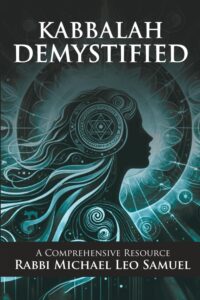
Rabbi Dr. Michael Leo Samuel’s book, Kabbalah Demystified: A Comprehensive Resource, is brilliant. I enjoyed it immensely. I have been a follower of Maimonides’ rationalistic thought since I was a youngster. Rational thinking is essential to me. I respect people who are not rationalists, but I disagree with them. Thus, people may be surprised that I like Samuel’s writing. I like it because it is clear, informative, and comprehensive. It’s an excellent introduction to kabbalah and mysticism. And we need to know what he writes because it is a part of Jewish history as well as current Jewish life.
Most people do not know that Jewish thought and practices have absorbed many kabbalistic ideas, writings, and customs. For example, most people think the song that highlights the Friday night Shabbat service, called Lecha Dodi, is about the joys of Shabbat. It is not. It was composed by a kabbalist and is about the kabbalistic notion that God is composed of ten parts.
They think the song sung when Torahs are taken from the ark on Shabbat morning is rational. It is not. It is a paragraph from the mystical book Zohar.
We open the door for the entrance of Elijah the prophet as a Passover Seder ceremony without realizing it was initiated as a mystical ceremony. We set aside a fifth cup of wine for the prophet for the same reason. Scholars call it sympathetic magic. It is a belief that we can do things on earth to bring about heavenly events.
These Passover acts are kabbalistic. They seek to bring about the magical arrival of the Messiah. There are more than a dozen such behaviors and rituals. They are in the prayer book and many daily routines. There is no Jewish holiday lacking a mystical component. So, people need to know how to recognize them.
People wonder what God is, what creation is, why evil exists, what Torah laws do for a person, and more. Mysticism gives answers. Rationalists, like me, respectfully disagree with their views. But they make us think. And making us think, whether we agree or not, is good.
Dr. Samuel’s very informative and readable book teaches us what kabbalah and mysticism are, their history, the people involved, the countries they were associated with, the influences and impact of these ideas on their lives and others’ lives, and the problems they posed.
He tells us that since the dawn of Judaism, patriarchs, prophets, and seers embarked on profound spiritual odysseys, seeking to understand what God is and how the universe functions. Recognizing that this quest demanded an understanding of the human mind, they developed kabbalistic ideas.
These ideas, steeped in enigma, were dedicated to decoding the mystery and purpose of human existence. The term קַבָּלָה “kabbalah,” meaning “received,” alludes to this body of esoteric wisdom, which at first passed down through an oral tradition from master to disciple.
By the Second Temple period, several centuries before the common era, the kabbalistic tradition had developed fundamental concepts such as the sefirot, and divine emanations that symbolize various facets of God’s interaction with the world.
Samuel aims to identify and explain these concepts and make them accessible to a broad readership in a manner that is both engaging and comprehensible, without compromising their depth and complexity. Readers will find that he is successful and will gain a richer understanding of this ancient wisdom and its timeless relevance to our contemporary lives.
As a result, we learn from him about books such as the Zohar and Sefer Yetzirah that led people to think thoughts and perform acts that non-kabbalists reject but discover what prompted kabbalists to create them. These people, like Shabbatai Zevi and Jacob Frank, had many followers. Many died because of their ideas. We also get insight into the mindset of Hassidim. Many Chasids have accepted some but not all kabbalistic ideas.
We see a world where letters mean more than words, and numbers and shapes conjure up ideas that cause people to act. Samuel opens our eyes to what we need to see because it is part of Jewish history and of many customs and prayers.
*
Rabbi Dr. Israel Drazin is a retired brigadier general in the U.S. Army Chaplain Corps. He is also the author of 67 books.