A Ceiling Made of Eggshells by Gail Carson Levine; Quill Tree Books; © 2020; ISBN 9780062-878212; 371 pages; plus author’s notes, glossary, and acknowledgements; PJ Our Way.
By Cailin Acosta in La Mesa, California

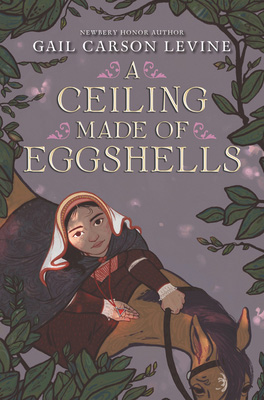 This historical fiction novel explores the lives of Jews in 15th-century Spain through the perspective of a young girl named Loma (Paloma) and the struggles faced by her family. The author researched her own Spanish Jewish heritage, which inspired her to write this novel, suitable for children ages 8–11.
Loma is the main character and comes from a large family living in the judería of Alcalá de Henares, the Jewish quarter, alongside her grandparents, parents, and many siblings. As the older children reach b’nai mitzvah age, arranged marriages and elaborate celebrations become an important part of family life.
A pivotal moment in the novel occurs when the plague sweeps through the village, claiming the lives of Loma’s grandmother Bela and several of her siblings. Loma treasures the amulet Bela gave her, wearing it as a symbol of good luck, protection, and remembrance.
The title of the novel comes from a bedtime story Bela tells Loma about King Solomon wanting to marry Paloma of Naples. Paloma agrees only if he creates a ceiling made of eggshells. The king fulfills her request, decorating the eggshells in many colors, and Paloma is rewarded with many healthy children.
Loma’s grandfather, Belo, eventually begins taking her on his travels throughout Spain as he works to protect Jewish communities from forced Christian conversions while negotiating with King Ferdinand and Queen Isabella.
Intelligent and brave, Loma faces many dangerous situations as she helps care for her aging grandfather. Hamdun, the family’s Muslim servant, accompanies them for protection and, in dangerous towns, claims Loma as his daughter so they can safely find shelter and avoid suspicion.
One of Loma’s greatest struggles is balancing her personal desires with her responsibilities. While her siblings are marrying and starting families, Loma longs for the same future but feels obligated to continue traveling with Belo in order to help preserve Jewish life and tradition.
As forced conversions become increasingly common in her home community, Loma returns to discover that her older brother and his wife have converted to Christianity. Behind closed doors, however, they continue to secretly practice Jewish customs, such as keeping dairy and meat dishes separate. Because of their conversion, they are forced to leave the Jewish community, and communication with the family becomes limited.
Loma eventually marries, though to a much younger man. Both agree that the marriage is primarily to satisfy family expectations, and they later choose to obtain a get, or Jewish divorce.
This novel made me pause and reflect on how different societal norms were in the 15th century and how drastically times have changed. People now live much longer, and the urgency of arranging marriages for 12- and 13-year-old children due to shorter life expectancy is no longer necessary. In fact, child marriage is against the law in the United States today.
The sacrifices made by Loma and Belo, who risked their lives to preserve Jewish communities in Spain serves as a reminder that throughout history there have always been courageous leaders willing to stand up for what is right and protect future generations.
*
Cailin Acosta is the assistant editor of the San Diego Jewish World.