By Alex Gordon in Haifa, Israel
Prophets are not liked because they speak unpleasant truths, expose vices, and demand changes to the habitual, often sinful way of life. Their messages disrupt comfort, expose lies, causing irritation and anger among the majority. Utopian authors paint a happy ending. Anti-utopian authors depict a tragic turn of events. Anti-utopian authors are often disliked for their heavy psychological impact, their bleak view of human nature, and their uncomfortable prophecies. When the same person is both a prophet and the author of an anti-utopia, he is destined to be unpopular, facing a tragic end and oblivion. Such was the fate of the hero of this essay.
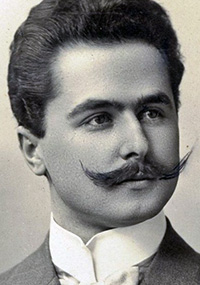
The German Jewish writer, Siegfried Lichtenstädter, Doctor of Law, was born on January 8, 1865, in Bayreuth (Franconia) — he was the youngest of five children of the leather merchant Wolf Lichtenstädter and his second wife Sophie, née Sulzberger. After the death of his father, his education was taken care of by his mother and the district rabbi of Bayreuth, Wolf Cohen. In 1882, Siegfried Lichtenstädter graduated from the humanities gymnasium in Erlangen.
He studied at the universities of Erlangen, Berlin, and Munich, initially focusing on Oriental studies, classical philology, comparative grammar of Indo-European languages, as well as the history of the German state and law. He obtained a doctorate in law. Lichtenstädter hoped to obtain an academic position at the university, but he was unsuccessful. In 1886, he passed his first state exam in Munich, and in 1898, he obtained a high position in the Bavarian fiscal administration and became a royal advisor (later he was appointed a senior royal advisor). In many ways, his life resembled that of Franz Kafka. Lichtenstädter never married and spent his days in an unremarkable job.
According to the recollections of his friends and acquaintances, Lichtenstädter was a person with a critical attitude toward life, an acute sense of justice, a tendency to analyze, and an intolerance for human misfortunes. He had few friends because the strictness of his demands did not please even his co-religionists, members of the Munich Jewish community, who mostly had no objections to assimilation. When most educated Jews believed they had found their home in Germany, he spoke of the actual political situation of Jews in this country as “unhappy but tolerable.”
After Lichtenstädter spent much effort assimilating into the non-Jewish mainstream, in the 1920s he began to actively participate in the life of the Jewish community in Munich again. He criticized Zionism, advising Jews to focus on “Jewish pride” and “Jewish uniqueness” instead of emigration. But soon he changed his mind. In 1935, he considered the times “difficult and worrying for the German Jewish community.” Starting in 1933, he began urging Jews to leave Germany – and not just to Palestine. “If people want to survive,” he argued, “the flow of emigrants should be directed into as many riverbeds as possible.” In 1937, he urged Jews to emigrate from Germany, “before it is too late!” He claimed: “600,000 Jews of the German Reich and 200,000 Jews of German Austria must be killed, and their property given to Aryans. But for this, new ethics is required. This ethics teaches: “foreigners” (read, non-believers) living in the homeland can and should be killed.”
Lichtenstädter presented an original interpretation of Nazi antisemitism. He believed that the Nazis’ racial ideology and its application to the Jews was a lie driven by entirely material motives. According to Lichtenstädter, fervent antisemites hated Jews because Jews posed competition for them in the struggle for “survival, honor, and prestige.” If Jews as a group were perceived as “disproportionately superior” to other groups, Lichtenstädter wrote, “why shouldn’t this provoke envy and resentment, anxiety and fears for one’s own future, just as it too often happens in relationships between individuals?”
Anti-utopia for Jewish authors often served as a tool for analyzing the dangers threatening the Jewish people and was a method of critically reflecting on their historical path. By writing anti-utopias, Jewish authors raised the alarm, warning the non-Jewish majority about the dangers of its antisemitism. In a witty manner, using subtle satire, they aimed to present antisemitism as a policy destructive to society.
In 1922, the satirical anti-utopia City Without Jews by Austrian-Jewish writer Hugo Bettauer was published, describing the expulsion of the Jewish population from Vienna. The novel predicted the rise of antisemitism and the horrors of the Holocaust, showing the city’s decline after the deportation. In 1926, four years after the anti-utopia City Without Jews, Lichtenstädter published a collection of everyday observations and farces titled Antisemitica: Humorous and Serious Aspects, True and False. It was an anti-utopia. He described the cultural history of the 19th and 20th, jokingly claiming that Jews were responsible for the widespread alcoholism of that time. Jewish wholesalers brought wine to the market, while Jewish bankers provided loans to brewers for beer production, and Jewish businesses sold jugs and mugs for drinking alcoholic beverages. Jewish furniture stores “most shamelessly supplied bars with the necessary tables, benches, and chairs.”
The sharpest satire in “Antisemitica,” written in the spirit of anti-utopia, is called Jewish Marshal. The action takes place in Anthropopolis, a city with a population of 200,000 people, including 2,000 Jews. One day, the city needed a new marshal to carry out eviction court orders (a highly prestigious position, the only one in all Anthropopolis). For the first time, a Jew is appointed, and soon public unrest begins. Some complain that the property restitution business is now 100 percent in the hands of Jews, even the Jews make up only 1 percent of the population. The Constitution of Anthropopolis guaranties Jews equal rights, but now, everyone understands that they have seized “rights that are 100 times greater than that.” It’s even worse, say the city’s mathematicians. They remind people that “the Aryan population has zero-zero! representation and that the number one divided by zero is by no means equal to 100 but actually equals infinity.” From this perspective, Jews “truly possess infinite privileges,” while Aryans are victims of unprecedented injustice. It was irony and fantasy, but a few years later, fiction became reality. The alternative history, satirically described by Bettauer and Lichtenstädter as a virtual world, turned out to be a completely unfunny reality. The comedic anti-utopia became the tragic reality of the Holocaust.
Lichtenstädter loved historical-prophetic sketches. In his book Das Neue Weltreich (The New Empire, 1903), he predicted Germany’s attack on Poland in October 1939 (he was off by one month). In 1912, Lichtenstädter predicted the “monstrous” slaughter of Armenians by the Turks, which took place in 1915. Long before the historical events, Lichtenstädter predicted the annexation of Austria by Germany in 1940 (he was off by two years).
Lichtenstädter retired at the end of 1932 at the age of sixty-seven. With the rise of the Nazis to power, his life underwent radical changes. Being Jewish, Siegfried Lichtenstädter was now subjected to exile and discrimination. In 1936, he visited his sister in Palestine but eventually returned to Germany. Due to the Nazi decree on name changes, which required Jewish men to take “Israel” as a second name, he renounced his German name Siegfried and began calling himself “Sami.” At the end of 1938, he published a desperate appeal to the free world, especially to the United States of America, titled ‘Perish or change? Memorandum about the Jewish distress.’ In March 1938, Siegfried Lichtenstädter was forced to leave the apartment on Arzissstraße 39, which had been his home for many years, and move to a boarding house on St. Paul’s Square 6. From the summer of 1939, he lived in a “Jewish apartment” at Maximilianstraße, 9. On February 1, 1942, he was forced to move to the “Judensiedlung” (“Jewish Quarter”) in Milbershofen, a camp with barracks on Knorrstraße. On June 23, 1942, the Gestapo deported him to the Theresienstadt ghetto. Siegfried Lichtenstädter died there on December 6, 1942, due to the catastrophic living conditions. Did he recall in the last terrible years of his life his warnings and predictions about the fate of the Jews?
*
Alex Gordon is professor emeritus of physics at the University of Haifa and at Oranim, the Academic College of Education. He is the author of 12 books.