By Ronald Robboy in San Diego
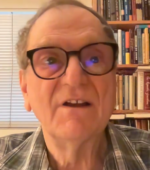
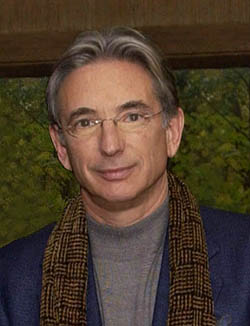
The extraordinary Michael Tilson Thomas (1944–2026), known to his public and colleagues alike as MTT, succumbed in April to an aggressive brain cancer. Conductor, pianist, composer and educator, he was a musicians’ musician, one of dazzling brilliance who was somehow still performing — conducting Mahler symphonies, no less — well beyond anyone’s expectation of what was possible with the grim prognosis he faced. Many readers are undoubtedly aware that he was the grandson of Yiddish theater superstars. MTT never knew his grandfather Boris Thomashefsky, who died in 1939, but in his youth he was very close to his grandmother Bessie Thomashefsky, who died when he was seventeen. Years later, he would go on to create the Thomashefsky Project to explore and honor his grandparents’ world, and before he died he gifted his Thomashefsky Family Papers to the YIVO Institute for Jewish Research, the world’s premiere archive of historic Yiddish documents.
I was the Thomashefsky Project’s researcher and, no doubt because in recent years I’ve also been lecturing on Yiddish theater music at YIVO, in 2025 they asked me to recommend an operetta that might be reconstructed for performance. I suggested they undertake Khantshe in Amerike, by Yiddish theater composer Joseph Rumshinsky. Written for MTT’s grandmother in 1912, it was a comic operetta about workers’ rights and women’s suffrage. It had wonderful music, along with hilarious gender-role confusion worthy of the Shakespearean stage. I lead the reconstruction for YIVO; and, in partnership with Carnegie Hall’s festival United in Sound: America at 250, they scheduled a concert performance of Khantshe for May 2026, to be sung in New York at the Center for Jewish History by students of the Bard College Conservatory’s Graduate Vocal Arts Program. Though MTT was by now very ill, Joshua Robison, his husband and longtime manager, told me how excited he and MTT were about it and how much they hoped he would live to hear the performance.
Alas, he did not, and shockingly neither did Joshua, who died unexpectedly two months before MTT. Nonetheless, their excitement found its way into the performance that YIVO and Bard prepared, one that was filled with magical energy (“Watch the Video”). The following is adapted from the dedication to MTT and Joshua that I was asked to write for the printed program (“View the Program”):
Khantshe in Amerike occupied a semi-mythical place for MTT. His grandmother Bessie Thomashefsky had originated its starring role, that of Khantshe the brassy working girl, and the show’s title song “became Bessie’s signature tune,” as MTT explained in The Thomashefskys, his homage to his grandparents and their Yiddish theater legacy. It was played, he said, “as she walked into restaurants and benefits, and later by me” — his proud emphasis clearly audible in the PBS broadcast of The Thomashefskys — “as she made her triumphant entrance into our living room in the San Fernando Valley.” It is no surprise, then, that its reconstruction became a high priority for MTT as his Thomashefsky Project got underway at the end of the 1990s, not so long after he’d settled into what would become his historic tenure at the San Francisco Symphony.
It was YIVO’s longtime music archivist, the remarkable Chana Mlotek z”l, who located the Khantshe material — the lead sheets and orchestra parts — gathered in a box that was mysteriously labeled “Supplement” and set aside on a shelf in the Archives as though it had been waiting precisely for MTT after so many years. Dear Chana was very excited and, yes, triumphant when she called that morning in 1999 to tell me she’d found the box and what was in it. I was the Thomashefsky Project’s researcher, and at that point — we’d begun the research almost exactly a year earlier — I was still scoping out what would be feasible, that is: what could be reconstructed in a convincing way?
The overture, simply put, offered a potpourri of tunes from the show, and the first thing I did was take its orchestra parts and assemble them into a full score to send to MTT. It wasn’t long before I received an excited phone call from him. (Though we had been meeting in person periodically, he only otherwise communicated with me, if at all, routed through his layers of assistants, so this tells you that something very special had happened.) He sounded like a schoolboy, and no wonder. This new find must have taken him back to his childhood, to memories of his grandmother and their music making together. For the Project, we also went on to reconstruct the title song, which, along with the overture, became centerpieces of The Thomashefskys.
That title song, “Khantshe,” may have been a signature for Bessie, but it was clearly not the only song from the show that MTT had internalized as a child. It was completely clear to me, as I watched him conducting the overture, that he was somehow on intimate terms with, for example, strains from the Suffragette March that Rumshinsky drew from his third act. But most interesting were the marginalia in MTT’s personal copy — which I had never seen until recently, once he’d gifted his Thomashefsky papers to YIVO — of the translation the Project had commissioned of a Khantshe script, one that had been published in Warsaw without the knowledge or authorization of the work’s authors. For the big solo turn sung by Khantshe’s confederate, Sammy the elevator boy, the bootleg Polish script included the words only to the first verse. Alongside it, though, in his copy of the translation, MTT had penciled in words from another verse, which had evidently been floating around his subconscious for decades, now released by a flood of memories of his grandmother and her singing, all unlocked by Khantshe in Amerike.
*
Musician and writer Ronald Robboy, formerly the Senior Researcher for Michael Tilson Thomas’s Thomashefsky Project, recently led the YIVO Institute’s reconstructions of two early operettas by Joseph Rumshinsky, Shir-hashirim (1911) and Khantshe in Amerike (1912). For many years a cellist in both the San Diego Symphony and the San Diego Opera, Robboy was at the same time active in the New Music and Conceptual Art communities, and as director of The Big Jewish Band participated in the earliest years of the West Coast klezmer revival. In 1995 the San Diego Jewish Film Festival commissioned his original score to Molly Picon’s early silent film East and West, and other of his own music has been heard in New York — at MOMA and The Kitchen — as well as in California. A contributor to Encyclopaedia Judaica, Robboy has held research fellowships at YIVO Institute and University of California, San Diego, and his writing on Yiddish film, literature, and theater music has appeared in arts magazines and academic settings.
What a wonderful, detailed article about MMT, his grandparents, especially his grandmother Bessie, the Thomashevsky project and the reconstruction of Chantze in Amerike. How fortunate we are to have Ron Robboy, YIVO researcher, in our community.