By Rabbi Dr. Israel Drazin in Pikesville, Maryland
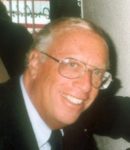
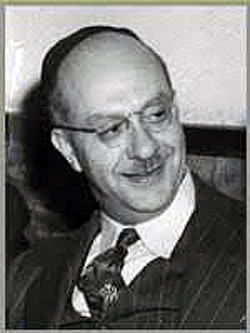
My father, Rabbi Dr. Nathan Drazin (1906-1976), published his book Marriage Made in Heaven in 1958. The book, which provides a frank discussion on sex and marriage from an Orthodox Jewish perspective, was originally released by Abelard-Schuman in London and New York. It was very successful and has had several reprints, including a second edition published by Bloch Publishing Company in 1961. It was also translated into Hebrew and, despite initial criticism from some Orthodox rabbis, was sold in a very Orthodox neighborhood store in Israel.
The controversial reception to Dad’s Marriage Made in Heaven stemmed primarily from its explicit and frank discussion of sexual intimacy, which many in the Orthodox rabbinate in 1958 considered inappropriate for public consumption.
While Dad was brilliant and was a respected Orthodox rabbi and scholar with many degrees, including a PhD and a Master’s Degree in Psychology, his decision to write a “sex manual” based on Jewish law (Halakha) broke what his colleagues considered taboo. The critics within the rabbinate argued that the book’s detailed descriptions of physical intimacy violated the traditional Jewish value of tzniut (modesty), which generally kept such discussions private or limited to oral instruction between a rabbi and a groom, certainly not with women.
Recognizing that divorces were rampant in all social circles in America and many families lived together in misery, Dad wanted to help them by giving good psychological advice. Over his 31 years as a rabbi in Baltimore, he conducted many hundreds of marriages, perhaps a thousand, because he was very popular. He always insisted that the couple meet with him for a period before the wedding ceremony, during which he would discuss how to build a successful marriage.
Despite the initial backlash about his book, it eventually became a foundational text for the Orthodox Jewish movement, paving the way for future Jewish authors to address intimacy more openly. While the subject was taboo in the 1950s and for hundreds of years before Dad’s book, his success prompted a flurry of similar books that continues today.
In 1959, I wrote a review of Dad’s book. It was the first of what blossomed into my 12,000 reviews. I pointed out how Dad was helping people, that his forward-thinking views needed to be known, and the “small-mindedness” of his critics was hurting people who needed help. At that time, I did not know that the 1958 “small-mindedness” did not exist in the past, and was not a traditional Jewish attitude, and that Dad’s successes with his book would prompt a revival of many books that followed his and continue to do so today.
Urim Publications gives us examples of similar discussions of marriage and sex from the Middle Ages. The book They Called It Holy: Physical and Spiritual Intimacy Between Man and Woman is fascinating. It is an intellectually rich 128-page work presenting two medieval Jewish texts: The Holy Code by Ravad and The Holy Letter, traditionally attributed to Ramban. Carefully edited and translated by Moshe David Kuhr, the book offers readers both the original Hebrew and an accessible English translation.
Both Ravad and Ramban were mystics. Both used the term “holy” when, contrary to the rabbis of 1958, they spoke frankly of love, marriage, and sex.
Rabbenu Avraham ben David of Posquières (c. 1125–1198), widely known by the acronym Ravad (or Raavad), was a preeminent talmudic authority and legal scholar in Provence, France, during the 12th century. He is best known for his critical glosses (Hassagot) on major works of Jewish law, most notably Maimonides’ Mishne Torah, in which, as a mystic, he often challenged the rationalist author’s conclusions and offered alternative sources. His “The Holy Gate” is the seventh chapter in his treatise Baalei Hanefesh concerning laws relating to women. He is considered a pivotal figure in the development of early Jewish mysticism (Kabbalah) and was the father of Isaac the Blind, another mystic thinker.
While the rabbis in 1958 overly stressed the concept of tzniut, modesty, Ravad and other medieval rabbis spoke openly about sex, and called it “holy,” as did Dad. Among much else, Ravad emphasized that husbands must make certain that their wives are satisfied with their sex. He wrote, “anything a married couple wishes to do with one another, they may do.” However, “nothing is permissible without her desiring it….Keep her satisfied….He is obligated to do what she desires to make her happy.”
Ramban (1194–1270), or Rabbi Moses ben Nachman (also called Nachmanides), was a leading medieval Spanish Jewish scholar, rabbi, philosopher, physician, and kabbalist. He was also open in his discussion on marital matters. He was a dominant talmudic authority in Girona, Catalonia, Spain. Kuhr tells us that while many think the book included in this volume was written by Ramban, others think it was composed by Ramban’s student, Rabbenu Menachem Recanati, who was also a kabbalist.
Kuhr also briefly includes in this volume other writings by medieval rabbis similar to the two he offers.
What is significant in the two books is that medieval scholars believed that love, marriage, and sex were holy and needed to be discussed. The two books refuse to treat sexuality as either merely physical or something to be ignored in religious life. Both medieval authors insist that intimacy between husband and wife possesses spiritual significance when approached with dignity, love, restraint, and holiness. Modern readers may be surprised by how candid these writers are. They discuss desire, emotional connection, bodily conduct, intention, and mutual respect with seriousness and sensitivity, presenting marital intimacy not as a concession to human weakness but as a pathway to spiritual elevation.
The English rendering in this book is clear and readable while preserving the dignity and intellectual texture of the originals. The side-by-side Hebrew and English presentation will especially appeal to students of Jewish thought who wish to engage directly with the source material.
The texts remind readers that classical Jewish tradition developed a more nuanced and helpful approach to sex than what existed in the past several centuries, recognizing the power, joy, and sanctity of physical intimacy within marriage.
The volume can be read in a single sitting, yet its ideas can change a lifetime of behavior. It is not just a historical curiosity. They Called it Holy is an invitation to rediscover an understanding that physical love and religious growth are not opposites but partners. Readers interested in Jewish philosophy, ethics, or marriage will find this elegantly produced book enlightening, thought-provoking, and a guide for joy.
*
Rabbi Dr. Israel Drazin is a retired brigadier general in the U.S. Army Chaplain Corps. He is the author of 67 books.
Rabbi Dr. Israel Drazin is a retired brigadier general in the U.S. Army Chaplain Corps. He is the author of 67 books.