By Debra Feldstein in Santa Cruz, California
As we close out the 2025-2026 Academic Year, I want to share an experience I had last fall, painting butterflies in my hometown of Santa Cruz, California. Community members from all walks of life–from across the political, cultural, and religious spectrum, ranging in age from eight to eighty-five–gathered in remembrance of the Holocaust.
At one table, an older woman wearing a dress and pearls to honor the experience sat with a small group of heavily pierced teenagers. They all painted with intensity and care. As I saw them paint their butterflies and watched them connect over their biography cards, I thought: this is why our work exists.
I have long believed that people learn best when they form a personal connection to the lessons at hand. Facts and dates make an impact, but what stays with us are the stories. Stories help us understand others’ experiences, see ourselves in a broader human context, and consider the choices we make in our own lives as we move beyond the classroom.
That belief is what drew me to The Butterfly Project three years ago.
When students learn about a child who was murdered in the Holocaust and paint a butterfly in honor of that child’s life, they become grounded in history in a way that textbooks alone cannot accomplish. They understand that the Holocaust was not just a historical event, but a collection of individuals with lives, hopes, and dreams just like their own.
Our collective, communal work at The Butterfly Project sits at the intersection of education, remembrance, and social responsibility. Our program engages young people in the lessons of the Holocaust while encouraging them to reflect on their own lives, responsibilities, and hopes for the future.
I am honored to be surrounded by so many dedicated individuals who believe in our work. This year–thanks in large part to our tireless community–we continued to expand our reach, bringing The Butterfly Project to new schools and strengthening our partnerships with educators, museums, and organizations worldwide that share our commitment to Holocaust education and remembrance.
One powerful example can be found in our growing partnership with the Virginia Holocaust Museum, which has enabled us to reach educators in all eight regions of the state. And, for the first time, we were able to offer kits at no cost to all public-school educators in San Diego, removing a significant barrier to entry for many public institutions and expanding access to Title 1 and underserved schools across the county.
As I reflect on the past year, I am filled with gratitude.
On behalf of all of us at The Butterfly Project, I want to express deep gratitude to the individuals and foundations whose generosity makes this work possible. Because of your support, students who would not otherwise have access to our Holocaust education can participate in this unique, impactful program.
I also want to thank our volunteers, whose dedication and countless hours of service support every aspect of our work, our educational and community partners who continue to share this mission and help us reach new audiences, and our staff and board members, whose commitment and hard work make everything we do possible.
Looking back over the last year, I am most moved by the students. Their curiosity, thoughtfulness, and willingness to engage with difficult history remind me every day that this work is making a difference. One middle schooler shared: “The most important thing I learned today was what the Holocaust was and about one person who stood up for herself and her friends. That is the most important thing I learned, because we can do that.”
It is an honor to serve as the Executive Director of The Butterfly Project during this period of growth and opportunity. Thank you for your belief in the power of education, the importance of preserving memory, and the need to inspire future generations.
*
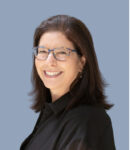
Debra Feldstein is the Executive Director of The Butterfly Project