By Alex Gordon in Haifa, Israel

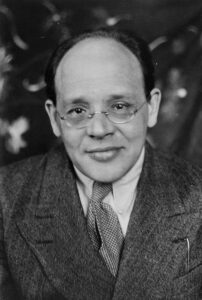
For a Jewish writer, mythologization becomes a defense mechanism against a hostile reality. It helps him overcome the tragedy of reality.
In 1894, in Odessa, with a population of approximately 300,000 residents, every third Odessan was Jewish. On July 12, 1894, another Jew, the future writer Isaac Babel, was born in this city. Odessa was a Jewish city, but in the 1890s, the Odessa newspaper Novorossiyskiy Telegraf regularly published antisemitic articles accusing Jews of exploiting peasants and workers, hostility toward the state, the assassination of Tsar Alexander II, and predicting pogroms.
From October 18 to 21, 1905, the bloodiest pogrom in the city’s history occurred in Odessa: over 300 Jews were killed, including women and children, and tens of thousands were left homeless. Babel himself survived the 1905 pogrom (he was hidden by a Christian family), while his grandfather Shoyl was one of the 300 Jews killed. This pogrom is described in Babel’s short stories The Story of My Dovecote and First Love.
Babel was born in the Moldavanka district of Odessa into a merchant family. It was in Moldavanka that the events of the Odessa Stories took place. In 1895, the future writer’s family moved to Nikolaev in the Kherson province, where Babel lived until he was eleven years old. In Autobiography, he wrote: “At my father’s insistence, I studied the Hebrew language, the Bible, and the Talmud until I was sixteen.” In 1911, after receiving a diploma from the Odessa Commercial School, he became a student at the Kiev Commercial Institute, where he studied in the economics department, graduating from the institute in 1917. During his studies, he first published his work—a short story Old Shloyme—in the Kiev weekly illustrated magazine Ogni (1913)
In 1916, Babel met the writer Maxim Gorky, who published Babel’s stories Elia Isaakovich and Margarita Prokofyevna and Mama, Rimma, and Alla in the magazine Letopis. They attracted attention, and Babel was about to be tried for pornography, as well as for the articles—”blasphemy and an attempt to overthrow the existing order” which were interrupted by the revolutionary events of 1917. In Autobiography, Babel wrote: “And for seven years—from 1917 to 1924—I went into the world.”
At the beginning of 1918, Babel went to work as a translator in the foreign department of the Bolshevik punitive agency, the Cheka. He was published in the newspaper Novaya Zhizn. In the spring of 1920, on the recommendation of Mikhail Koltsov (Moses Friedland, a writer and journalist executed by the Soviet authorities on February 2, 1940), under the name Kirill Lyutov, he was sent to the First Cavalry Army under the command of the future Marshal Budyonny as a war correspondent, where he served as a fighter and political officer. In the ranks of the First Cavalry Army, he became a participant in the unsuccessful war with Poland in 1920. The writer kept records (The Diary of a Cavalryman, 1920) that served as the basis for the future collection of stories Red Cavalry. Later, he worked in the Odessa Provincial Committee, was the editor-in-chief of the 7th Soviet Printing House, a reporter in Tbilisi and Odessa, and at the State Publishing House of Ukraine.
In June 1921, Babel’s story The King was first published in the popular Odessa newspaper Moryak. In 1923-1924, the magazines LEF, Red New, and other publications featured a few of his stories, which later formed the cycles Red Cavalry and Odessa Stories. In the spring of 1924, Babel was in Odessa, where on March 2 of the same year his father passed away, after which he, along with his mother and sister, finally settled in Moscow.
With the tightening of censorship and the onset of the Great Terror, Babel was published less and less. He was engaged in translations from Yiddish, including the works of Sholem Aleichem and David Bergelson. From September 1927 to October 1928 and from September 1932 to August 1933, he lived abroad (France, Belgium, Italy).
In 1937, a short note appeared in Literary Gazette in which Babel accused the convicted Trotskyists: Radek, Sokolnikov, and Pyatakov (the first two were Jews) of “lies” and “treason,” while extolling the “genius of Lenin and Stalin.”
Arrested by the NKVD on May 15, 1939, on fabricated charges of “anti-Soviet conspiratorial terrorist activities,” Babel was executed in Lefortovo Prison (Moscow) on January 27, 1940, a week before the execution of his colleague, fellow countryman, and comrade Mikhail Koltsov.
In one of his stories, Babel recounted how, at the age of nine, he first saw his father, submissively kneeling before a Cossack officer during a pogrom—just like the embodiment of the centuries-old fate of a ghetto Jew: “The officer was wearing lemon-yellow suede gloves and was staring into the distance with a vacant gaze.” Like Trotsky, Babel wanted to become a “strong personality.”
Short, intellectual, frail, and well-read, the Jewish boy who grew up in a strict patriarchal family (under the pressure of a despotic father), Babel acutely felt his own defenselessness in the Russian Empire, shaken by pogroms. In Odessa Stories, he wrote: “I am a Jew, a kike. At times, it seems to me that I can understand everything. But one thing I will never understand is the reason for that vile treachery, which is so boringly called antisemitism.”
At the heart of Odessa Stories (published as a separate book in 1931) and the character of Benya Krik, based on the well-known Jewish bandit Mishka Yaponchik (Moishe-Yakov Vinnitsky), commander of one of the resistance units against pogroms, lies Babel’s complex internal conflict with his own Jewish heritage, social status, and physical weakness. The writer endowed the Jewish raiders from Moldavanka with exaggerated masculinity, physical strength, power, and daring—all the things he himself lacked. Benya Krik serves as a kind of response to the humiliated and defenseless position of traditional Judaism, taking justice into his own hands.
In Odessa Stories, Babel appears not only as a realist chronicler but also as the creator of his own literary utopia and myth. His famous Moldavanka is not the real criminal slums of Odessa, but an idealized promised land where the rules of a romantic code of honor prevail over the laws of real morality. In this utopia, the raiders are not just criminals, but rather unique “knights,” enforcers of justice. The writer creates a parallel reality, contrasting the harsh historical life with a bright, fairy-tale ideal.
Babel overturned the antisemitic image of the “cowardly Jewish merchant,” making his heroes proud, fearless, and sometimes noble “kings.” In his artistic system, theft and violence are often justified by a code of honor, elevating crime to the status of folkloric chivalry. The romanticization of Jewish crime was for the writer a way to overcome personal complexes thru the creation of a unique myth.
In the collection Odessa Stories, Babel remains a Jew with glasses on his nose, looking at brute force with both admiration and disgust. In Odessa Stories, the force that the writer vividly and positively describes are the Jewish raiders, while in Red Cavalry (1926), it is the Cossack Red Army soldiers to whom the writer attributes the ability to create bloody history. In the stories of the Red Cavalry cycle, the intellectual author-narrator Kirill Lyutov describes the violence and cruelty of the Red Army soldiers with mixed feelings of horror and admiration.
Odessa Stories were created in an effort to overcome the author’s Jewish inferiority complex and to achieve the glorification of his people even through the heroization of criminals.
One of the main merits of Babel’s Odessa Stories was his language. Formally, he wrote in Russian. But the writer created a new language, a language of parables and aphorisms, a language rich in metaphors and full of Jewish color, a language of fables with morals, a dialog with an imaginary interlocutor. It was a language of humor and sadness, irony and lamentation—a language that was the folklore of a people fading into the past due to the imposition of the Soviet international. He witnessed how the new regime was destroying the traditional Jewish world.
These people were alive, but the author was bidding farewell to them. These people joked and cried, and lived to the fullest, but their strength was waning. The heroes of the tales faded into the mists of history. They spoke a language that did not exist. This language was not in the dictionary. It was illegal and powerless, like the Jewish people in Russia, who were beaten, displaced, humiliated, and replaced by other, full-fledged nations. This language will drown in the Black Sea, in the black sea of revolution, oblivion, and pogroms. Only the characters of the Odessa Stories can speak in that language.
This language is unique and untranslatable. It is alive, vibrant, and dying. The speech of the heroes in Odessa Stories is filled with bitter and ironic rhetorical questions, forming a large, unanswered “Jewish question.”
In Odessa Stories, wise and noble people, who were not popular in Odessa, spoke this special language. Before the reader appeared a “normal” people, just like other Odessa peoples, but persecuted and hunted precisely because they wished to be a special, distinctive, and independent people.
Babel was aware of his national identity, but he was not a Jewish writer. He was a Jewish dreamer, a goalkeeper of the vanishing Jewish folklore. The specific syntax and vocabulary create an artificial, mythologized color. The language of the stories contains hyperbolic humor, expression, and the very essence of Jewish folklore. Babel puts into the mouths of his characters—poor Jews, petty thieves, and robbers—a florid, biblical-theatrical style of speech that did not actually exist in the port taverns. This is a stylistic choice on the author’s part, intended to elevate these marginalized figures to the status of epic heroes.
The author portrayed Jews not as defenseless victims of pogroms, but as proud, clever and strong people capable of standing up for themselves. It was a bold innovation, but in the Odessa Stories, one could sense the writer’s bitterness and longing for a world doomed to die.
*
Alex Gordon is professor emeritus of physics at the University of Haifa and at Oranim, the Academic College of Education. He is the author of 12 books.