The Essential Guide to Jewish Prayer and Practices by Andrea Lieber; ISBN 978-1-61564-138-3 ©2012, $16.95, p. 316, including appendices and index
Jewish Liturgy and its Development by A. Z. Idelsohn; ISBN 978-0-486-28648-8 2012 reprint by Dover Publications, Inc., New York of ©1931, p. 404, including appendices, notes, and index
By Fred Reiss, Ed.D.
WINCHESTER, California — According to the Talmudic sages, Jewish prayer began with the Patriarchs, Abraham, Isaac, and Jacob. Abraham is given credit for initiating morning prayers (Gen. 19:27), Isaac, the afternoon prayers (Gen 24:63), and Jacob the evening prayers (Gen. 28:11). From that time until the Talmudic period, prayers came from the heart or perhaps from one of the psalms, as no prayer code existed until Rabbi Gamaliel in the mid-first century CE institutionalized one. Even then, Gamaliel’s prayer structure formed only a basic shell of Jewish worship. Many of the prayers and piyyutim (liturgical poems) that we now use in our synagogues and temples were slowly incorporated into the prayer service over the next two thousand years.
Today, there are Ashkenazi and Sephardic prayer books, French and Italian prayer books, Yemenite prayer books, and even Kabbalah prayer books. Prayer books are arguably the most important instrument in the life of a religious movement because the prayer book is used day-in and day-out by the rank-and-file. The prayer book encapsulates the essence of beliefs. Prayer books from the Orthodox movement differ from those of the Conservative, Reform and Reconstructionist movements’ prayer books, and they all differ from each other.
In the introduction to her book, The Essential Guide to Jewish Prayer and Practice, author Andrea Lieber, Associate Professor of Jewish Studies at Dickenson College, asks the reader to ponder, “What does an ancient religious tradition like Judaism, which developed thousands of years ago in a world so different from our own, have to offer the twenty-first century?” Her response is a practical, easy-to-read guide, describing the ritual and practices of Judaism and prayers in broad brushstrokes, which she divides into four parts.
In the first two parts, Lieber lays the foundation for prayer by describing the concept of “a meaningful life” and relating various paths toward prayer. The third part describes the essence of prayers throughout the Jewish year and at life-cycle functions, such as weddings and circumcisions. The final part talks about the sanctity of the synagogue and the spirituality that one can be developed in the home. The Essential Guide to Jewish Prayer and Practice illustrates Jewish prayer though the eyes of the major present-day sects of Judaism, namely Orthodox, Conservative, Reform, and Reconstruction. Yet, Lieber understands the tensions that exist between ancient faith and contemporary life and often describes how one can pray and feel close to God in non-traditional ways. The Essential Guide to Jewish Prayer and Practice is an ideal book for anyone, practicing Jew or potential convert, looking to communicate with God through synagogue prayers and prayers from the heart.
If The Essential Guide to Jewish Prayer and Practice is a bird’s eye view of the forest of Jewish prayer, then Jewish Liturgy and its Development by A. Z. Idelsohn, the late Professor of Jewish Music and Liturgy at Hebrew Union College, the Reform Jewish seminary, is a book that takes the reader among all the trees. Jewish Liturgy and its Development, true to its name, details the history of prayer from Abraham through the publication of siddurim (Hebrew for prayer book) from the Reform movement during the first third of the twentieth century, thereby covering the structure of prayer from ancient Israel to the destruction of the Second Temple (70 CE) and on to the influence of poets and kabbalists and the development of a printed prayer book.
Idelsohn’s scholarly approach covers all synagogue services, from the week day services to the Sabbath and High Holiday services and through the services found on festivals and fast days. He tells the history of the service and gives a paragraph-by-paragraph explanation of the meaning of each prayer. His explanations are often filled with fascinating tidbits of Jewish history and he contrasts the services among the unique communities of Jews living in the Diaspora.
Both The Essential Guide to Jewish Prayer and Practices and Jewish Liturgy and its Development are wonderful additions to any Jewish library.
*
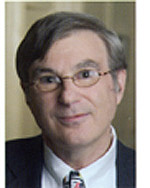
Dr. Fred Reiss is a retired public and Hebrew school teacher and administrator. He is the author of The Standard Guide to the Jewish and Civil Calendars; Ancient Secrets of Creation: Sepher Yetzira, the Book that Started Kabbalah, Revealed; and Reclaiming the Messiah. He may be contacted at fred.reiss@sdjewishworld.com