By Rabbi Leonard Rosenthal
SAN DIEGO — When Abraham bargained with God to save the cities of Sodom and Gomorrah, he prefaced his challenge by telling God, “Here I venture to speak to my Lord, I who am but dust and ashes.” (Gen. 18:27) With these words Abraham acknowledged the inadequacy of his position and his plea. Compared to God, Abraham was nothing. What right had he to challenge the Divine?
Rabbi Yonatan Eybeschutz (1690-1764) explained why Abraham used the expression “dust and ashes” to express his humility.
If he had said “dust” alone, it would not have been an absolute negation of self-worth. It is possible for dust to possess an element of pride. Dust can be gathered to build and to plant and thereby become worthwhile instead of worthless.
If Abraham had said “ashes” alone it could also have been an indication of pride. Although ashes are worthless, at one time, before they were burned, the materials from which they came had substance and could have been used to build. They, at one time, had worth.
By using the combination, “dust and ashes,” Abraham expressed true humility. He said that in the past he was “dust” and in the future he will be “ashes,” so that in no period of time did he construe himself as having any worth or substance. He was truly powerless.
I do not know anyone today who possesses this type of humility, who thinks of themselves as completely powerless…unless, of course, they are a victim of hurricane Sandy. Natural phenomena, such as hurricanes, make us realize how powerless we are in the face of nature. While we may deceive ourselves into believing that we can live wherever and in whatever matter our hearts desire, the devastation caused by Sandy and Katrina remind us that, in the face of nature and the face of God, we truly are no more than “dust and ashes.”
We cannot prevent natural disasters but we can help with the recovery.
Helping with the recovery is one way in which we can positively respond to natural disasters. The other way is more difficult: to stop building and living in places which are vulnerable to the forces of nature: shore lines and quake zones (should we move Los Angeles?).
I doubt that this will happen, because even in the face of natural disasters, none of us really thinks that we are dust and ashes.
*
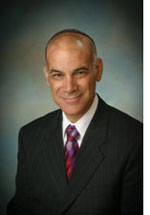
Rabbi Rosenthal is spiritual leader of Tifereth Israel Synagogue. He may be contacted at leonard.rosenthal@sdjewishworld.com