By Rabbi Leonard Rosenthal
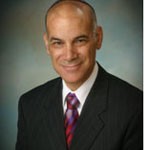
SAN DIEGO — Parashat Chukkat is best known for containing the mitzvah of the Parah Adumah, the Red Heifer, whose ashes were used for ritual purification. Parashat Chukkat also contains various other laws dealing with Tumah v’Tahara, ritual uncleanliness and ritual purity.
One of the greatest sources of ritual impurity is a dead body. A person who touches a dead body becomes ritually impure and must have the ashes of the Red Heifer mixed with water and sprinkled over him or her in order to become ritually pure, once again.
However, the ability of a dead body to transmit ritual impurity is so strong that when a person dies in an enclosed space (such as a tent or a room), anyone who is in that enclosed space becomes ritually impure, as does an “open vessel, with no lid fastened down.” (Num. 19:14)
While the laws and concepts of Tumah and Tahara are too complex to deal with here, I would like to share an interpretation passage offered in Lekutei Yehoshua, which says it is possible to relate the law of the “open vessel” to the prohibition against lashon harah, indulging in gossip or slander.
Lekutai Yehoshua says that just as an “open vessel” can become impure, so can a human being who does not keep his or her mouth shut! When a person speaks without thinking and says embarrassing things or spreads horrible tales about his or neighbor, that person becomes impure and anathema to God and the community. When we indulge in lashon harah, we say more about whom we are than the one whom we are gossiping about.
Lekutei Yehoshua draws a similar lesson from Rav Sheshet’s words in the Talmud (Chulin 17). The Talmud says that Rav Sheshet used his tongue to check the sharpness of a knife used for shechita (ritual slaughter).
Lekutei Yehoshua says that here the Talmud is also hinting about an aspect of lashon harah: if you want to know the true nature of a human being, check the sharpness of his or her tongue! One who uses his words to help and heal is a mensch. But he who uses a “sharp tongue” to cause hurt and pain to others will not find favor in God’s eyes. (Iturei Torah, Bamidbar p. 125)
As Rabbi Joseph Telushkin, author of Words That Hurt, Words That Heal: How to Choose Words Wisely and Well, writes: “Words are powerful enough to lead to love, but can lead to hatred and terrible pain as well. We must be extremely careful how we use them.”
*
Rabbi Rosenthal is spiritual leader of Tifereth Israel Synagogue in San Diego. He may be contacted via leonard.rosenthal@sdjewishworld.com