Actor Dustin Hoffman delves into Jewish identity on ‘Finding Your Roots’

(JNS.org) Hollywood actor Dustin Hoffman learned about the importance of his Jewish identity, after being raised without much knowledge about his family’s faith or religious identity, as he delved into his family history in a new episode of the PBS program Finding Your Roots.
The Oscar-winning actor, 78, became emotional as he found out from show host Dr. Henry Louis Gates, Jr. about the difficult lives faced by his ancestors because they were Jewish.
Hoffman discovered that his paternal grandfather, Frank Hoffman, was killed by the Bolsheviks during the Soviet Civil War after risking his life to get back to an area in modern Ukraine in order to save his parents from anti-Semitic pogroms. Hoffman’s great-grandfather, Sam Hoffman, was also killed by the Bolsheviks. Sam’s wife, Liba, was arrested for reportedly trying to bribe an officer of the Soviet state security agency (Cheka). She was sent to one of the Soviet labor camps (Gulags), but survived the ordeal and eventually made it to the U.S. in the 1930s.
Dustin Hoffman said his great-grandmother was a “hero” for her resilience, despite all the persecution she and her family faced for being Jewish. He also expressed regret that he has only now learned about his family’s courage in the face of adversity.
“People ask me today, ‘What are you?’ I say, ‘I’m a Jew….’ I’m a Jew. They all survived for me to be here,” said Hoffman. (Preceding provided by JNS.org)
*
Uruguay stabber says Allah told him to kill Jews
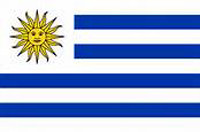
MONTEVIDEO, Uruguay–The man who stabbed to death Jewish community leader David Fremd in Uruguay earlier this and claimed Allah had been responsible for the murder acted alone and had no ties to foreign militant networks, the government in Montevideo said.
Interior Minister Eduardo Bonomi said the government drew that conclusion after security agents scoured the computer of 36-year-old Carlos Omar Peralta and searched his home for signs he might have links to outside groups. “No links arise with other people inside or outside the country, nor with any group,” Bonomi said.
Earlier on Thursday, Judge Fabricio Cidade found Peralta guilty of knifing businessman David Fremd late on Tuesday in Paysandu, near the border with Argentina. The judge told the ‘El Telegrafo’ newspaper that Peralta would be sent to a psychiatric hospital for tests ahead of sentencing.
“He consistently talked about the religious motivations but did not once recognize committing the crime,” the judge told the local paper. “He said his actions were in the hands of Allah.”
Fremd was the director of the Jewish Community of Paysandu, a small town on the Uruguay River, on the border with Argentina. Alejandro Wajner, the president of the Paysandú Jewish community, told the newspaper ‘El País’ that Fremd “was a much-loved person who did not have any quarrels with anybody.” He had not received any threats prior to the attack.
About 15,000 Jews live in Uruguay.
In the capital Montevideo, the Egyptian Center for Islamic Culture and Israeli Embassy condemned the attack. (Preceding provided by World Jewish Congress.)
*
Poposki likens Macedonia’s birth to Israel’s

JERUSALEM (WJC) In a speech before the Israel Council on Foreign Relations (ICFR), Macedonian Foreign Minister Nikola Poposki drew a parallel between the birth of Israel and that of his country: “We faced a situation in which pretty much everyone around us disagreed with the existence of a Macedonian state.”
Turning to the effect of events in the Middle East on his country, the 38-year-old chief diplomat of the former Yugoslav republic noted that over 140 Macedonian citizens had been fighting for the Islamic State.
“One would be naïve to think that they don’t come back. This is a process that we have been ignoring….How did we arrive at a situation in which a European country, albeit with a problematic European integration path but still one with a European destiny, could produce so many people that are fighting for a wrong cause using methods that are completely unacceptable in our society? Indeed, some of them are making their way back and we shouldn’t be surprised if something dramatic happens as it did in Paris.”
Poposki noted that in 2015, Macedonia, a country of 2.1 million inhabitants, had seen 800,000 migrants use this route in an attempt to make their way from one EU country (Greece) across a non-EU, non-Schengen Agreement country (Macedonia) back into the EU. Since the beginning of this year, 90,000 have done so. “We just happen to be on the shortest and cheapest route from the Middle East to Europe, one which has been used for centuries,” said Poposki. The Schengen Agreement abolished internal borders among signatory states.
Poposki lamented the fact that the EU and Schengen rules had not been enforced at the EU external borders, and that Macedonia had been compelled to confront the problem. Negative publicity for Macedonia had been one of the results.
“Greece,” he said, “is in a particularly vulnerable situation and no one should…put all the blame for what has been happening in Europe on Athens. That would be unfair. Coming from a Macedonian, this might sound funny, but these are the facts. Maybe the only good news is that this critical situation has provided us with an opportunity to work more closely with the Greeks and we have managed to strengthen our relations.”
The Jerusalem-based Israel Council on Foreign Relations is devoted to the study and debate of foreign policy, with special emphasis on Israeli and Jewish concerns. The council functions under the auspices of the World Jewish Congress. (Preceding provided by the World Jewish Congress)
*