U.S. Secretary of State Mike Pompeo and Treasury Secretary Steve Mnuchin briefed reporters by telephone about the new sanctions against Iran that go into effect on Monday, Nov. 5. Here is a transcript of their statements:
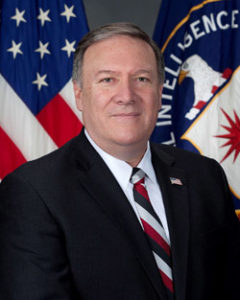
SECRETARY POMPEO –Earlier this year, President Trump withdrew from the fatally flawed nuclear deal and implemented a new campaign aimed at fundamentally altering the behavior of the Islamic Republic of Iran. This part of the campaign about which we’re speaking today is simple. It is aimed at depriving the regime of the revenues that it uses to spread death and destruction around the world. Our ultimate aim is to compel Iran to permanently abandon its well-documented outlaw activities and behave as a normal country.
Today, Secretary Mnuchin and I will discuss one of the many lines of effort to achieve these fundamental changes in the Iranian regime’s behavior as directed by the President. While important, these economic sanctions are just a part of the U.S. Government’s total effort to change the behavior of the Ayatollah Khomeini, Qasem Soleimani, and the Iranian regime.
On November 5th, the United States will reimpose sanctions that were lifted as part of the nuclear deal on Iran’s energy, ship building, shipping, and banking sectors. These sanctions hit at the core areas of Iran’s economy. They are necessary to spur changes we seek on the part of the regime.
In order to maximize the effect of the President’s pressure campaign, we have worked closely with other countries to cut off Iranian oil exports as much as possible. We expect to issue some temporary allotments to eight jurisdictions, but only because they have demonstrated significant reductions in their crude oil and cooperation on many other fronts and have made important moves towards getting to zero crude oil importation. These negotiations are still ongoing. Two of the jurisdictions will completely end imports as part of their agreements. The other six will import at greatly reduced levels.
Let me put this in context for you. The Obama administration issued SREs to 20 countries multiple times between 2012 and 2015. We will have issued, if our negotiations are completed, eight and have made it clear that they are temporary. Not only did we decide to grant many fewer exemptions, but we demanded much more serious concessions from these jurisdictions before agreeing to allow them to temporarily continue to import Iranian crude oil. These concessions are critical to ensure that we increase our maximum pressure campaign and accelerate towards zero.
Our laser-focused approach is succeeding in keeping prices stable with a benchmark Brent price right about where it was in May of 2018 when we withdrew from the JCPOA. Not only is this good for American consumers and the world economy, it also ensures that Iran is not able to increase its revenue from oil as its exports plummet. We will, we expect, have reduced Iranian crude oil exports by more than 1 million barrels even before these sanctions go into effect.
This massive reduction since May of last year is three to five times more than what many analysts were projecting when President Trump announced our withdrawal from the deal back in May. We exceeded our expectations for one simple reason: Maximum pressure means maximum pressure.
The State Department closed the Obama era condensate loophole which allowed countries to continue importing condensate from Iran even while sanctions were in place. This loophole allowed millions of dollars to continue to flow to the regime.
This administration is treating condensate the same as crude since the regime makes no distinction between the two when it decides to spend its oil revenue on unlawful ballistic missiles, terrorism, cyberattacks, and other destabilizing activities like the assassination plot Denmark disclosed this past week.
And starting today, Iran will have zero oil revenue to spend on any of these things. Let me say that again. Zero. One hundred percent of the revenue that Iran receives from the sale of crude oil will be held in foreign accounts and can be used by Iran only for humanitarian trade or bilateral trade in nonsanctioned goods and services.
These new sanctions will accelerate the highly successful effects of our sanctions that have already occurred. The maximum pressure we imposed has caused the rial to drop dramatically, Rouhani’s cabinet is in disarray, and the Iranian people are raising their voices even louder against a corrupt and hypocritical regime.
On that note, our actions today are targeted at the regime, not the people of Iran, who have suffered grievously under this regime. It’s why we have and will maintain many humanitarian exemptions to our sanctions including food, agriculture commodities, medicine, and medical devices.
I will now turn the call over to Secretary Mnuchin.
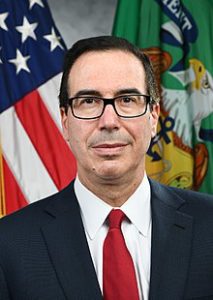
SECRETARY MNUCHIN: Thank you very much. Since the beginning of the Trump administration, the Treasury Department has been committed to putting a stop to Iran’s destabilizing activities across the world. We’ve engaged a massive economic pressure campaign against Iran, which remains the world’s largest state sponsor of terrorism. To date, we have issued 19 rounds of sanctions on Iran, designating 168 targets as part of our maximum pressure campaign. We have gone after the financial networks that the Iranian regime uses to fuel its terrorist proxies and Hizballah and Hamas, to fund the Houthis in Yemen, and to support the brutal Assad regime in Syria.
The 180-day wind-down period ends at 11:59 p.m. Eastern Standard Time on Sunday November 4th. As of Monday November 5th, the final round of snapback sanctions will be enforced on Iran’s energy, shipping, shipbuilding, and financial sectors. As part of this action on Monday, the Treasury Department will add more than 700 names to our list of blocked entities. This includes hundreds of targets previously granted sanctions relief under the JCPOA, as well as more than 300 new designations. This is substantially more than we ever have previously done. Sanctions lifted under the terms of Iran’s nuclear deal will be reimposed on individuals, entities, vessels, and aircraft that touch numerous segments of Iran’s economy. This will include Iran’s energy sector and financial sectors. We are sending a very clear message with our maximum pressure campaign that the U.S. intends to aggressively enforce our sanctions. Any financial institution, company, or individual who evades our sanctions risks losing access to the U.S. financial system and the ability to do business with the United States or U.S. companies. We are intent on ensuring that global funds stop flowing to the coffers of the Iranian regime.
I want to make a couple of comments on the SWIFT messaging systems since I’ve received lots of questions about this over the last few weeks. So I’d like to make four points. Number one, SWIFT is no different than any other entity. Number two, we have advised SWIFT the Treasury will aggressively use its authorities as necessary to continue intense economic pressure on the Iranian regime, and that SWIFT would be subject to U.S. sanctions if it provides financial messaging services to certain designated Iranian financial institutions. Number three, we have advised SWIFT that is must disconnect any Iranian financial institution that we designate as soon as technologically feasible to avoid sanctions exposure. Number four, just as was done before, humanitarian transactions to nondesignated entities will be allowed to use the SWIFT messaging system as they have done before, but banks must be very careful that these are not disguised transactions or they could be subject to certain sanctions. Thank you very much. — From the United States Department of State
*
AIPAC endorses new sanctions on Iran
 Strong and effective economic and political pressure is imperative to thwart Iran’s nuclear ambitions and to counter its regional aggression. The Trump administration will reimpose the remainder of U.S. sanctions on Iran lifted under the 2015 nuclear deal. These sanctions include tough measures targeting Iran’s financial, petroleum and transportation industries, while protecting humanitarian trade.
The American Israel Public Affairs Committee (AIPAC) appreciates the Trump administration’s continued determination to address all facets of Iran’s malign behavior and urges strict enforcement of all sanctions.
Already, U.S. sanctions have helped reduce Iran’s oil exports while the value of the rial plummets. To ensure that this economic pressure continues, it is critical that any countries granted waivers or exemptions from these sanctions continue reducing their purchases of Iranian oil over time. In addition, any violation of financial sanctions must be met with immediate consequences.
*
Brandeis Center launches program for law students to combat anti-Semitism
 The Louis D. Brandeis Center for Human Rights Under Law, in conjunction with Hasbara Fellowships, today launched the innovative JIGSAW Initiative, an unprecedented pilot program to train law students to combat and prevent resurgent anti-Semitism.
“As the tragic and horrific events in Pittsburgh made abundantly clear, anti-Semitism is escalating at a frightening rate in the U.S.,” stated Alyza D. Lewin, Brandeis Center President and General Counsel. “We must reverse this rising tide of anti-Semitism and ethnic racism, and there is no substitute for legal action. By properly training a select team of law students to work with undergraduates and utilize specific legal tools and strategy, we can begin to take the offensive in this battle.”
According to the FBI’s latest reporting, in the United States there were more incidents of anti-Semitism than all other religious hate crimes combined. The ADL reports anti-Semitic incidents rose 57% across the nation last year, and 89% on college campuses alone. Fifty-four percent of Jewish college students experienced anti-Semitism in 2014, according to a Trinity College-Brandeis Center nationwide survey, and only a year later, a Brandeis University study found that figure had spiked to nearly 75%.
JIGSAW stands for Justice Initiative Guiding Student Activists Worldwide and its motto is “Achieving Justice Piece by Piece.” Under JIGSAW, Brandeis Center lawyers will train a specialized corps of law students to utilize legal tools and expertise to combat both classic/white supremacist and anti-Israel anti-Semitism. The law students will focus on combating anti-Semitic incidents on campus by using university policies, and state and federal law. After they graduate, former JIGSAW Fellows will have the knowledge and personal expertise to address incidents nationwide.
JIGSAW Fellows will engage in both joint training with the Hasbara Fellows as well as a separate legal-based curriculum specifically developed by Brandeis Center attorneys. Topics to be covered include how to recognize both classic and anti-Israel anti-Semitism; utilize internal student government policies to combat anti-Semitism; understand university bias and discrimination complaint procedures; understand Title VI of the Civil Rights Act of 1964 and how to file complaints for violations of Title VI with the Department of Education’s Office for Civil Rights; understand and utilize protections provided by the First Amendment; be conversant in the state penal codes that apply to event disruptions and other criminal activity including assault and vandalism; and understand international law principles as they relate to Israel and BDS.
“In the pilot year, we plan to train 12 law students, and then to grow the program substantially each year, increasing to up to 50 the second year and 100 students after that.” stated Lewin. “Our goal is to select students who are dispersed geographically across the country, so that each law student can cover a geographic region, and to eventually expand the program to other countries, such as Canada and the U.K. We hope to arm a new generation of individuals with firsthand experience and an understanding of the federal, state and international law necessary to combat anti-Semitism so that they may assist college students now and remain engaged, effective advocates long after they graduate.” — From the Louis D. Brandeis Center for Human Rights Under Law
*
Yad Vashem mounts new online exhibit on Kristallnacht’s 80th anniversary
 The infamous Kristallnacht pogrom on 9-10 November 1938 was a pivotal event in the lead up to the Holocaust. In a few short hours, mobs across Germany and Austria swept through Jewish communities leaving in their wake devastation and death. As Holocaust survivor and historian Prof. Zvi Bacharach z”l testified: “German Jewry was so much a part of German society that the Nazi blow hit it from within. Until 1938, my parents never thought of leaving Germany.”
Eighty years after the Kristallnacht pogrom, Yad Vashem, the World Holocaust Remembrance Center, will upload a new online exhibition entitled “It Came from Within”, and will also host three commemorative events.
Lore Mayerfeld (née Stern) was born in 1936 in the city of Marburg, Germany. In 1938, her father, Markus Stern, was arrested and sent to the Buchenwald concentration camp. On the evening of 9 November 1938, the Kristallnacht (Night of Broken Glass) pogrom broke out. In just a few hours, antisemitic mobs broke into and vandalized Jewish homes and businesses across Germany and Austria. During the pogrom, 91 Jews were murdered, more than 1,400 synagogues across Germany and Austria were torched, and Jewish-owned shops and businesses were plundered and destroyed. In addition, the Jews were forced to pay “compensation” for the damage that had been caused. Approximately 30,000 Jews were arrested and sent to concentration camps many of who never returned home.
During the pogrom, non-Jewish neighbors offered to hide Marcus’s wife Kaetchen and their infant Lore in their house, to protect them from the anti-Jewish violence raging in the town. Lore, already in pajamas, hid with her mother at the neighbors’ until the pogrom was over. When they returned home, they found that their house had been destroyed, forcing them to move in with Kaetchen’s mother, Lena Kahnlein-Stern. Markus was released six weeks later from Buchenwald, thanks to a US visa he possessed, on the condition that he leave Germany right away.
After arriving in the US, Markus immediately set about getting his wife and daughter out of Germany. Eighteen months later, Kaetchen and Lore finally obtained US visas. In August 1941, they sailed from Portugal on the Mouzinho. Lore took Inge, the doll she had received for her birthday from her grandmother Lena, with her on her voyage. She dressed Inge in the pajamas she had worn the night of Kristallnacht. On 9 September, the ship reached New York, and the Stern family were finally reunited. Many members of Lore’s family who remained in Germany were murdered during the Holocaust.
Throughout the years, Lore kept Inge close to her. Even when she became a mother, she would not let her children play with the doll – which represented the life Lore left behind in Germany. In 2018, she donated Inge, as well as personal letters and documents, to Yad Vashem for posterity as part of the “Gathering the Fragments” project to rescue Holocaust-related personal items from being lost forever.
Lore’s story is one of the personal accounts featured in Yad Vashem’s new online exhibition marking 80 years since the Kristallnacht pogrom – “It Came from Within” All eleven stories featured in the exhibition represent a microcosm of the shocking experiences of the German and Austrian Jewish community that terrible night. Through the use of personal testimonies, stories, documents, photographs and artifacts the exhibition depicts the brutal blow suffered by the Jews during the Kristallnacht pogrom: the physical violence, the property damage, the synagogue desecration and destruction, and the horrifying sight of holy books and Torah scrolls in flames. The precious artifacts featured in the exhibition provide a window into the lives of those who experienced the events of 9 November 1938, and give a glimpse of German and Austrian Jewry before WWII. Some of the stories displayed are being told for the first time. — From Yad Vashem
The following was received from the Israeli American Council for Action:
“The IAC for Action strongly supports the Trump Administration’s decision to reimpose and toughen sanctions on Iran. By targeting this dangerous and radical regime’s critical sectors, the President has advanced U.S. national security interests and demonstrated our country’s commitment to global peace and security.
Renewing these sanctions will cut off revenues that the Iranian regime uses to bankroll terrorist groups, foment global instability, and fund nuclear and ballistic missile programs that directly target American troops and American allies in the Middle East.
We also commend the Administration for signaling that it intends to fully enforce these sanctions by aggressively targeting those who attempt to violate or circumvent them. We also support our government’s plans to pressure other nations to reduce imports of Iranian oil, driving a wedge between a corrupt state sponsor of terror and the international community.
The IAC for Action urges Congress to work with the President to use every tool possible to curb Iran’s regional ambitions. Iran’s destabilizing activities in the Middle East and support for terrorism around the world pose a serious threat to the United States and important allies, like Israel. It is also one of the leading propagators of anti-Semitic rhetoric in the Middle East and around the world.
Our coast-to-coast community will continue to advocate for U.S. foreign policy that uses all tools at our country’s disposal to address the Iranian threat.”