By Lawrence Krause
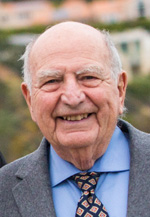
ENCINITAS, California — The world economy is changing rapidly, and the United States and China are the primary actors in promoting change. For the US, that has long been the case. Following the disruptions of World War II, the United States led in the development of a liberal world order. Every country that was part of it, benefited from it. However a disproportionate share of the economic gains went to countries other than the United States. That was inevitable and morally right because the US homeland survived the conflict without loss and had much gain. Industrial countries were major beneficiaries. Many developing countries also benefited. However, the greatest achievement of the liberal order was the incorporation of the Chinese economy. That permitted hundreds of millions of people to emerge from poverty.
The liberal system had weaknesses. It was inadequate in countering government efforts to abuse the trading system. France made efforts in that direction but were not very capable. The Japanese, however, were masters. They created a state-led catch-up model that worked to perfection, and was subsequently copied by South Korea, Taiwan, and China. With some discomfort, the system adjusted to Japan, South Korea, and Taiwan, but could not adjust to China because of its immense size. Thus China created pressures that fundamentally undermined that order.
For the United States, the end to its dominant position was inevitable as other countries caught up to the US in productivity and their self confidence was restored. Also the US failed to compensate the losers in our population from the negative consequences to them from globalization. The huge benefits of globalization to our society provided sufficient resources to make such transfers, but the political will was never mobilized. This contributed to the 2016 election results.
Along with an international trading system in disarray, other major challenges include global warming, mass migration of peoples, and the mal distribution of income within countries. However, the most disruptive event yet to be faced is the introduction of artificial intelligence (AI) into daily lives. Technical change has always been disruptive, even more than globalization, but AI is a dimension greater. Economic growth will be greatly stimulated, but the upheaval will be huge. The US need not reproduce the mistakes and inattention of the past, and it must seek its own solutions without help to or from other countries.
How can the United States deal with all of these challenges? The immediate issues can be dealt with with the familiar tools of the past; comprehensive immigration reform, adjustment of the tax code, and a moderate amount of trade protection. The danger may come from over-correction. Our basic system is sound and needs no revolution.
AI, however, is much more challenging. Our adjustment mechanism must be significantly enhanced. New tools may well be necessary. Many existing high paying jobs will be lost and the losses may be concentrated in particular locations. New jobs will be created that require greater skills. People will have to be trained and relocated.
The new tools might include a comprehensive retraining program. Rather than unemployment insurance, the government might pay the unemployed a living wage (adjusted for family size) to attend a retraining program. Since relocation is likely to be necessary, the government might buy the housing of the newly trained and help them resettle in a new location. Thus a government run housing bank will be accumulated. Also a formal state-to-state income transfer mechanism might become necessary. The US is blessed with a fifty-state political system that permits social experimentation. The huge disruption caused by AI will require experimentation.
It is obviously impossible to forecast the dimensions of the AI upheaval. However the ground is already shaking. It will be prudent to prepare for a tsunami and have the recovery corps in the ready.
*
Krause is a professor emeritus of international economics at UC San Diego. He received his doctorate from Harvard, taught at Johns Hopkins and Yale, researched and published under the aegis of the Brookings Institution in Washington, DC, and also served on President Lyndon B. Johnson’s Council of Economic Advisers
Larry are we looking a revolt if the political will do not respond to the upcoming changes?
Please put me on your Email list.
Larry:it seems I may have missed a significant number of papers and other thoughtful missives from you. Glad you have me on the list now. I really enjoyed your thoughts although “enjoyed” may not be the correct word. Surely eye opening and greatly appreciated. Hope you are well. Take care. C F & S, Norm