Editor’s Note: Mayoral candidate Barbara Bry lays out her vision for the City of San Diego. She and Assemblyman Todd Gloria face each other in the Nov. 3 runoff election.
By Barbara Bry
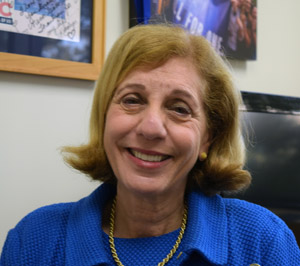
SAN DIEGO — San Diego, like the rest of America, is in a crisis due to COVID-19. The pandemic is not only a health crisis. It has shattered our economy with an unprecedented unemployment rate, devastating impacts on businesses of all kinds, and a loss of opportunities for young people just entering the workforce. It has deprived local government of the resources needed to serve our people, just when those services are needed more than ever. It has magnified existing inequalities in healthcare, housing, employment, education, internet access, and overall quality of life.
As Mayor, my priorities will be to restore and re-invent our local economy and get our people back to work, while addressing historic inequities and protecting our most vulnerable residents. We will accomplish this by re-imagining our future, laying the foundation for a more resilient way of living and working, developing effective public-private partnerships, and ensuring that our strategic decisions are based on facts, not fantasies.
As a longtime business entrepreneur, and for many years a single mother before assuming public office, I have faced struggles and challenges, and I feel great empathy for those struggling today. I know how difficult it is to start and manage a business in the first place, let alone under these circumstances. And I know how terrifying it is to face the prospect of losing one’s livelihood and becoming unable to provide for one’s family.
As a parent and grandparent, I am acutely aware of the severe personal and financial impacts this crisis, the extended lockdown, and the resulting economic recession are having on working families and individuals. Not only economic impacts, but also psychological impacts from prolonged stress and physical impacts from both the virus itself and delays in medical treatment.
But this crisis also provides us with an opportunity. It forces us to think big about ways to improve our community and make it more resistant to future disasters. I want us to take control of the current situation and turn disaster into opportunity.
San Diego Must Build on Its Strengths
Let’s start by examining our city’s strengths and what we need to do to build on them:
First, we are fortunate to have a highly diverse population, bringing together a collection of cultures and professional skills that make San Diego a uniquely attractive place to live and work. The combination of home-grown talent and immigrants has produced a highly energized, entrepreneurial economy.
Our great universities continue to produce cutting-edge research and talented young people, giving them a start professionally and bolstering our local economy. I worked at UCSD for many years, and later taught there. I will use the Mayor’s Office to build further relationships between the City and all our higher education institutions. Such partnerships will strengthen their roles in the community, enabling us to access their expertise and help the city to overcome its challenges.
We have a thriving biotech sector which is a leader in developing vaccines, test kits, and many other life-saving medical products, along with a large medical community putting those advances to work. Our thriving technology sector, with its famous entrepreneurial culture, has adapted wonderfully to working remotely. Naval and military facilities, as well as defense industries, dot this region and continue to be major contributors to our economy. Now, SDSU West has the potential to create a tech and biotech hub in Mission Valley bordered by a beautiful river park.
The innovation economy creates high-paying jobs and good service sector jobs around it. This is where I spent over 30 years of my career — first as an executive at CONNECT, helping to launch hundreds of tech and biotech companies, and then as an entrepreneur launching my own businesses. As Mayor, I will apply that experience by leading efforts to raise investment capital, to promote our city as a home for job-generating businesses, and to preserve the quality of life that will continue to attract productive workers.
Our proximity to the Mexican border ensures long-term synergy with the economy of the Tijuana region, which has developed a manufacturing center and vibrant arts and culture communities.
Some of these sectors currently are suppressed by the health crisis, but they will rebound once given the opportunity. Thousands of individuals cross the border daily in both directions for work, further connecting our economies. As Mayor, I will develop cohesive partnerships with officials, businesses, and universities in Baja—a true cross-border partnership similar to Crossborder Connect, which I started many years ago at UCSD.
Our vibrant arts and culture sector — including large institutions, neighborhood-based groups, and individual artists and writers — is essential to creating a sense of community. This is especially vital now, as we emerge from being isolated and look forward to sharing experiences as soon as it is safe to do so. While most of our institutions receive great support from the community, many rely on public buildings and public funding to present their art, concerts, and plays. As Mayor, I will ensure they receive the support they need to provide this critical service to our community, whether or not they are housed in city facilities.
Next, we have San Diego’s physical beauty and natural environment—our beaches, bays, canyons, hiking trails, lakes, and open spaces—that will soon include an expanded and accessible river park in Mission Valley. Their importance to our quality of life has become even more obvious to us during the restrictions imposed by the lockdown. Providing the resources to maintain and enhance these valuable features will be a priority for me as Mayor. And I will do that while investing in maintenance and improvements, without allowing these parks and recreation facilities to be further neglected or commercialized.
San Diego is fortunate to have such a diverse and unique set of neighborhoods, which together comprise our City of Villages. This provides the foundation on which we will build our future planning, community and economic development, and cultural growth. As Mayor, I will respect the identities and unique qualities of our neighborhoods, and I will ensure that city policies and programs, particularly in the areas of land use and environmental regulation, do not undermine them.
We Will Confront Our Challenges
At the same time, we must recognize some weaknesses, which made us vulnerable to the impacts of COVID-19 and which will make recovery more challenging.
Our economy is over-dependent on tourism, which is subject to disruption and produces many lower-wage jobs. It is uncertain when our Convention Center will again host events, and it is likely that attendance will be reduced for a long time to come. While the visitor industry will remain a critical component of our local economy deserving of support, I will work to diversify that economy to mitigate the impact of disruptions to this sector.
Our lower-income communities and minority populations continue to suffer from historical inequities, including exposure to environmental hazards, lack of internet access, poorer schools, access to employment centers and inadequate social services. These inequities have been magnified during the shutdown, as the industries employing many people from these communities have seen the highest level of closures and job loss. Meanwhile, communities of color have had disproportionately high infection and death rates, on account of less access to quality healthcare and a higher level of exposure in many of their workplaces. My administration will strive to address these inequities through improved services and increased emphasis on economic development targeting the most impacted communities.
Our future growth is more likely to come from our children and grandchildren than from new people moving here, so we must develop our local talent. As Mayor, my office will include a School Engagement Coordinator who will develop partnerships between employers and schools so that, from a young age, children are aware of the opportunities available to them.
We also must recognize some structural weaknesses that need to be addressed as part of the recovery process. All of us, including businesses and public agencies, will have less money to spend and invest than in the past. It may take several years before we fully recover from the losses we are suffering during this crisis.
Over a long period, beginning well before the current crisis, we developed a political culture that has very little accountability or transparency, and that has enabled poor, often costly decisions to be made by local officials. We no longer can afford that. I have been fighting that culture since I was elected to the City Council, and I pledge to carry on that fight even more intensely as Mayor.
The Playing Field Has Changed
COVID-19 already has changed many aspects of our communities and our daily lives. We should expect many of those changes to be permanent.
Large numbers of employees, especially office workers and those in the knowledge sectors, have been working from home. That includes much of city government. Employers largely have found this to be as efficient as having employees work in a traditional office environment. Companies and public agencies will need less office space, fewer meeting rooms, fewer parking spaces, and less in the way of job-site support services. The Planning Department and other city agencies need to monitor these trends and take them into account in making land use decisions.
Closing of retail businesses during the lockdown has vastly increased on-line shopping. Many smaller businesses, as well as some larger chains, are closing selected locations or going out of business entirely, leaving substantial empty commercial space in storefronts and malls. This trend is likely to continue. I want the city to identify the newly available commercial spaces, and then either help new businesses locate in them or facilitate converting them to other uses.
Meanwhile, the increase in on-line shopping is generating far more deliveries. That means more delivery vehicles in both residential and commercial districts, and increased demand for short-term parking. That requires rethinking the layout of our streets and our parking regulations.
The closure of stores, restaurants, bars, and other retail and entertainment establishments has caused sales tax revenues to the city to drop sharply. Absence of visitors has meant a plunge in hotel transient occupancy tax collections. Job losses will result in lower income tax revenues to the state, which will have less resources to share with local governments.
It also will cause some default or delay in property tax payments. Tourism is expected to be the last business sector to recover. So, in the short-term, I will emphasize assisting the growth of sectors which have greater immediate potential, and which produce higher-paying jobs, such as research and development and manufacturing.
Large numbers of workers operating from home will increase demand for businesses which previously thrived in commercial areas, such as restaurants, bars, coffee shops, and convenience stores, and workers will want those businesses within walking distance. Again, I will see that our land use decisions accommodate those changing needs.
The pandemic has highlighted the importance of affordable child-care, particularly for our front-line workers who need to be available 24 hours a day. Individuals who work from home cannot perform at required levels while also dealing with caring for children in their home, and part-time workers cannot afford childcare. These services have never been available enough or affordable enough, and now many providers may have gone out of business. I will collaborate with other government and business leaders to address this on a regional level, throughout our regional economy.
More people working from home will reduce motor vehicle use, increase pedestrian traffic, and promote use of small vehicles such as bicycles and scooters. I will ensure that the city’s transportation policies and programs accommodate those developing preferences, while protecting the safety of both riders and pedestrians and working to minimize negative impacts on businesses and residences.
The crisis has made clear who are essential workers – first responders and medical professionals, certainly, but also grocery and drug store employees, agricultural workers, construction workers, and trash collectors, among many. These workers are disproportionately Hispanic, African-American, and/or recent immigrants. Their historic lesser access to nutritional diets and quality healthcare, as well as their concentration in industries that require workers to operate in crowded conditions, have left them more vulnerable to COVID-19 in the first place, yet they are being expected to continue working in most instances.
Transit use has plummeted and is likely to remain low for some time, due to concerns over maintaining distancing and sanitation. Ride-hailing services and, eventually, autonomous vehicles, may divert even more people from transit. Transit remains an important element in our climate change planning, so I will press the transit agencies to maintain the necessary hygiene and safety standards needed for the public to feel comfortable returning to buses, trains, and trolleys, but we need to take these changes into account in future transportation planning.
This city, more than most, relies on social, recreational, and cultural facilities to support the quality of life expected by both residents and visitors. After being closed for many weeks, these are gradually reopening, but with strict rules. I will champion maintaining these facilities, as well as expanding them in currently underserved communities.
Needs and Opportunities
With a view toward improving our current conditions and protecting ourselves against future catastrophes, we should seize the opportunity to make changes in several key areas:
Universal Broadband Internet Access
The lockdown has demonstrated the importance of digital tools for residents and further exposed the digital divide. Universal broadband internet access is essential for everyone—for learning, telecommuting, accessing information, telehealth, shopping, social interaction, and participation in local government. Over the last two months, I have attended many community Zoom meetings where the ability to attend from home has actually boosted participation. I have seen the same pattern with City Council and commission meetings. As the pandemic ends, we need to continue to offer digital options. As Mayor, I will lead an effort to develop a municipal internet strategy through leveraging our existing fiber network and our partnerships with carriers so all residents have access to what has become an essential service.
The Work Environment
Working from Home. Businesses and public agencies should capitalize on the experience of recent months and maximize opportunities for employees to work from home. Some major companies already have announced their intention to make this arrangement permanent. Doing so will have multiple benefits for the businesses and for the community, though it also raises some new issues that need to be addressed.
Workplace Physical Changes. To the extent workers need to be in congregate environments – offices, manufacturing plants, construction sites – physical changes will be necessary. These may include reconfigured floor plans, better separation of work spaces, increased cleaning and sanitizing, improved ventilation, and touchless access systems. Extra protective measures will be needed for employees who have to operate in close quarters, such as food handlers and utility plant workers. The Governor may issue standards for such changes. If not, my mayoral office will.
Use of Surplus Space. Even with those changes to work places, there likely will be significant amounts of surplus office space. Companies and government agencies will need to plan for how to convert that space to new uses. Satellite offices and parking structures may be converted to community facilities or residential use, for example. Some space may be converted to on-site childcare, health services, or convenience stores. I will instruct the Development Services Department to facilitate permitting for such changes, to ensure that the best use is made of existing structures and spaces.
Job Restructuring. City government itself can contribute to these shifts. Through job sharing and staggered work schedules, we can further reduce the need for office space and parking. And upgrading technology will allow us to increase productivity with a smaller workforce. By applying these same methods, I will make sure the City keeps important facilities like libraries, recreation centers, and parks open for longer hours, including weekends.
Economic Development
Small Business Assistance. Small businesses are being hurt especially severely by the lockdown. The impact has been greatest in lower-income, minority, and immigrant neighborhoods. My experience as Associate Director of the CONNECT organization, on behalf of new companies in the tech sector, will be particularly useful here. The City will support small businesses by providing them with technical assistance to obtain state and federal financial aid and by reducing wherever possible local regulations for businesses below a certain size. In order to maximize the benefits of these measures, the outreach, design, and implementation of programs on financing and professional development for small businesses, many of which are owned by recent immigrants, must be conducted in a manner that maximizes access by the target audiences. Further, by improving the access of small businesses to city contracts, and by assisting development of those that hire from and serve their immediate communities, I will ensure that many of them will be able to recover and thrive.
Environmental Justice. Just as lower-income communities and communities of color have been disproportionately impacted by COVID-19, they have historically been disproportionately impacted by bad environmental conditions. Poor air quality from proximity to freeways and industrial facilities accounts for high rates of asthma. Exposure to toxic chemicals results in higher incidence of various cancers. Lack of parks and other healthy recreation options contributes to overall poor health. I support including a strong, enforceable Environmental Justice Element in our City General Plan, and will work to see it implemented through future planning and land use decisions.
Job Development Priority. As Mayor, I will promote job creation activity in areas south of I-8 and particularly areas closer to the international border and closer to affordable housing. Increasing jobs there will reduce the need for travel northward, including workers crossing daily from Mexico. Otay Mesa, for example, can become a manufacturing hub for such clean and vital products as pharmaceuticals. Most major pharmaceutical companies already have a presence in San Diego by virtue of having acquired or invested in a San Diego biotech company and/or having a research facility here, so this would be a natural growth opportunity for that industry and would generate high-paying jobs in the ideal location. The federal government is seeking to have more of that manufacturing occur domestically, so the City should pursue financial and other incentives to bring those companies here.
Border Synergy. San Diego and Tijuana comprise a single economic region, and the border must be seen as an economic asset. Synergy between businesses and workers on both sides is key to a thriving regional economy, and especially to the localized economy of areas such as San Ysidro. Massive public investment in the border crossing facilities already has occurred. As we recover from COVID-19, we must build on that investment to make legal movement of people and goods as seamless and efficient as possible. Proximity to the border is an advantage to a variety of service, trading, and manufacturing businesses, so the City will actively identify and recruit such companies to generate jobs and bolster the economy in the southern part of the City. I will collaborate in every way possible with my counterpart in Tijuana, as well as with the appropriate state and federal agencies, to make all this a reality.
Restoring Tourism. We need to restore the tourist economy as rapidly as safely possible, as it currently accounts for about 200,000 jobs in the region and draws about $12 billion annually in visitor spending. The City, along with other local governments, must work with the visitor industry to make certain its gradual reopening now underway is done strictly according to plan, so that an influx of visitors doesn’t cause a second surge of infection and a further shutdown.
Cultural Tourism. As we restore this sector of our economy, I want us to diversify it further. Our variety of ethnic communities, coupled with our outstanding art and cultural offerings, provides us with the opportunity to promote cultural tourism in addition to recreational visits and conventions. We will enhance this opportunity, and also better serve our local communities, by aiding a wider variety of cultural groups in obtaining financial and technical support, and by encouraging partnerships between community-based groups and larger institutions. This form of tourism will support local businesses and cultural institutions far beyond whatever hotel taxes it may generate.
Economic Diversification. As much as we value our tourist economy, however, we must acknowledge that we are too reliant on it for jobs and tax revenues. In the 1980s, city leaders realized that our economy was overly dependent on defense and aerospace, so they worked with UCSD to form CONNECT to capitalize on commercializing the research coming out of UCSD and institutes like Salk and Scripps. In 1986, we had fewer than a dozen local life science companies. Today there are hundreds, and the research conducted in San Diego continues to develop new industries such as bio-algae, genomics, cyber-security, and autonomous vehicles. I want to make this highly successful public-private partnership a model for future development in other economic sectors. This is our city’s future.
Key Workers. We have seen during the lockdown how dependent we are on certain groups of workers whom we usually take for granted, especially those involved in health care, food sales, sanitation, and deliveries. Most are among the lowest-paid professions. I will advocate for living wages and affordable housing so these important workers will be able to stay in San Diego.
Reducing Commuting. In the long run, we need to develop a regional model for dispersed employment centers, one not so concentrated in the northern parts of the City and in North County, especially when so much of the workforce lives far to the south and currently commutes long distances. While many office workers will continue to work from home, those in research, manufacturing, and construction, among others, will continue to commute, so I will prioritize shortening those work commutes. In addition to establishing new job centers south of I-8, we should incentivize development of a tech-focused job center downtown, where much of that industry’s workforce already lives and where the amenities exist that are desired by younger tech workers. And, citywide, we need to facilitate locating small-to-medium size businesses close to residential areas.
Childcare. The spread-out nature of our communities and our workplaces makes childcare a regional issue. Every family with young children faces the challenge of finding quality, affordable, conveniently located childcare providers. That difficulty dominates decisions about housing, employment, and social interaction. It impacts women especially, as a large proportion work in lower-wage service jobs and struggle to afford childcare. It also forces them to give up jobs if their spouse or partner has a better-paying job and one of them has to assume childcare responsibility. All of this threatens to set back women’s economic gains by decades. I experienced this myself years ago as a working mother of two young children. As Mayor, I will initiate collaboration among our city, the County, and other local cities, to promote development of more childcare programs and facilities, located where they can best serve our residents’ needs, and facilitate establishing a larger network of private in-home childcare facilities.
Workplace Equity. Just as the City can play an important role in dealing with childcare needs, it can address continuing pay equity issues. Women and racial minorities continue to be undercompensated at most professional levels and underrepresented in higher-level positions. State and federal law govern in these areas, but the City can set a strong example by ensuring that its own workforce is representative of the community, that its employees are treated equally as to compensation and professional advancement, and that city contractors and suppliers are strictly held to compliance with fair employment laws.
Youth Opportunity. Ensuring that our youth receive the necessary training is vital to the economy we are building. On-line learning during the lockdown has proven to be less effective than classroom instruction and interaction, so I want to see the public schools reopened as soon as safely possible. At the same time, I will encourage school officials and administrators to use this as a chance to consider how their curriculum and methods can be revised to make them more relevant to the needs and opportunities presented in the local economy. This must include a greater understanding of the intersections among different educational disciplines and various economic sectors. With the right learning foundation, the partnerships I have proposed between employers and schools will give students access to paid internships in tech, biotech, non-profits, local government, health care, and other higher-paying industries, thereby launching them on the best possible career tracks.
Facilities and Services
Parks. As lockdown requirements are eased, people are flocking to parks, beaches, and other outdoor recreational venues. Keeping those places open, maintaining them well, and enforcing health and safety rules will be critically important. I will support funding the necessary park rangers, lifeguards, museum staff, and maintenance workers. I also will advocate for locating more parks and other facilities in currently underserved communities. To support these plans, I will first order a comprehensive parks assessment, something not done in this city in decades. Based on that, we will make decisions about locating additional facilities and fairly allocating park resources.
Leisure Venues. Similarly, people want to return to theaters, concert arenas, restaurants, bars, and other entertainment venues, most of which are privately owned or operated. I will ensure that the City and the operators of these facilities jointly enforce rules for safe use, including social distancing, sanitizing, and occupancy limits. The challenge will be implementing rules which ensure safety while allowing the facilities to operate profitably. Moving as much activity outdoors as possible will help, and I will have the Development Services Department formulate appropriate regulations to enable that to happen in a safe manner. This is an area where the lockdown may have to be eased in multiple small steps, testing the effects at each step.
Schools. I believe our public education system and institutions can play an enlarged role in our communities. Many schools already engage in hosting community meetings and events. As Mayor, I will collaborate with school district authorities in a comprehensive review of how school facilities which sit unused during parts of the day and week can become centers for delivery of child care, health services, and other vital community-level services. This potentially will have the dual benefit of saving the City the cost of constructing separate new facilities and enabling school districts to avoid closing currently underutilized neighborhood schools.
Libraries. Public libraries have similar potential to be more diversified in their service to the communities in which they are located. They are especially suited for this, as they draw a broad range of residents already. Following the examples of other cities, I want to see libraries distributing information on vital services, hosting job training programs, making internet and wi-fi services more available, and housing child-care facilities.
Infrastructure
Streets. With fewer people driving to work, and more people staying in their neighborhoods, we have the opportunity to rethink the design of many of our public rights of way. With over half of car trips being less than three miles and twenty percent being less than one mile, there is great potential to divert many of them from motor vehicle use. While originally designed mainly for cars, major thoroughfares will need to be redesigned as complete streets, including wider sidewalks and protected lanes for bicycles and other small vehicles. A few streets may be converted entirely to pedestrian use, especially in areas of high residential density such as downtown.
Transit. San Diego’s widely spread development pattern has always made creation of a transit system challenging, and health concerns from COVID-19 have greatly worsened the situation. Yet, San Diego has basic elements of a useful transit system, with the new line connecting north to UCSD and UTC, the #1 employment area in the city. This transit line, scheduled to open at the end of 2021, needs to serve as a model for solving both first-mile and last-mile issues. I will press the MTS to review its use and routing of buses, which offer much greater flexibility than trolleys or trains.
More immediately, the city and the transit agencies must restore public confidence by modifying all types of transit vehicles for social distancing, promoting safety and cleanliness, converting to cashless payments, and demonstrating convenience. Increased transit use will take pressure off our streets and freeways. But transit still will suffer from the “last mile” problem, making it even more important that we facilitate use of small vehicles (and eventually autonomous vehicles such as those being developed at UCSD) to cover the final distance from transit stops to ultimate destinations.
Housing, Land Use and Development
Basic Principles. I support a plan for development of new housing that respects and preserves as much as possible the character of our diverse City of Villages, something that is essential to our quality of life. The current shortage of affordable housing is spawning some reckless proposals, many of them emanating from the so-called YIMBY movement. Rather than fostering unrestrained development, the proper role of the City under my administration will be to collaborate with residents to determine what kind of development is appropriate at which locations, and then allow that development to proceed by right, without additional discretionary approvals. This will require extensive public discussion and education, which can be conducted through the important process of updating community plans.
Short-Term Rentals. As Mayor, I will enforce our existing Municipal Code prohibition against short-term rentals in residential neighborhoods, thereby returning up to 16,000 single-family homes and condominiums to the market. I will advocate for the City Council to block the practice of apartment owners turning some of their units into visitor accommodations. It is more important than ever that we protect our residential neighborhoods and our legal hotel industry.
Locations. New housing needs to be located appropriately and in a way that does not overwhelm existing neighborhoods. We have opportunities to create new housing without causing such impacts, as the expected reduced need for commercial space due to widespread working from home and shopping on-line will make many surplus offices buildings, retail stores, and parking structures available for conversion. I will ensure that city staff do everything possible to facilitate taking advantage of those opportunities.
Transit-Oriented Development. The City already has eased regulations on new residential development along transit lines and updated community plans in many areas near transit. But I oppose waiving parking requirements in those zones, as that will just result in burdening adjoining neighborhoods.
Mid-Range Housing. My administration will put greater emphasis on mid-range housing development along major streets and adjacent to existing residential areas. New units can be built far less expensively in buildings three or four stories in height than in high-rise structures. They also are more compatible in scale with existing neighborhoods of two-story homes and apartments. If developed in sufficient volume, they will not only significantly alleviate the current housing shortage, but also provide sufficient numbers of residents to support the neighborhood-serving businesses now missing in many older areas. The Complete Communities Plan currently being developed by city staff is not sensitive enough to the needs of individual communities and would allow too much density and too much height in the wrong places. While I support the concept of having a diversity of housing and other development in all our communities, I want that to take into account the needs of existing residents as well.
Preserving Affordable Housing. At the same time, I will act to preserve existing affordable housing. A recent study showed that thousands of units affordable to average San Diegans are at risk of being demolished to make way for new, more expensive development, and that thousands more are scheduled to have affordability requirements expire. I want to be particularly careful that new development does not displace existing residents from the limited amount of affordable housing now available. My administration will collaborate with housing agencies and with property owners to preserve these units and their affordability. This is far more cost effective than financing and building new ones in their place. At the same time, I want to expand the supply of low-moderate income housing, through such methods as making available surplus public land, prioritizing permit processing, and reducing fees.
Homeless. Addressing homelessness requires a multi-pronged strategy, starting with focusing on the root causes, which include mental health and substance abuse. Solutions require psychological counseling, drug detox programs, and job training. Much of this must be addressed by the County and the State, which have far greater resources and responsibility. However, at the city level, my administration will put trained professionals on the street to engage with homeless individuals, halt the destruction of low-income housing units, provide shelters and transitional housing to meet immediate needs, press the County to adequately fund mental health and addiction programs, and prepare homeless adults to be integrated into the workforce.
Improving Communities. Community plans form the backbone of our city planning process. Keeping them current is essential, so I have strongly supported regular updating of these plans. The key to successful development policy is demonstrating that it will enhance, or at least not damage, the quality of life of existing residents. That means the impacts of new development, particularly community infrastructure needs like parks and street improvements, must be addressed concurrently with the development, if not earlier. Through development agreements with builders, the city can obtain such improvements, as well as addressing current infrastructure deficiencies, in return for the value created from land use modifications.
Climate Change
The city’s Climate Action Plan needs to be updated and revised, taking into account new opportunities that have become available. Much of the current plan depends on reduction of greenhouse gas emissions by reducing the number of motor vehicle trips. Such a reduction has occurred during the lockdown and can continue at a lower rate as more people work remotely at least part of the time—which is why we need to incentivize this practice. Unfortunately, COVID-19 will have long-term negative impacts on transit use. Electric vehicles, electric buses, and electric trucks will also play a key role in reducing greenhouse gas emissions.
We are more likely to achieve the goal of reducing the frequency and length of motor vehicle trips by taking the steps I have suggested to promote economic development – creating new job centers in closer proximity to residential centers and in areas like downtown that are already well served by transit.
The San Diego region is highly vulnerable to effects of climate change – notably sea level rise, increased wildfires, reduced water supply, and loss of wildlife habitat. I want our city to set an example for others. To that end, as Mayor I will ensure that the Climate Action Plan is regularly reviewed and improved, and that the standards it sets are enforceable.
City Government
Budget. The COVID-19 crisis has exposed how much the city relies on unstable revenue sources, especially tourism-related sales and transient occupancy taxes. Whatever financial aid the city receives from the state and federal governments to address the current crisis will not be ongoing and cannot be relied on to fill future gaps in the budget. As Mayor, my budget proposals will do a better job of matching the City’s expenses with realistic revenue projections. That will be enhanced by pursuing the economic development and real estate development strategies I support. I also plan to order a close analysis of current departmental budgets, particularly with an eye toward reducing the bloated middle-management ranks.
From my experience in starting and operating businesses, I understand the complexities of the budget process. We are in a particularly challenging time right now on account of our greatly reduced revenues. As Chair of the City Council Budget Committee, I am fighting to preserve the most important programs and services, while realizing that some painful cuts must be made. In the long run, however, if we are to preserve San Diego as the kind of city we want, we will need to generate the revenues to support that vision. That is where my economic development proposals are especially important.
Police Reform. I support a multi-faceted approach to addressing reform of our Police Department, consisting of the following:
- I will continue to support a ballot measure for the establishment of an independent Police Review Commission.
- I will work with the Police Chief to revitalize community-oriented policing — an approach that embeds officers in a neighborhood, encourages officers to get out of their patrol cars and get to know and collaborate with residents, and encourages a proactive approach to neighborhood problem-solving. San Diego successfully pioneered this approach but has retreated from it in recent years because it requires more officers and more training and is more expensive.
- I will work to recruit officers who are committed to the community-oriented policing approach — who live in and are a part of the communities they serve, then give them the training and support they need to deal with the complicated problems neighborhoods face.
- I will work with a police chief who is committed to a community-oriented policing approach.
- I will acknowledge that we’ve asked officers to take on issues — from mental health and substance abuse to homelessness and truancy — that go far beyond traditional law enforcement responsibilities. We need to invest in counselors, social workers and others who can support the work of police officers and free them to focus on their primary responsibilities.
- I will continue to collect and release data on police conduct so we can assess their performance. A San Diego State University study documented racial profiling in traffic stops. A more recent ACLU Campaign Zero Report found that San Diego police stop Black people at a rate 219 percent higher than white people. We need to be conscientious about collecting, analyzing and releasing such data on a regular basis.
- I support Councilwoman Monica Montgomery’s proposal for an Office on Race and Equity with the mission of healing race relations in our city.
- I will pursue the “8 Can’t Wait” reforms, including a ban on chokeholds and strangleholds, enforcing de-escalation policies, requiring a warning and exhausting alternatives before shooting, and establishing a duty to intervene by officers if another officer is violating use-of-force guidelines.
Police officers have a very tough job. They deserve our respect and support when they discharge their responsibilities professionally and ethically. They deserve the resources and training necessary to do their jobs well. And they deserve compensation commensurate with the challenges and risks that go with those jobs. But elected officials have an obligation to demand that they protect and serve all residents and must be prepared to hold them accountable when they fail to do that.
Elections. The state has recognized the health hazards of in-person voting by committing to send all voters mail-in absentee ballots, while still maintaining a limited number of in-person voting locations. The city should work with the County Registrar of Voters to do the same for municipal elections.
Final Thoughts
I’ve had a diverse career—as a journalist, small business owner, entrepreneurship educator, and elected public official. In addition, I founded two organizations that empower women (Athena San Diego and Run Women Run), have served on several non-profit organization boards, and most importantly, served as Team Manager for my two daughters’ Bobby Sox softball teams. I became a single mother when my two daughters were 8 and 11, and I was fortunate to find love again and marry my second (and last!) husband Neil.
Throughout my career, I have done my research, asked questions, listened, and then relentlessly pursued a goal. These traits continue to be key parts of who I am, defining how I operate.
At City Hall, I have stood up for transparency and accountability. I was the first elected official to oppose the SoccerCity take-over of the Mission Valley stadium site, because I realized that the best long-term investment that our city could make was in education and our environment. That is why I supported SDSU West’s plan, which will allow the expansion of a great university and the construction of a beautiful river park for all of San Diego. Similarly, I took the lead on the City Council in demanding an independent review of the Public Utilities Department when large numbers of customers were being grossly overcharged. Most recently, I have been the leading advocate for reopening and reversing the disastrous deal by which the City acquired the office building at 101 Ash Street, a deal now shown to have been based on poor information and political expediency.
My life experiences have made me understand that, whatever strategies we pursue to recover from COVID-19 and the resulting lockdown, we are likely to face risks. Yet, taking no action contains risks, as well – physical, psychological, and monetary. Studies of persons hospitalized with the coronavirus have found that nearly all had at least one major chronic health condition and that most of those had multiple chronic conditions. Those are predominantly older people, but not all. It underscores the importance of an overall public health strategy, particularly since about half of our population has at least one underlying health condition, with those numbers being even higher in the Hispanic and African-American communities.
I am optimistic that together we can rebuild our city and do it in a way that improves the quality of life of all our residents.
I choose a tomorrow anchored by San Diego’s unique and diverse collection of neighborhoods. I’m confident my grandkids — and yours — will thank us for it.
Let’s get started!
*
Barbara Bry currently represents the 1st District on the San Diego City Council.