Updated and corrected on Friday, April 10.
By Barrett Holman Leak in San Diego
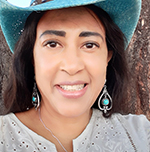
While the national media often treats the intersection of Black and Jewish identities as a modern novelty, the history of Jews of Color in the Americas is centuries deep. Long before the term “bridge-building” became a social justice buzzword, individuals were living at this intersection, weaving together the traditions of two resilient peoples. I am one of them.
The history of the Black Jewish experience in the Americas is not a modern development; it is etched into the very expansion of this country. Our history is rooted in pioneers like Solomon Franco, who in 1649 became the first (Sephardic Jew (North African heritage) to set foot in Massachusetts, As early as the 18th century, we find stories like that of Elizabeth Mendis in Savannah, Georgia, who was a woman of African and Jewish descent born to Sephardic Jewish father and African mother (who was likely a slave). In the 19th century, figures like Lucy Marks of Philadelphia’s Mikveh Israel congregation became known for their devout participation in Jewish life, despite the racial hierarchies of the era.
Take the story of Solomon Nunes Carvalho (1815–1897). A Jew of Sephardic descent, Carvalho was a brilliant artist and pioneering photographer who pioneered the use of the daguerreotype—the first publicly available photographic process—under extreme, outdoor conditions that were previously thought to be impossible for the technology. His work was revolutionary not just because of what he photographed, but how he adapted the science of photography to survive the American frontier.
He joined Colonel John C. Frémont’s 1853 expedition across the Rocky Mountains. His lens captured the American West long before it was settled, proving that Jews of Color were pioneers in the truest sense—navigating the literal and cultural frontiers of our nation. When not traveling, he lived in Charleston, South Carolina.
By the early 20th century, Black Jewish presence evolved into organized movements, such as the Commandment Keepers in Harlem, founded in 1919 by Rabbi Wentworth Arthur Matthew, which asserted a distinct Black Jewish identity that challenged the status quo.
By the 20th century, this presence evolved into organized movements in major U.S. cities during the Great Migration. In Chicago, Beth Alpha Congregation became a significant hub for Black Jews in the mid-20th century. Today, that legacy is carried forward by Rabbi Capers Funnye of Beth Shalom B’nai Zaken Ethiopian Hebrew Congregation. Rabbi Funnye, a cousin of former First Lady Michelle Obama, made history as the first African American rabbi to be ordained by the Israelite Rabbinical Academy and made history as the first African American rabbi to be elected to the Chicago Board of Rabbis. He was named chief rabbi of the International Israelite Board of Rabbis in 2015.
In that same Chicago soil under Funnye’s mentorship, Rabbi Tamar Manasseh has risen as a modern powerhouse. Ordained through the Israelite Rabbinical Academy, she is the founder of Mothers Against Gun Violence (MASC) and famously hosts “rabbi on the block” sessions, proving that Jewish ritual and Black community safety are inextricably linked.
This legacy continues to expand today. In Washington D.C., the recent opening of two new congregations—Ohev Sholom (rebranding as a center for diverse Jewish life) and Minyan Segulah—highlights a national shift toward honoring the multiethnic reality of the Jewish people. Additionally, there are two new Black congregations — Ohel Eidot Chemdata (Modern Orthodox) and Kehillat Sankofa, a community that centers Black Jews in the District of Columbia-Maryland-Virginia (DMV) region.
In recent weeks, I have seen this national movement reach a fever pitch in the fight against antisemitism and racism. Earlier in March, I participated in the American Jewish Committee’s (AJC) second annual Latin-Jewish Seder here in San Diego. On March 30, I was in Los Angeles where I was asked to serve as a facilitator and table leader for a 300-person seder with guests such as Tiffany Haddish, Ziggy Marley, and his Israeli wife Orly. Hosted by Stephen S. Wise Temple and Van Jones’ Exodus Leadership Forum, we engaged in conversation designed to build bonds blended with traditional readings of the Exodus story.
On April 7, overlooking San Diego Harbor atop the University Club, I joined the Anti-Defamation League (ADL) of San Diego and many leaders (like Dr. John Warren and Donna DeBerry) from the city’s Black community, for the ADL’s inaugural seder event. National organizations such as the AJC and ADL are finally realizing that the rise of antisemitism and the rise of racism are inextricably linked.
When I arise in the morning and all day long, I carry my ancestors with me, especially my African and Jewish foremothers and forefathers. I carry my womanhood. I live every moment in the intersection. I do not live in a binary world of Black over here and Jewish over there. I am, like other Jews of Color, the living bridge at the center. That is why I founded Playing Together Project (PTP) in 2022 here in San Diego,
I am a multiethnic Black Jewish woman. For me, this work is not a professional assignment—it is a life’s calling. PTP, which operates as a Jewish non-profit within the ecosystem of the Jewish Federation of San Diego. It began quietly four years ago with a single dinner for just six people. We didn’t have a celebrity guest list or a massive foundation grant or a making list; I had matzah ball soup, collard greens, kosher roast chicken and tzimmes (Jewish yams and sweet potatoes with raisins and prunes) made with my own hands, word of mouth and most of all, a vision for non-transactional solidarity.
That vision has grown through the power of “sweat equity” and community partnership. With the support of personal friends who are also members from my synagogue and two other synagogues, PTP established the first Jewish Solidarity Booth at the Cooper Family Foundation’s annual Juneteenth Freedom Festival, bringing a Black Jewish presence (with the ADL and Lawrence Family Jewish Community Center joining some years) to that beautiful Black community celebration. In February 2025, we hosted the inaugural Black-Jewish Clergy Breakfast, creating a historic space where Black clergy and members of the San Diego Rabbinical Association sat at the same table to discuss the shared moral obligations of our city, the commonalities of our theological beliefs and topics such as racism and antisemitism, our youth and education.
On April 24, 2026, the Playing Together Project will host yet another Black-Jewish Shabbat dinner. With the goal of tikkun olam—Hebrew words for the concept of repairing our broken world—Black and Jewish clergy, local leaders (civic, business, education) in San Diego are invited to attend the evening. We will gather for good music, good food, a presentation by Dr Henry Louis Gates, Jr and some good conversation.
We will continue with PTP’s vision of a solidarity that moves through “We did this for you and we are done” and/or lacks knowledge about the alliance (read the fourth edition of “Black Power, Jewish Politics”) and move forward to “Now is the time to come together and jointly claim the freedom that is ours – because neither the Black community nor the Jewish community can defeat racism and antisemitism alone.
Those who hate Jews hate African/Black people too. Our common enemies – white supremacy/white Christian nationalism and members of extremist hate groups benefit from our being divided. It is their goal to divide us then destroy us. But they lose power and we gain our rightful freedom when we join together. Come join us for Shabbat dinner! (bit.ly/shabbat0424) (Limited seats, so register soon!)
*
Barrett Holman Leak is the founder of Playing Together Project. She is also an educator, resilience coach and freelance journalist based in San Diego.
Quite informative article, thank you Ms. Leak! Happy Passover!
Pleased that you mentioned as part of your historical breakdown, my maternal grandfather the late Chief Rabbi W.A. Matthew, founder of the Commandment Keepers Ethiopian Hebrew Congregation in Harlem USA and branches around the US and Caribbean. I was ordained a rabbi by my grandfather at the age of 16. I practice law in NYC. Rabbi Matthew (with some students, including teenage me) was featured in a brief appearance in the Belafonte film The Angel Levine, released in 1971. Was a wonderful and memorable experience when Harry Belafonte came by the synagogue during the filming. (On Youtube and Tubi)
Regards, Rabbi David Matthew Dore’