SACRAMENTO, California (Press Release) — Two priority bills sponsored by Jewish California – the nation’s largest statewide coalition of Jewish organizations – advanced through their final policy committees in their second house Tuesday, marking major steps toward protecting Californians of all backgrounds from hate-motivated violence at community events and ensuring Jewish Californians are accurately included in state data collection.
The Assembly Privacy and Consumer Protection Committee advanced SB 1387 (Stern) – ensuring Jewish identity is recognized in state ethnicity data – on a 15-0 vote. Simultaneously, the Senate Emergency Management Committee advanced AB 1836 (Gabriel) – expanding the California State Nonprofit Security Grant Program to cover offsite community events – on a 9-0 vote.
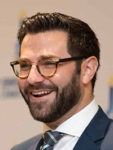
“Every Californian deserves to live without fear and to be recognized for who they are. Together, these bills protect the safety and identity of our community – two commitments that are inseparable in this moment,” said David Bocarsly, CEO of Jewish California.
SB 1387 – Recognizing Jewish Ethnicity in State Law and Data
Authored by Senator Henry Stern (D-Sherman Oaks) and sponsored by Jewish California, SB 1387 ensures that Jewish identity is captured in the state’s ethnicity data collection systems, in addition to existing religious categorization. When ethnicity data is collected by state agencies, this bill ensures that “Jewish” must be one of the options. All data would be reported publicly only in aggregate, without personal identifying information.
Jewish identity is widely understood as encompassing ancestry, history, language, culture, community, and shared values – not solely religion. These are characteristics of an ethnicity. Yet California statute and data collection systems treat Jewish identity only as a religion. This results in the systemic undercounting, misclassification, and misunderstanding of Jewish Californians, undermining equitable policymaking, appropriate research funding towards health outcomes, and the accurate tracking of antisemitic hate crimes.
The data bears this out. According to the Pew Research Center, a majority of American Jews say religion is not central to their Jewish identity. 52% of U.S. Jews cite ancestry and 55% cite culture as central to their Jewish identity, while only 36% cite religion. Despite this reality, California demographic systems fail to capture how the majority of Jewish Californians engage with their identity. This gap has real and compounding consequences.
SB 1387 is consistent with a long-standing legislative principle that California has applied to many communities, having enacted recent laws requiring more detailed demographic data collection for Asian American and Pacific Islander subgroups (AB 1088, 2011; AB 1726, 2016), Black subgroups (SB 189, 2022), LGBTQ+ communities (SB 957, 2024), and Middle Eastern and North African populations (AB 91, 2025). Extending the same recognition to Jewish Californians is both equitable and overdue.
“For years, California has recognized that good data drives good policy – and has extended that recognition to community after community,” said Bocarsly. “Jewish Californians deserve the same. This bill ensures our community is neither invisible nor misrepresented in the systems that shape public health, education, and civil rights decisions.”
If passed, California would become the first state in the nation to recognize Jewish identity as an ethnicity.
SB 1387 will next be heard in the Assembly Appropriations Committee in August. If passed, it will be voted on by the full Legislature by the end of August.
AB 1836 – Securing Community Events Against Hate
Authored by Assemblymember Jesse Gabriel (D-Encino) and sponsored by Jewish California and Equality California – the nation’s largest statewide LGBTQ+ civil rights organization – AB 1836 expands the California State Nonprofit Security Grant Program (CSNSGP) to allow nonprofits to use grant funding for security at offsite community events – including religious observances, LGBTQ+ Pride celebrations, cultural festivals, and marches and protests. The bill also ensures that nonprofits without a permanent physical location remain eligible for funding, closing a critical gap that has left many gatherings unprotected.
The need is urgent and growing. According to the California Attorney General’s annual Hate Crimes report, hate crime events increased 52% from 2020 to 2024, with anti-Jewish and anti-Black bias events among the most prevalent. At the same time, demand for the CSNSGP has reached record levels. More than 1,600 organizations applied in the most recent funding cycle, collectively requesting over $325 million. Since the program’s inception in fiscal year 2015, the state has awarded nearly $229 million in grants to 1,271 high-risk nonprofit organizations – a testament to how critical this support has become.
The mass shooting at a Hanukkah celebration at Bondi Beach in Sydney, Australia, is a sobering reminder that Jewish communal life – including offsite gatherings – requires security support. AB 1836 ensures that Californians can assemble, celebrate, and practice their beliefs without fear.
“Our communities don’t just gather behind security doors – we gather for religious holidays in the park, we demonstrate, and we host public festivals and parades,” said Bocarsly. “Vulnerable communities should not have to worry about safety when practicing our traditions in the community. But with hate-motivated violence on the rise, the cost of securing these gatherings has become prohibitive for many organizations, threatening the very community-building that defines us. We thank Assemblymember Gabriel for his leadership in solving this problem, and we’re proud to work alongside Equality California to make sure every Californian can come together without fear.”
AB 1836 will next be heard in the Senate Appropriations Committee in August. If passed, it will be voted on by the full Legislature by the end of August.
*
Preceding provided by Jewish California.