By Eileen Wingard in La Jolla, California
“Pops Around the World,” The Jewish Community Symphony’s annual pops concert, was presented to a nice-sized audience in the David & Dorothea Garfield Theatre of the Lawrence Family JCC on Sunday afternoon, August 16.
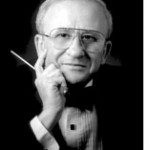
Founder and conductor, David Amos, joked that because he could not raise his right shoulder as high as usual due to a minor injury, that day, he was a semi-conductor. He did, however, conduct the opening John Phillip Sousa March, The Free Lance March; His Excellency March, by Harvey Fillmore, and, at the end of the second half, the challenging Polonaise from the opera, Eugene Onegin by Peter Illitch Tchaikovsky.
With his bassoon teacher, Carlos Mullenix, having played in the Sousa Band, it is no wonder that Amos knows the march repertoire so well and always elicits such spirited renditions of that genre from his musicians.

The concert featured the beautiful tenor voice of Rabbi Hanan Leberman, current rabbi and cantor of Tifereth Israel Synagogue. He has appeared in operas in Israel, Italy and the United Kingdom and in the touring Broadway musical, Soul Doctor. He received operatic training as well as his rabbinical ordination, in Israel, and served for many years in the IDF.
In the first half of the program, Leberman sang the Flower Song from George Bizet ‘s opera, Carmen, and Una Furtiva Lagrima from Gaetano Donizetti s opera The Elixir of Love, and in the second half, he sang La Donna E Mobile from Giuseppe Verdi’s opera, Rigoletto. The arias showcased his beautiful sound, his large range, his dramatic fervor and his excellent breath control.
Before Rabbi Leberman’s Carmen aria, Robert Zelickman conducted the Carmen Suite No. 2.
The musicians, under Zelickman, captured the contrasting moods of the various movements, March of the Contrabandists, Habanera, Nocturn, Chanson du Toreador, La Grande Montante, Danse Boheme. The Nocturn’s violin solo was played with confidence and good intonation by concertmaster, Bryce Newall, the Habanera was sultry and nuanced, and the Chanson du Toreador had a spirited trumpet solo played by principal James Gaudi. Carmen is arguably the best-loved opera in the repertoire.
The second half included a waltz, two Strauss polkas and a novelty called The Whistler and his Dog, which had excellent piccolo whistling sounds and the principal violist imitating a barking dog. The composer was Arthur Pryor, trombonist in the Sousa band. In addition to the Tchaikovsky Polonaise, the concluding part of the concert featured Highlights from Oklahoma, the first musical that paired Rodgers and Hammerstein, and whose many songs were all familiar hits.
The medley contained such tunes as Oh What a Beautiful Morning, the Oklahoma Theme, People Will Say We’re in Love, Surry with the Fringe on Top, Poor Judd is Dead, The Farmer’s Dance, and I Can t Say No. Although it kept switching meters and tempi, it was well-navigated by the orchestra under Zelickman’s careful direction.
The concert ended with the obligatory Sousa March, The Stars and Stripes Forever, and left the audience clapping joyfully.
Five concerts are being planned for the coming season of the Jewish Community Symphony. All are on Sunday afternoons at 3 p.m. in the David and Dorothea Garfield Theatre of the Lawrence Family JCC: October 25, February 21, April 25, June 6, August 1.
*
Eileen Wingard. a retired violinist with the San Diego Symphony, is a freelance writer specializing in coverage of the arts.