By Alex Gordon in Haifa, Israel
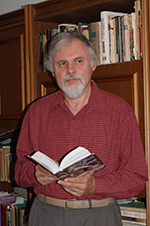
After the implementation of the Molotov-Ribbentrop Pact, the Jewish population of the USSR increased by approximately two million people. The annexation of Western Ukraine, Western Belarus, the Baltic States, Bessarabia, and Northern Bukovina resulted in the total Jewish population of the USSR reaching five million people. As a result of the division of Poland in September 1939, a territory with a Jewish population of between 1.2 and 1.3 million came under Soviet control, with over 100,000 living in Lvov, which constituted about a third of the city’s population. Along with the Jews of Lvov, Yakov Parnas, a professor and director of the Institute of Medical Chemistry at Lvov University, joined the USSR. He organized this institute and directed it from 1920 to 1941.
Jakub Karol Parnas was born on January 28, 1884, in the city of Ternopol in the Lvov region, into a Jewish family. He graduated from the Technical University in Berlin-Charlottenburg (1904), continued his studies in Strasbourg (1905) and Zurich (1906-1907), where he was a student of the Jewish Nobel Prize-winning chemist Richard Willstätter. In 1907, Parnas defended his doctoral dissertation at the University of Munich. Since 1913, he was an associate professor at the University of Strasbourg, and in 1916, he was appointed head of the Department of Physiological Chemistry at the University of Warsaw. In 1920, he moved to Lvov, where he established a school of Polish biochemists.
Parnas remained in the USSR after the annexation of Western Ukraine. He was a world-renowned scientist and could have found a job at any Western university, but he did not want to leave his many Lvov students. During the years of World War II, he was in evacuation in Ufa (1941–1943). He became the organizer and the first director of the Institute of Biological and Medical Chemistry of the Academy of Medical Sciences of the USSR (1944 – May 1948).
Parnas’s main works are dedicated to the tissue metabolism of carbohydrates and the enzymatic processes underlying muscle contraction. In 1935 (together with the Polish scientist Tadeusz Baranowski), he discovered the process of glycogen breakdown involving phosphoric acid. He provided a theoretical analysis of the mechanism of glycolysis and alcoholic fermentation and the connection between glycolysis reactions and other transformations in muscles. He became one of the pioneers of applying the isotopic method in biochemistry in the USSR. He traveled across Europe, collaborating with universities in Cambridge, Naples, Strasbourg, Ghent, and Zurich.
On May 8, 1942, Parnas was elected an academician of the Division of Biological Sciences (biochemistry). In the same year, he became a laureate of the Stalin Prize of the first degree, was awarded the Order of Lenin and the Order of the Red Banner of Labor. In 1943, he became one of the founders of the Academy of Medical Sciences of the USSR. In 1944, he was elected a full member of this academy. He was a member of the German Academy of Natural Scientists “Leopoldina” and a corresponding member of the Polish Academy of Sciences, as well as an honorary doctor of the Sorbonne and the University of Athens. In 1943, Parnas organized and became the head of the Laboratory of Physiological Chemistry of the USSR Academy of Sciences.
Parnas became a magnet for biochemists from all over the country. At Parnas’s “Thursdays,” his regular scientific seminars, deep issues of tissue metabolism and the biochemistry of muscle contraction were discussed, and Parnas himself amazed listeners with his erudition and boldness of hypotheses. At the same time, according to contemporaries, he remained a person alien to Soviet society. Parnas’s student, Professor Evgenia Rosenfeld, recalled that the scientist, who had worked in Europe for many years, was genuinely perplexed by the absurdity of some Soviet practices: “Parnas had a poor understanding of the peculiarities of our life. For example, he was very surprised by the idea of planning science. At the academic council, he could perplexedly ask: “How can one plan a discovery?” It turns out that everyone writes in the plan what has already been done, but what’s the point of that? When a rally was organized at the institute in connection with the 1947 monetary reform to express support and approval for this event. Parnas, the director of the institute, spoke and asked: “What is the purpose of this reform? If it is so that people, as we say in Poland, tighten their belts, then biochemists should consider whether this will lead to a reduction in the number of proteins, fats, and carbohydrates below the level necessary for feeding the population.” His speeches did not conform to the Soviet mindset.
Parnas was a member of the Jewish Anti-Fascist Committee.
On October 17, 1947, Parnas submitted a request to be relieved of his duties as the director of the Institute he had founded, as by that time he was seriously ill with diabetes and suffering from heart failure. The order relieving Parnas of this position was signed on May 28, 1948. People surrounding the scholar noted his severe mental and physical condition. He sought permission to go to Poland because he could not adapt to the rigid ideological framework of Soviet science. He did not become a Soviet person. This country was foreign to him. But it reciprocated fully: he was also a stranger to it.
On the day of his sixty-fifth birthday, January 28, 1949, Parnas was arrested as part of the campaign to arrest members of the Jewish Anti-Fascist Committee, which took place from January 13 to 28, 1949. He was arrested “for conducting intelligence activities against the USSR on behalf of a foreign state.” The Jewish Anti-Fascist Committee is a public organization created in the USSR in 1942 to mobilize political and financial support for the fight against Nazism among the world’s Jewry. The committee was also involved in raising funds for the needs of the Red Army and documenting the crimes of the Holocaust. On November 28, 1948, a decree was issued by the Soviet government to dissolve the Committee.
The reason for the dismantling of the Jewish Anti-Fascist Committee was the authorities’ concerns due to the Committee’s growing independence, its ties with the West, and the idea of creating an independent Jewish state. This coincided with the beginning of a state campaign of antisemitism and the fight against “cosmopolitanism.” Stalin took a course toward isolating the USSR from the West and strengthening Russian nationalism. Independent Jewish public life, led by the Jewish Anti-Fascist Committee, began to be perceived as a threat to the state’s monopoly.
Yakov Parnas was a model enemy of the Soviet regime: fifty-five years of life outside the USSR, extensive international connections, immense scientific renown, ties with international and Soviet Jewry. He did not accept Soviet reality. The Soviet authorities persecuted scientists because fundamental science was much less important to them than their dogmatic ideology. They did not like or know how to appreciate the great biochemist, a Jew, especially a foreign Jew, an outsider and a stranger. Yakov Parnas was a representative of the European scientific elite, a brilliantly educated intellectual and polyglot, shaped in Western European universities, and worked in independent Poland. A native of Austria-Hungary, raised in the traditions of European culture, a member of prestigious foreign academies, he found himself in the USSR as a world-renowned scientist. A true scientist found himself in a world of anti-science.
The Soviet authorities made a mistake, as Parnas was not suitable for their show trial: due to his severe physical condition, he died in the internal prison of the USSR Ministry of State Security in Moscow during the first interrogation on January 29, 1949, from a myocardial infarction. The fact of his death was concealed for a long time. They continued to receive packages from his wife for several years. The wife was not arrested but was evicted to a communal apartment; Academician Parnas’s apartment was sealed immediately after his arrest, and the fate of his archive is unknown. The location of Parnas’s burial has not yet been made public. On April 3, 1954, a decree was issued to terminate the criminal case against Parnas due to the absence of a crime in his actions.
*
Alex Gordon is professor emeritus of physics at the University of Haifa and at Oranim, the Academic College of Education. He is the author of 12 books.