By Alex Gordon in Haifa, Israel
On November 6, 1943, the Soviet Army liberated Kiev from the Nazis. In the city, the horrific tragedy of Babi Yar—a large ravine in Kiev where German occupiers had executed tens of thousands of Jews—was uncovered.
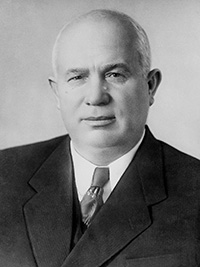
In 1944, Nikita Khrushchev, First Secretary of the Central Committee of the Communist Party of Ukraine and Chairman of the Council of People’s Commissars of Ukraine, delivered a speech at the first session of the Supreme Soviet of the Ukrainian SSR describing the suffering endured by the population during the years of occupation, but he made no mention of the tragedy of the Jews.
Khrushchev mentioned the mass murders of “Soviet people” by the Nazis, but he did not mention the extermination of Jews, whose only “crime” was that they were Jewish. The silence regarding the Jewish Holocaust, imposed by Ukraine’s top leader for ideological reasons, was a manifestation of state antisemitism.
Encyclopedias state that the policy of state antisemitism in the USSR began in 1948 with the arrest of members of the Jewish Anti-Fascist Committee and the condemnation of “rootless cosmopolitans,” the elite of the Soviet Jewish creative intelligentsia; however, it turned out that the correct date for the start of the campaign of state antisemitism was 1944.
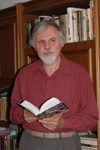
Léon Leneman (April 6, 1909–January 1997), a Polish French journalist and writer of Jewish descent, wrote about this discovery in French in a book Tragédie des Juifs en U.R.S.S. (Éditions Desclée de Brouwer in the “Questions actuelles” collection, Paris, 1959).
Leneman was born in Warsaw, Poland. He graduated from the Yiddish-Hebrew high school of M. Krinski, and he went on to study in the pedagogical department of Warsaw University and in the Warsaw senior school for journalism, which he competed with distinction in 1931. From his youth he was active in the Zionist movement. He was chairman of the school organization of Yardenya and Hateḥiya (The Revival). Until September 1939 he lived in Warsaw.
After the war broke out, he left for the Russian occupied area, and from there in June 1940 he was sent by the NKVD [Soviet secret police] to camps in the far north of the Komi Soviet Socialist Republic with a sentence of five years. He was freed due an amnesty for Polish citizens in August 1941. Until 1944 he lived in hunger and want, wandering through Russia from the distant north to Uzbekistan.
From late 1944 until April 1946, he lived in Moscow, and later until November 1947 in Poland; from there he moved to Paris. He was a member of the central committee of the general Zionist party in France, of the association of writer-survivors, and of the Jewish writers’ and journalists’ association.Leneman was well acquainted with Rosa Khodes, a Polish communist of Jewish descent, from whom he learned important details about the Soviet state’s antisemitic policies.
After the Nazis were driven out of Ukraine, the Council of People’s Commissars of Ukraine was headed by Nikita Khrushchev, who held that position concurrently with that of First Secretary of the Central Committee of the Communist Party of Ukraine (Bolsheviks). Among the vast array of tasks facing the restored government, a new one emerged—one that was entirely peripheral to the leadership: either to engage in an open struggle against antisemitic sentiments or to turn a blind eye to them.
Khrushchev delivered speeches at various official forums describing the suffering of the Ukrainian population during the years of occupation, but he made no mention of the Jewish tragedy. Instead of addressing the consequences of German antisemitism and the crimes committed by their Ukrainian collaborators, Khrushchev launched a campaign to conceal and cover up the murders of Kiev’s Jews committed by them.
Leneman’s published book included the testimony of Rosa Khodes, who survived the entire occupation in Kiev thanks to “Aryan” documents in the name of Maria Helminska and remained there for about another year after liberation. Like Leneman, Khodes-Helmińska fled Nazi-occupied Poland to the USSR. In early November 1944, at a meeting of the editorial staff and employees of the Polish Press Bureau in Moscow—which Leneman attended—she recounted her experiences in Kiev.
Before the outbreak of World War II, Maria Helmińska had served several years in a Polish prison for communist activities. She survived the Nazi occupation of Kiev thanks to forged documents that listed her as Ukrainian. During the occupation of Kiev, she was involved with the underground, and after Kiev’s liberation, she was hired to work in Nikita Khrushchev’s secretariat using forged “Aryan” documents. But Rosa-Maria decided to tell the truth.
After truthfully filling out her application, she was fired. Shocked by her acquaintances’ explanations that, according to an unspoken directive, Ukraine was supposed to restrict the appointment of Jews to positions of responsibility, Helmińska appealed to Khrushchev personally.
Their conversation was tense. Helmińska burst into tears, to which Khrushchev replied:
“I understand that you, as a Jewish woman, view this issue from a subjective perspective. But we are objective: in the past, Jews committed many sins against the Ukrainian people. People hate them for that. We don’t need Jews here in our Ukraine. And I think it would be better for Ukrainian Jews, who survived Hitler’s attempts to exterminate them, not to return here… They’d be better off going to Birobidzhan (Birobidzhan is a town and the administrative centre of the Jewish Autonomous Oblast, Russia, located on the Trans-Siberian Railway, near the China–Russia border.) … After all, we’re here in Ukraine. Do you understand? This is Ukraine. And we have no interest in the Ukrainian people interpreting the return of Soviet power as the return of the Jews. All I can do for you is return your questionnaire. “Write another one without mentioning your Jewish heritage. Use your forged documents, which state that you are a ‘pure-blooded Ukrainian.’”
In the article German Fascists Must Not Live (November 4, 1943), the Soviet writer of Jewish descent Ilya Ehrenburg began his Black Book of Jewish victims of the Nazi genocide as follows: “Who can imagine Ukrainian and Belarusian cities and towns without Jews? I saw this wasteland, these terrible ruins. Beneath them—a sea of blood. […[ THERE IS NOT A SINGLE JEW LEFT IN UKRAINE. The Germans have done their work.”
After the Nazis retreated from Ukraine, surviving Jews returned there—those who had managed to leave in time and save themselves. Khrushchev faced a dilemma: to condemn the Nazis for their crimes and help the returning Jews live in liberated Ukraine on an equal footing with other Soviet citizens, or to remain silent about the Nazis’ crimes against the Jews and adopt the Nazi ideology, according to which Jews are an inferior race. Khrushchev chose the second option. He led Ukraine until December 1949, during the antisemitic campaign known as the “struggle against cosmopolitanism,” one of whose victims was my father.
Khrushchev sharply criticized Yevgeny Yevtushenko’s poem “Babi Yar” (1961) and Dmitri Shostakovich’s Symphony No. 13, “Babi Yar” (1962), which was based on it, for their “political immaturity” and one-sided portrayal of the Holocaust without giving due emphasis to the victims of the entire Soviet people. On memorials and in official reports, the murdered Jews were referred to simply as “peaceful Soviet citizens.” The word “Jew” was not mentioned.
The authorities prohibited the erection of monuments with inscriptions in Yiddish or stating that it was specifically Jews who had been exterminated. The Soviet government erased the national identity of the victims of Nazism. The authorities acknowledged the tragedy of all the peoples of the USSR but denied the Jewish people the right to a separate commemoration of the catastrophe. They feared discussion of the collaboration of the local population—especially the Ukrainian population—in the extermination of the Jews, for the socialism preached in the USSR was based on the “friendship of peoples.” Under the banner of “socialism,” a policy of state-sponsored antisemitism was carried out.
*
Alex Gordon is professor emeritus of physics at the University of Haifa and at Oranim, the Academic College of Education, and the author of 12 books.