Photos and story by Sandi Masori in Los Angeles

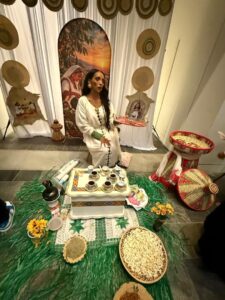
Sigd is an Ethiopian Jewish holiday observed 50 days after Yom Kippur. It’s a time to renew the community’s commitment to God and to each other, with a longstanding connection to the dream of returning to Jerusalem. Whereas Yom Kippur is about the individual’s relationship with G-d, Sigd is all about the community.
The afternoon began with a ceremonial walk to an overlook on the Skirball grounds. Before heading uphill, we were invited to choose a rock. It could represent something we’d been carrying that we wanted to release, or something we wanted to hold onto and recommit to. At the end, we could leave it in a basket or keep it.
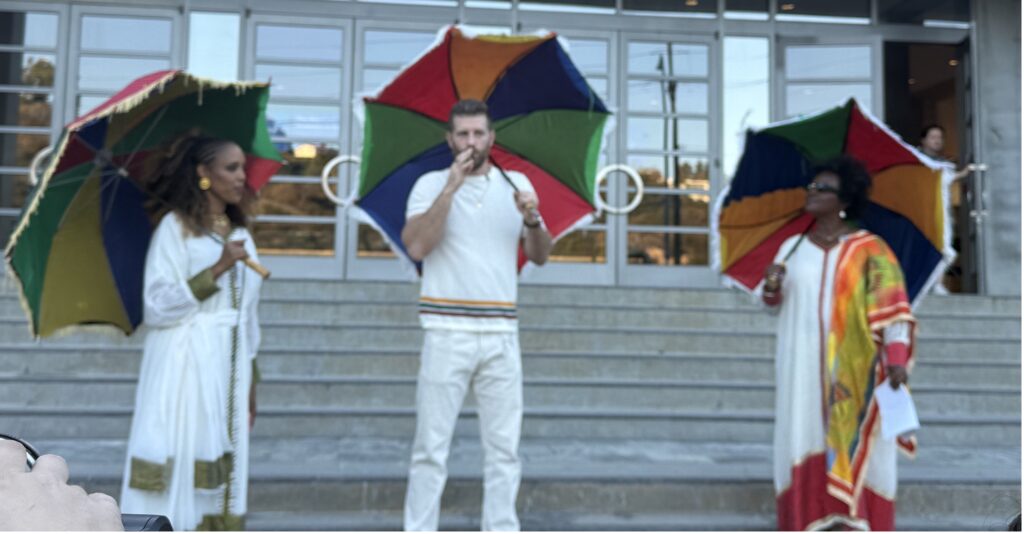
Barhany led the ceremony with Dr. Beza Abebe. In Ethiopia, Jewish communities gathered on a mountain for Sigd to renew their covenant with God and pray for Jerusalem. It also gave relatives from different villages a chance to see each other.
Abebe, Platt and Barhany gathered with the traditional colorful umbrellas, called jontela. Barhany explained their spiritual significance and their practical purpose of providing shade from the Ethiopian sun.
“But the beauty within this particular holiday is yearning for the unification of the people of Israel, and that is the intention,” she said.
She encouraged us to introduce ourselves to someone we didn’t know. They might even be a cousin, she suggested.
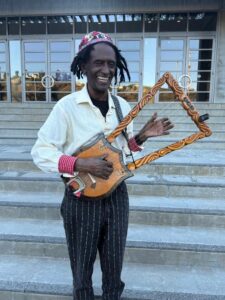
Musician Alula played the kirar, a stringed instrument. People volunteered to read passages in Hebrew and English, and we said Shehecheyanu together and sang familiar songs, including “Hinei Mah Tov.”
Abebe asked us to think about what we wanted to contribute to our communities.
“The most important part is that the people came together,” she said.
Ethiopian Jews had kept their dream of reaching Jerusalem alive across generations, for over 2600 years in fact. What could we commit to doing together now?
When attendees shared their thoughts, one spoke about Ethiopian Jewish friends and coworkers quietly telling him they were Jewish after seeing his kippah. He wanted them to feel fully welcome within the Jewish community. That stayed with me.
After the walk, we gathered for an Ethiopian coffee ceremony, with Abebe demonstrating. This is not your grab-a-cup-and-run kind of coffee.
The beans start out green and are roasted before being ground and boiled. There are three servings, with time to talk while the next round is prepared. You’re supposed to stay awhile.
One presenter described roasting coffee after Shabbat as part of her household’s Havdalah practice. Popcorn and kolo, a roasted grain snack, accompanied the coffee. There were also savory vegan sambosas at the reception.
Barhany signed copies of Gursha, and displays introduced Ethiopian Jewish crafts. Dinner came from Rahel Ethiopian Vegan Cuisine, with music from Anbessa Orchestra.
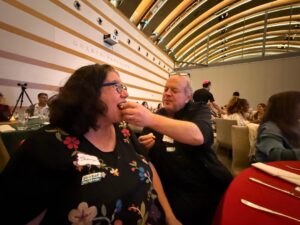
Barhany also explained gursha, feeding another person a morsel of food as a gesture of affection. She described doing it with dabo (Ethiopian challah) and encouraged us to try feeding one another.
“We can break barriers through feeding one another,” she said.
At our table, Sheryn Obsatz and Michael Gordon got into it, feeding each other pieces of dabo bread.
I asked Platt how the event came together. He’d learned about Sigd through conversations, including having Barhany on his podcast. She already had a Skirball book signing planned, and the Skirball had been talking to him about doing an event. He brought the plans together, hoping to connect Jewish communities and welcome non-Jewish friends too.
That idea of finding each other had been on my mind too.
Earlier that weekend, I was at a conference for the vertical drama industry. I noticed Black attendees networking and actively offering to help each other. It was beautiful to see.
I felt certain there were plenty of Jewish people there too, but nobody seemed to be talking about it.
Now, I’m generally loud and proud about being Jewish. When I mentioned cloning my son’s voice from a recording of his bar mitzvah for an animated character, people came up to me afterward.
“I’m Jewish too,” they said, almost in a whisper.
That made me sad. I wanted us to be finding each other and helping each other just as openly. Hearing the attendee at Sigd talk about his friends made me realize that we are all experiencing this.
It also made me appreciate events and traditions like Sigd that are about the community and bringing people together. These traditions not only give us reasons to gather, they keep us connected to our people, and boy do we need each other right now. I’d like to think that being in community with our people can also help us be willing to speak up and be loud and proud and together perhaps we might dampen antisemitism even a little. We have strength in numbers.
We need more events that bring us together, because G-d knows the world is ready to tear us apart.
And when you see those events, go. Even if you’re tired, even if you’re not feeling it. Get out, go to the event, be part of the community. We need each other. And you may even learn about another culture and get a great meal from it as well.
*
Associate editor Sandi Masori covers food, culture and theater.