Story and photos by Shor M. Masori in La Jolla, California
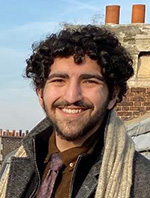
Samara Kaplan met Drew Schwartz at a Hillel event last spring and then spent the summer interning at his company, 1-2-3 Wellness. They kept working together, and when she told him about the November 3 gathering, he wanted to return to support her and Hillel.
Hillel of San Diego’s CEO, Karen Parry, told me that career help frequently topped students’ requests. Hillel created the Jewish Networking Hub in response, and Parry notes that it has made roughly 120 mentorship matches so far. Many pairs met for the first time that evening. Parry wants graduates to find jobs here and have people they can turn to in San Diego’s Jewish community.
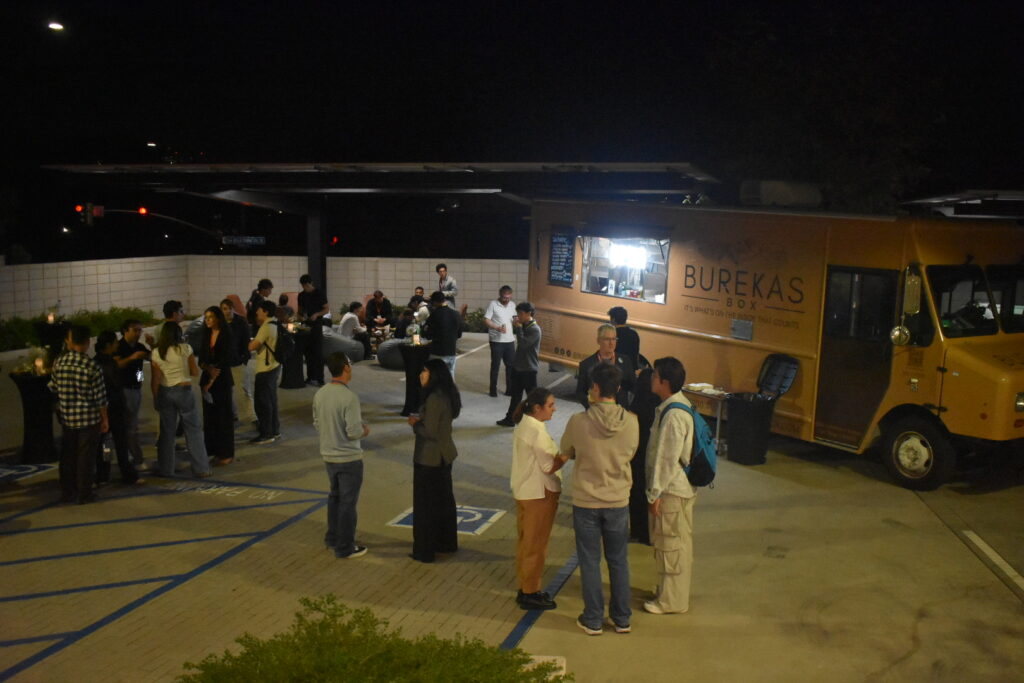
Parry counted more than 100 community members at The AI Advantage: How to Get Hired & Get Ahead, held at the Beverly and Joseph Glickman Hillel Center. Burekas Box catered the evening with tasty kosher food from what founder Rabbi Shalva Michaels described as California’s first fully electric food truck.
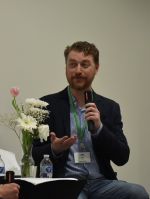
Students led interviews with alumni experts Rabbi Adam Lutz, co-founder of Campus Stack, a software consultancy for synagogues, schools and nonprofits; Josh Kirsch, a senior staff software engineer at Qualcomm; and Michael Slawinski, a principal data scientist at CrowdStrike.
Lutz recognized the temptation students face when AI can do their homework. He had felt much the same way about his graphing calculator. Why did his teacher insist he do calculus by hand? Later, working as an engineer, he needed to develop an equation himself and had to draw on the calculus he had practiced all those years before.
He sees the same problem when his engineers lean too heavily on AI. “They get a little bit tired, lazy,” he said. “It works, but it’s way too complicated.” He knows enough about programming to catch the unnecessary complexity. Students need to develop that judgment too, becoming what he calls a “connoisseur” of the agent’s work.
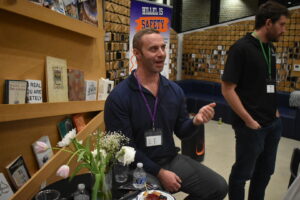
When I asked Slawinski what he would do if he were graduating now, he said, “I would dive deep into AI.” He would use it to learn, asking it to explain a difficult concept and then asking again about whatever still did not make sense. Students’ answers in a job interview will show how much they actually learned, he said.
Kirsch, who interviews applicants for his team, wants to hear them explain their thinking. A mistake gives him something to discuss with a candidate. Keep going, he advised, and ask questions back. He said it’s quite obvious when applicants are trying to answer live with AI or focus so much on prepared answers that they stop engaging with the interviewer.
He offered an example from his audio software team: an applicant interested in road-noise cancellation could describe a school project that sparked that interest. A list of programming languages they can work with would tell him much less. “Everyone can put those words on paper,” he said. AI can help a résumé reach his desk and, nowadays, often screens out applicants it deems a poor fit, but the applicant still needs to give him a reason to be interested.
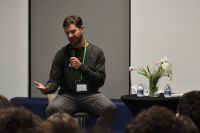
Kirsch liked applicants who were already thinking about what they could learn to help the team, such as one who asked during the interview what they could do on day one to impress him. He urged students to research the company’s work and explain how they could contribute. Lutz stressed that they also need the ability to carry out that work. He had hired people who passed an interview but, within weeks, showed they could not do the job.
Kirsch worries about how students will gain the experience employers expect. If AI handles the assignments junior engineers once learned from, how will they gain enough knowledge to replace senior colleagues when they retire? When I asked which careers students should pursue, he hesitated to steer anyone away from an interest, although he questioned the future of software jobs. He pointed to work involving human contact and creativity.
To students weighing their options, Lutz passed along a question his aunt had asked him: what did he want his working days to look like? Did he want to work with people? Set his own schedule? His memories of Hillel and Jewish summer camp led him to pursue synagogue work, where he discovered how much he enjoyed working with people and children, and he decided to become a rabbi.
He urged students to find a problem they could tackle and start a project. Running a business gives him control over his schedule.
Slawinski sees another complication in his field, cybersecurity. AI makes attacks easier to attempt and produces unfamiliar code that can trigger false alarms. He said the industry needs lighter AI models that can run on a computer’s regular processor while examining much more information about its activity. To make that possible, software would first group related events, such as file changes and network connections, so the models could assess how those actions fit together and whether they signal an attack. He described cybersecurity as a game of catch-up, with defenders facing more attempts as AI makes it easier for people to try breaking in.
When a student asked how to get started in data science and eventually build a business, Slawinski recommended taking internships and keeping in touch after an initial connection on LinkedIn. Kirsch told his audience that he had found it difficult to approach people when he first left school. At Qualcomm, he learned to reach out to colleagues on other teams. This helped him learn about their work and find people who could help put his ideas into practice. It also made that first approach seem a lot less scary. Most people just want to help if they can.
Internships came up again when I spoke with Gabe Douek, founder of Vantage Point Travel, and returning attendees Kaplan and Schwartz. Douek was already mentoring an SDSU student and considering hiring an intern.
Kaplan and Schwartz now make videos helping young children name their emotions and respond when they feel angry or overwhelmed. Kaplan said the evening introduced her to professionals working in fields she could imagine pursuing, as well as to students from other campuses.
Through Hillel’s mentor and mentee sign-ups and upcoming events, like the next Networking Hub on April 15th, students can meet professionals to learn from and work with. Parry also invited readers to support Hillel, helping more students find what Kaplan found last spring: someone willing to give them a start.
*
Shor M. Masori is a freelance writer based in San Diego.