By Barrett Holman Leak
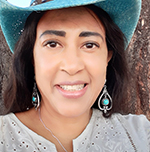
SAN DIEGO — Growing up, I loved watching my mom go bowling in her weekly women’s bowling league. It wasn’t just a game; it was her community. She had her bowling outfit, her special shoes, and that amazing crimson bowling ball. It was a powerful thing to see these women together, strong and supportive, projecting a ball and smashing it into ten pins while slamming down Fresca and applauding each other in their victory dances.
These women knew that while their separate scores were important, it was about the group score. They watched their team move up the brackets in the league. Their social capital, the community they established among themselves for support (like childcare, small money gifts and loans, a listening ear, borrowed clothing, and more), was high. Cooperation and strong social structures in their case led to greater success and a group trophy
We rely on networks, organizations, and associations to address crucial issues like education, health, caring for veterans and the elderly, and justice. As Americans, we employ networks or organizations and on a large scale, government departments to collectively address education, health, housing, law, and justice, thus displaying American democratic freedom and liberty.
In the 1990’s Harvard sociologist Robert Putnam did research that resulted in a very famous book, Bowling Alone. He explained that people were bowling individually but were not joining leagues as my parent did. This Putnam viewed as a loss of social capital. Networking was seriously declining. His later research on religion showed that religious attendance reversed that trend. Regular Shabbat attendance correlates with higher rates of altruism and kehillah or community. This connection is stronger than factors like education, income, or even ethnicity. Shabbat attendance rather than simply our Jewish theological beliefs, is the strongest predictor of altruistic or kehillah behavior and empathy, surpassing factors like education, age, income, gender, or ethnicity.
Our modern-day understanding of “survival of the fittest” is about reproductive success. However, one man who thinks he is spreading his allegedly genius sperm between 11 or 15 different women does not create a successful society. In social species, including homo sapiens, group dynamics play a significant role in fitness. For example, cooperation, altruism, and social structures collectively enhance the survival and reproductive success of individuals within a group and groups within a society. Taking national steps to reduce or eliminate maternal morbidity, increases good maternal and childhood health outcomes (including immunizations and nutritious food access), and educating everyone at a high level, increases the survival and growth of a civilization
So, let’s examine Moses and the partying Israelites in the desert. In Parsha Ki Tissa, Moses descended from the high of Mount Sinai and had to deal with the outrageous and infuriating sight of the party led by Levite high priest DJ Aaron, with thousands of partying golden calf worshipers. Moses made people drink the idol they made, killed the 3,000 who crafted the idol, and they were all afflicted with a plague. What do you do when your people have just thrown their ethical and spiritual morals out the window, forgotten who they are and their values, and put on a massive house party and you’ve had to punish them?
I can hear an incredulous parent asking a child who just did something outrageous, “Have you just lost your mind? What in the world made you think that that behavior was acceptable?” In such a crisis, how do you ALL recover? How do we all survive and eventually thrive? How do you get past this moment? How do we get back on track and move forward?
Vayakhel (Exodus 35:1-38:20) gives us the answer. You do not simply think only of yourself or an elite few. You restore kehillah, community. Today, we must commit to community, to kehillah. We must remember that what hurts you will also eventually hurt me and that we, the collective we, will not survive. Community is where we find God. Our relationship with God is We-Thou, not I-Thou. Kehillah is where we restore our ethics, morals, and virtues.
The life-giving word to us today from Vayakhel is that we must remember our civilization has human faces – they come in ALL colors, tones, and shades in American society and in American Judaism. We must work in a grassroots fashion, and remember that we must look after everyone’s welfare. Look at how easily we are allowing two men, two highly individual-focused, e.g., selfish arrogant vengeful men, to dismantle the government charged with the collective care for the health, education, and housing of Americans.
Look at how we sat like a frog in a boiling pot before realizing we were boiling to death in antisemitism in America. How long have we made Jews of Color – African, Latino, Asian – second class or silenced and invisible in both our organizational and congregational leadership and membership? We need to restore our society, and our Jewish community by practicing kehillah, doing the work of reviving and sustaining the tribe and our society.
Moses had to help the riotous individualistic Israelites remember they were a community. That was how they were going to truly go from enslavement to freedom. Remembering they were a community was the purpose of all these very long detailed instructions. No one was excluded. Everyone had a role. Everyone could be a part of moving forth.
After you punish your child, you do not leave them in despair. You ask them to help you make the challah dough for loaves you’ll bake together, or help you assemble a piece of furniture. You let them know they are forgiven, loved, and restored to right relationship with God and you. Moses gave the Israelites a tangible way to once again become a cohesive people. Kehillah or community and the acts we do within it to care for each other. Tzedakah and tikkun olam and joining a minyan to recite Kaddish – our Jewish social capital – are the antidotes to the poison of individualism and over-reliance on the state.
Where can you restore kehillah – community – through your gifts, skills, education, position, etc? Just do it.
*
Barrett Holman Leak is a freelance writer based in San Diego.