By Rabbi Leonard Rosenthal
SAN DIEGO –Tonight (Friday, Aug. 17) we celebrate Rosh Chodesh Elul, the beginning of the Hebrew month of Elul, which is the month immediately preceding Tishrei, whose first day is Rosh Hashana, the Jewish New Year.
The Rabbis wrote that the Hebrew letters that spell out Elul are an anagram for the verse from the Song of Songs: ani l’dodi, v’dodi li, “I am my beloved’s and my beloved is mine.” While we usually think of this verse referring to the relationship of two lovers, the rabbis tell us that it also reflects the relationship of the Holy One and Israel. Just as loving spouses forgive each other for the hurts they cause, so does God forgive us for our failings, shortcomings, and sins.
Our tradition further teaches that just as God forgives us, so must we forgive others for their offenses.
In the Talmud is a tale about a horrible offense committed by Rabbi Eliezer ben Shimon and his subsequent quest for forgiveness.
Rabbi Eliezer once chanced upon a very unattractive man. The man greeted him, “Shalom, Rabbi!” Rabbi Eliezer did not return the greeting. Instead, he stared at the man and said, “Wow! You are really ugly! Are all the inhabitants of your town as ugly as you?”
The man hardened his face and calmly said: “I don’t know. Why don’t you ask the Artist who made me?”
When Rabbi Eliezer heard this rebuke he immediately regretted his words and asked for forgiveness. The man wanted nothing to do with him and set off for his village. Rabbi Eliezer followed him, continuing to beg for forgiveness.
When they arrived at the man’s village, word got out that the great Rabbi Eliezer had come to visit and the townspeople flocked to him shouting: “Rabbi, Rabbi! Teacher, Teacher!” The man whom Rabbi Eliezer had insulted asked them, “Who are you shouting at?” “Why the great Rabbi Eliezer,” they responded, “he is right behind you.”
“He’s not so great,” said the man and told them how Rabbi Eliezer had insulted him.
“You should forgive him nevertheless,” the townspeople said, “for he is a great rabbi and scholar.” “I will forgive him for your sake,” said the man. “I just hope that he learns his lesson.”
Rabbi Eliezer ben Shimon responded, “Yes I have learned. When dealing with people one should always be as gentle as a reed and not hard like a cedar.” (TB Ta’anit 70b)
Rabbi Eliezer learned his lesson. One must be particularly sensitive when dealing with human beings, recognizing their assets and ignoring their liabilities. Some, and perhaps most, opinions are better left unsaid.
And from Rabbi Eliezer all of us can learn an additional lesson as well: when we offend someone we must do our utmost to put things right, even if it means following them to the ends of the earth.
*
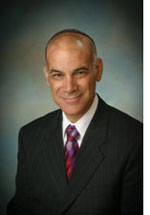
Rabbi Rosenthal is spiritual leaer of Tifereth Israel Synagogue. He may be contacted at leonard.rosenthal@sdjewishworld.com