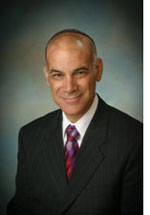
By Rabbi Leonard Rosenthal
SAN DIEGO — At the end of parashat B’har we find the following words:
“You shall not make idols for yourselves, or set up for yourselves carved images or pillars, or place figured stones in your land to worship upon, for I the LORD am your God. You shall keep My sabbaths and venerate My sanctuary, Mine, the Lord’s.” (Lev. 26:1-2)
Our Etz Hayim commentary remarks on the Torah’s connection between idolatry and Shabbat: “Why is this denunciation of idolatry at this point? And why are Shabbat and the sanctuary mentioned as contrasts to idol worship? It is suggested that these verses raise the question: Is the visible world all there is? Or is that which is real but invisible ultimately the greatest reality?” (p. 746)
Rabbi Abraham Joshua Heschel, z”l, makes an even more explicit connection between Shabbat and idolatry in his classic book “The Sabbath.” In this week’s Community Jewish High class we studied a passage from “The Sabbath” in which Heschel wrote: “The seventh day is the armistice in man’s cruel struggle for existence, a truce in all conflicts, personal and social… a day on which handling money is considered a desecration, on which man avows his independence of that which is the world’s chief idol.”
For Heschel idolatry was not only the worship of graven image; the worst idolatry was making the acquisition of material possessions central to one’s life. Heschel asserted that money is “the world’s chief idol,” the chief object of human love, affection, devotion, and desire.
Heschel believed that Shabbat is a day that should be devoid not only of the worship of graven images, but a day upon which we set aside any action, desire, or thought of gaining material goods. Shabbat should be a day dedicated to worship, family, friends, and spiritual reflection.
Most of our week is devoted to the acquisition of things. We work, we shop, we pay bills, and perform all of the typical mundane tasks that keep life going.
When I asked my CJH students how they felt about their regular daily schedule of school, sports, homework, chores, and after school activities, they replied, “exhausted!” Almost every minute of their lives was programmed, leaving them little time to relax, much less reflect on the meaning of it all.
Shabbat provides a weekly opportunity to disconnect from the idolatries of daily life, from the need (lust?) to acquire material goods and pursue trivial diversions. It gives us twenty-five hours to kick back, relax, converse, eat, drink, and nourish our inner soul. On Shabbat we are forced to stop and smell the roses.
When most Jews consider Shabbat they think about its restrictions, that which they are not allowed to do. I suggest that when we think about Shabbat, we consider its prohibitions not as that which restrict us, but rather that which frees us.
*
Rabbi Rosenthal is spiritual leader of Tifereth Israel Synagogue in San Diego. You may comment to him at leonard.rosenthal@sdjewishworld.com, or post your comment on this website provided that the rules below are observed.
__________________________________________________________________
Care to comment? We require the following information on any letter for publication: 1) Your full name 2) Your city and state (or country) of residence. Letters lacking such information will be automatically deleted. San Diego Jewish World is intended as a forum for the entire Jewish community, whatever your political leanings. Letters may be posted below provided they are responsive to the article that prompted them, and civil in their tone. Ad hominem attacks against any religion, country, gender, race, sexual orientation, or physical disability will not be considered for publication. There is a limit of one letter per writer on any given day.
__________________________________________________________________