The Arts

Postcards and the Kindertransport
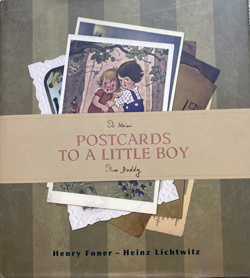
This story is built around 50 delicate letters, most written on the back of German period piece postcards: including garden scenes of fairy tales gnomes, elfs, leprechauns, and teddy bears designed for children. The letters, starting in February 1939 were by Max Lichtwitz, a Berlin lawyer, to his six-year-old son Heinz or Heini Lichtwitz, the future Henry Foner. They evoke love, longing, and irreparable loss. Max, a widower, sent his six-year son Heinz to England to live in Swansea, Wales with Morris and Winifred Foner. Max, his new wife and stepdaughter never got out of Germany, and were murdered in Auschwitz. [Oliver Pollak]

Postcards and the Kindertransport Read More »

Books, Poetry & Short Stories, International, Jewish History, Oliver Pollak

Books that have greatly influenced me

When a recent zoom meeting of the only group in which I still participate set as a subject for discussion ‘A Book That Has Influenced Me,’ I had no hesitation in choosing J.G. Frazer’s study of comparative religions, anthropology, history and sociology entitled The Golden Bough; a Study in Magic and Religion.’The paperback copy I bought in 1962, when I was a university student, numbered almost 1,000 pages and was touted as the ’abridged edition in one volume.’ [Dorothea Shefer-Vanson]

Books that have greatly influenced me Read More »

Books, Poetry & Short Stories, Dorothea Shefer-Vanson

Zina Schiff performs Bloch to critical acclaim

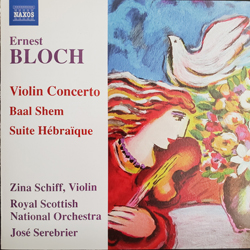
For this article, I am featuring my sister, violinist Zina Schiff’s Bloch Naxos release: Violin Concerto, Baal Shem Suite and Suite Hebraique, recorded with the Royal Scottish National Orchestra, Jose Serebrier, conducting. At a concert commemorating Kristallnacht at New York City’s Cathedral of St. John the Divine, Maestro Jose Serebrier heard Zina perform as soloist with the the Brooklyn Philharmonic Orchestra.He introduced himself after the concert and they later met to discus this CD project. [Eileen Wingard]

Zina Schiff performs Bloch to critical acclaim Read More »

Eileen Wingard, Music, Dance, and Visual Arts

Novel/ memoir draws inter-generational comparisons

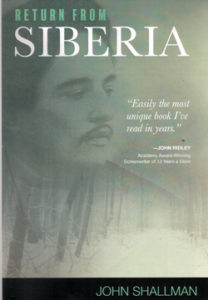
Return from Siberia by John Shallman, Skyhorse Publishing © 2020; ISBNB 9781510-763371; 220 pages including acknowledgments. By Donald H. Harrison SAN DIEGO – Author John Shallman is a Los Angeles-based political consultant and commentator, and one of the protagonists in this novel is John Simon, a political consultant.  There is no coincidence here; the book

Novel/ memoir draws inter-generational comparisons Read More »

Books, Poetry & Short Stories, Donald H. Harrison

Pandemics through history and the religious response

In his newest book, God and the Pandemic, Rabbi Samuel starts with a historical look at plagues in antiquity, comparing and contrasting leadership skills combating them, praising Marcus Aurelius, a stoic, for guiding his nation through the Antonine Plague in the second century, and condemning Roman emperors in the following century for failing to protect the citizenry during the Plague of Cyprian. [Fred Reiss, Ed.D]

Pandemics through history and the religious response Read More »

Books, Poetry & Short Stories, Fred Reiss, EdD, International, Jewish Religion, Michael Leo Samuel-Rabbi, Middle East, USA

When hippies invented their own Judaism

Take yourself back to the 1960s and 1970s when Jewish hippies envisioned creating their own brand of Judaism. Kosher food mixed with marijuana. Come as you are davening with cushions in a circle, instead of chairs facing a bima. Potluck dinners, in both meanings of the word. Some traditional prayers in, others out. Fully egalitarian services long before more established movements recognized women as spiritual leaders. Men and a woman even going to an outdoor mikvah together (Okay, it was skinny-dipping mixed with traditional mikvah prayers.) [Book review by Donald H. Harrison]

When hippies invented their own Judaism Read More »

Books, Poetry & Short Stories, Donald H. Harrison, Judaism

Cinematic history of White nationalism

Although screen neo-Nazis continue to be portrayed as ideologues, mad scientists, or thugs, historical docudramas and psychosocial films constitute an increasing portion of the movies about neo-Nazis produced since 1980. This corpus of movies renders their main characters victims of familial, political, or socioeconomic circumstances rather than as stock villains. Their proliferation reflects the escalation of white supremacist rhetoric into recurring acts of right-wing terrorism in Europe and North America from the 1980s on. Depending on the national origin of these pictures, the specific catalysts for radicalization differ, but the images and themes of Holocaust denial, nativism, Nazi iconography, the skinhead look, and virulent racism embraced by actual and fictional white nationalists resemble each other because they network with each other via Internet propaganda, international contacts, joint training maneuvers, rock music, and social media. [Laurie Baron, Ph.D]

Cinematic history of White nationalism Read More »

International, Lawrence Baron, Theatre, Film & Broadcast, USA

Ellis Island and the name ‘Kaputnik’

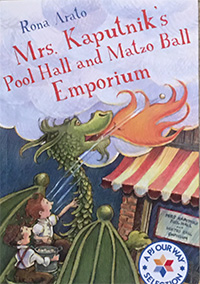
Supposedly, the name Kaputnik was assigned to the family at Ellis Island, when Mrs. Kapustin (her real name) worried aloud that if the baby dragon they had smuggled into the U.S. were discovered they would be Kaput (finished).  “Is that your name, Kaput?” a translator asked.  “Nicht (No),” responded Mrs. Kapustin.  And so the immigration inspector wrote down what he thought he heard — “Kaputnik.” [Donald H. Harrison]

Ellis Island and the name ‘Kaputnik’ Read More »

Books, Poetry & Short Stories, Donald H. Harrison, Jewish History, USA