The Arts

What Rav Soloveitchik taught about suffering
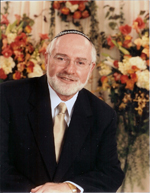
In all faiths, cultures, and communities, the question of evil plays a prominent role in that specific group’s philosophies. What is evil, and how does one comprehend it in our lives? In Judaism, the question of evil and suffering is expressed in the following statement “Tzadik ve ra lo- A righteous person, and bad to him, rasha vetov lo- a wicked person, and good to him.”  The question is why do righteous people suffer and experience hardship, while others who are “wicked “do not experience pain and suffering? [Rabbi Dr. Bernhard H. Rosenberg]

What Rav Soloveitchik taught about suffering Read More »

Bernhard H. Rosenberg-Rabbi, Books, Poetry & Short Stories, Jewish History, Jewish Religion
Kant on why we must not discriminate

The Supreme Court decided on June 15 that the Civil Rights Act of 1964 protects gay and transgender workers from workplace discrimination. Discrimination ‘because of sex’ is unlawful. But what is it that makes discrimination morally wrong? It is useful to examine this from a Kantian standpoint because Immanuel Kant lays the foundation for recognizing the inherent dignity of every individual – and discrimination is indeed an affront to human dignity. [Sam Ben-Meir]

Kant on why we must not discriminate Read More »

Books, Poetry & Short Stories, Sam Ben-Meir, Science, Medicine, & Education

Temple Isaiah families dance in socially distant circles

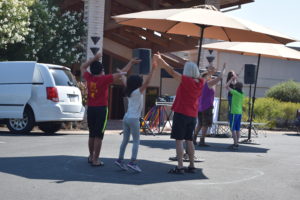
Large circles, at least six feet apart, were drawn on the upper parking lot of Temple Isaiah, each reserved for a family grouping who wanted to dance, play games, and congregate, yet maintain the proper social distance from other families during this time of Covid19. (Donald H. Harrison)

Temple Isaiah families dance in socially distant circles Read More »

Donald H. Harrison, Judaism, Lifestyles, Music, Dance, and Visual Arts, Travel and Food, USA

Comics as an agent of social change

The San Diego Convention Center would normally be bustling this weekend with devoted fans of science fiction, fantasy and horror dressing up and geeking out. This year, the center lays as quiet as a tomb. Yet, leave it to clever and resourceful nerds to find a way. Comic-Con International has moved online with presentations and forums via Zoom. While there is a variety of panel discussions and workshops to choose from, I decided to focus on a handful that feature comics as agents of social change. (Eric George Tauber)

Comics as an agent of social change Read More »

Eric George Tauber, San Diego County, Theatre, Film & Broadcast

Online Comic-Con lacks spontaneity, nerdiness

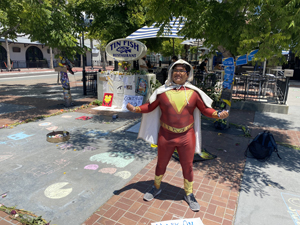
As my friend Nick and I walked around downtown on Friday, there was a sense of stillness in the air. Restaurants had mostly converted to serving only outside and while nearby beaches were packed there was still a sense of disconnection among individual families camped out on their blankets. Perhaps the strangest part was the San Diego Convention Center. If this were normal times, downtown would be Comic-Con central right now. People would queue in mile-long lines to see their favorite piece of media or stories come to life. The restaurants in the Gaslamp Quarter would be buzzing with hungry nerds. Hotels would be filled with tourists. Today I saw a lone man, dressed as Shazam, making chalk art outside the center. [Shor M. Masori]

Online Comic-Con lacks spontaneity, nerdiness Read More »

Music, Dance, and Visual Arts, San Diego County, Shor M. Masori, Theatre, Film & Broadcast

Comic-Con Online: Art & the Holocaust

When Art Spiegelman first proposed Maus, his two-volume graphic novel about the Holocaust, people asked how he could tackle a subject so dark, weighty and personal with comics. I think a more important question is: What happens if we don’t? How many stories will be lost? How many young people will lose the opportunity to comprehend this period of history without an accessible visual medium? [Eric George Tauber]

Comic-Con Online: Art & the Holocaust Read More »

Books, Poetry & Short Stories, Eric George Tauber, Music, Dance, and Visual Arts, San Diego County

Daughter conducts violinist mom with Hungarian orchestra

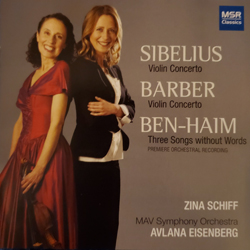
This MSR recording is the first time in the annals of classical music that a violin soloist has been accompanied by her own conductor daughter!

My sister, violinist Zina Schiff, my niece, conductor Avlana Eisenberg, and Hungary’s MAV Symphony Orchestra are featured in this mother-daughter collaboration: Sibelius Violin Concerto, Barber Violin Concerto, Ben-Haim Three Songs Without Words.. Gramophone Magazine described how the “mother and daughter partnership shows evident unity of purpose….intense passionate feeling.” [Eileen Wingard]

Daughter conducts violinist mom with Hungarian orchestra Read More »

Eileen Wingard, International, Music, Dance, and Visual Arts, San Diego County

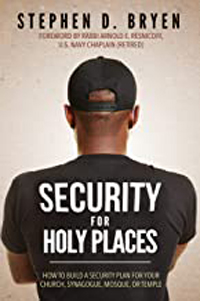
A security proposal for holy places

A new security approach is needed to protect holy places. Even before the COVID-19 epidemic and the lockdown that impacted businesses and organizations, especially churches, synagogues, mosques and temples, attacks on holy places were increasing. Now almost every day another religious site is invaded, trashed, burned or rabbis, priests, ministers, pastors and monks are assaulted, and in one case a Buddhist monk was killed praying in his temple by a gunshot in High Point, North Carolina. (Stephen D. Bryen, Ph.D)

A security proposal for holy places Read More »

Books, Poetry & Short Stories, International, Jewish Religion, Stephen D. Bryen, USA

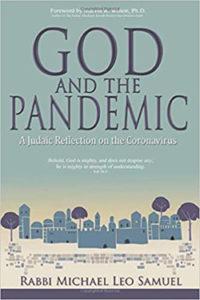
Book Review: ‘God and the Pandemic’

Rabbi Dr. Michael Leo Samuel, the author of ten books, has made a fascinating, enlightening, and much needed contribution to our understanding of the Coronavirus pandemic and Jewish and other views on the subject in his book God and the Pandemic. He gives readers a thorough very readable analysis of the many pandemics, earthquakes, plagues, and other occurrences that killed many people. [Rabbi Dr. Israel Drazin]

Book Review: ‘God and the Pandemic’ Read More »

Books, Poetry & Short Stories, Israel Drazin-Rabbi Dr., Jewish Religion, Michael Leo Samuel-Rabbi

Watching granddaughter’s IDF ceremony in Covid19 time

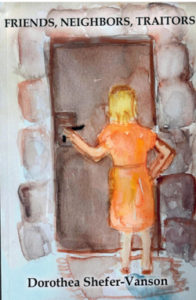
“You are invited to watch the ceremony to mark the graduation of the soldiers who have completed the Officers’ Training Course.” That was the text of the official invitation emailed to me and other family members by one of our granddaughters, whose sister was one of the soldiers concerned. We were informed that we would be able to watch the ceremony live, as filmed by the IDF’s official photographer, on the official IDF site on the internet. [Dorothea Shefer-Vanson]

Watching granddaughter’s IDF ceremony in Covid19 time Read More »

Dorothea Shefer-Vanson, Middle East, Theatre, Film & Broadcast

As Rabbi Hollander retires, Rabbi Rosenberg ready to step in

or 21 years, Rabbi Chaim Hollander has served as spiritual leader of Young Israel of San Diego (YISD), a small Orthodox congregation located across Navajo Road from the popular Cowles Mountain trail head.  Hollander came to San Diego to teach at Soille San Diego Hebrew Day School (SSDHDS), one of the schools that incoming Rabbi Eddie Rosenberg attended as a child.  [Our Shtetl San Diego County column by Donald H. Harrison]

As Rabbi Hollander retires, Rabbi Rosenberg ready to step in Read More »

Books, Poetry & Short Stories, Donald H. Harrison, Jewish Religion, San Diego County

The philosophical, religious lessons of Auschwitz

The title of Joshua Hammerman’s book Embracing Auschwitz is incredulous. How can a rabbi, a pulpit rabbi charged with comforting his congregation, in light of the continental genocide and devastation inflicted on so many families, known as the Holocaust, and understanding the Jewish nation has a God-given obligation to obliterate the Amalekites, the biblical archetype of evil, ask us to accept and welcome this malevolence? The conundrum is resolved before one begins to read a single chapter. Hammerman, stressing there is nothing positive about the Holocaust, invokes his interpretation of the word “embrace” by quoting Abraham Joshua Heschel: “There are three ways we respond to sorrow. On the first level, we cry; on the second level, we are silent; on the highest level, we take sorrow and turn it into song.” [Fred Reiss, Ed.D]

The philosophical, religious lessons of Auschwitz Read More »

Books, Poetry & Short Stories, Fred Reiss, EdD, Jewish History, Jewish Religion