Jewish Religion

Notes on Torah Reading for October 12, 2019
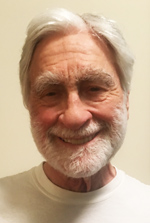
This parasha more or less recapitulates Chapter 31, but in a poetic form recited “by Moses” before they are to cross the Jordan to enter the promised land. After the poem, prose text tells the assembled Israelites, that Moses will ascend Mount Nebo, overlook the promised land from the east, and die there. With a new curiosity for biblical poetry, I have explored its elements as expounded by Professor Emeritus Jeffrey Tigay of the University of Pennsylvania in his commentary on Deuteronomy, published by the Jewish Publication Society (1996). (To read more, please click on the headline.)

Notes on Torah Reading for October 12, 2019 Read More »

Irv Jacobs, MD, Jewish Religion

Our Shtetl San Diego County: October 10, 2019

Items in today’s column include:
*Google service places inappropriate ads on our website
*Lineup for “Tapestry” on Nov. 17 announced
*Nikki Haley featured in L’Chaim Magazine
*Political bytes
*Twelfth Night at the Old Globe
*Coming Our Way
(To read more, please click on the headline.)

Our Shtetl San Diego County: October 10, 2019 Read More »

Donald H. Harrison, International, Jewish History, Jewish Religion, San Diego County, Theatre, Film & Broadcast, USA

D’var Torah for October 12, 2019

This week’s parasha begins with “Listen, O heavens, and I will speak! And let the earth hear the words of my mouth!”

הַאֲזִינוּ הַשָּׁמַיִם וַאֲדַבֵּרָה וְתִשְׁמַע הָאָרֶץ אִמְרֵי־פִי

The parasha immediately draws our attention to two key words, two essential capabilities, to key gifts, hearing and listening. To see that though, depends on two other facilities, vision and sight. Let’s understand this in the service of our striving to live a more fully engaged life, with more openness and receptivity to the world around us. (To read more, please click on the headline.)

D’var Torah for October 12, 2019 Read More »

Jewish Religion, Michael Mantell

Our Shtetl San Diego County: October 9, 2019

Items in today’s column include:
*Congressional effort underway to protect San Diego’s clean water supply
*Jewish Studies events at San Diego State University
*Dr. Seuss Enterprises to debut Green Eggs and Ham on Netflix
*Political bytes
*Rabbi, recalling R-E-S-P-E-C-T popularized by Aretha Franklin and Otis Redding, says society needs more
(To read more, please click on the headline.)

Our Shtetl San Diego County: October 9, 2019 Read More »

Donald H. Harrison, Jewish Religion, Music, Dance, and Visual Arts, San Diego County, Theatre, Film & Broadcast

Cedars-Sinai hosts bat mitzvah for intensive care patient

Twelve year-old Numa Beron, a longtime Cedars-Sinai patient who has spent much of her life in the Pediatric Intensive Care Unit, recently celebrated her Bat Mitzvah, a coming of age party for Jewish girls, in the medical center chapel. Beron was born with lissencephaly, a degenerative brain malformation leaving her unable to stand or speak. (To read more, please click on the headline.)

Cedars-Sinai hosts bat mitzvah for intensive care patient Read More »

Jewish Religion, Science, Medicine, & Education, USA

Kapparot ceremony is unnecessary cruelty to animals

Yom Kippur has its own unique customs and traditions, and one of the most historically controversial customs involves taking a chicken and swinging it around one’s head. When I was a Hassidic youth, I recall getting up early in the morning before dawn to reenact the tradition better known as “Shlugging Kaparos,” or “Kapparot.” (To read more, please click on the headline.)

Kapparot ceremony is unnecessary cruelty to animals Read More »

Jewish Religion, Michael Leo Samuel-Rabbi, The World We Share

Two rabbinic leaders disputed Torah in ancient times

Two Talmudic sages lived around 130 CE and disagreed on how to interpret the Bible. Rabbi Akiva won out, and Rashi, Nachmanides, and most ancient Bible commentators as well as most Midrashim follow his view. Others, such as Rashi’s grandson Rashbam, Abraham ibn Ezra, and Maimonides interpret the Torah as Rabbi Ishmael did. (To read more, please click on the headline.)

Two rabbinic leaders disputed Torah in ancient times Read More »

Israel Drazin-Rabbi Dr., Jewish History, Jewish Religion

Sefer Devarim and Jewish Sovereignty  

Sefer Devarim, the last “book” of Torah, is also called Deuteronomy because it contains many laws (1) that were not presented earlier and are especially relevant to the conquering and settlement of Eretz Yisrael (Land of Israel). Commanded to conquer and “take possession” of Canaan, the Jewish people were apparently having doubts about whether this was possible, what it would cost in lives, if they would be successful, and what they should do with the Canaanites.  
Contemporary Israelis ask similar questions. Although the words of Torah guide our lives, some have a political meaning today, and may be, for some, controversial.  (To read more, please click on headline.)

Sefer Devarim and Jewish Sovereignty   Read More »

Jewish History, Jewish Religion, Middle East

Mystery of Kol Nidre unfolded

Kol Nidre meaning all vows is an 8th century Talmudic legal document written to seek annulment of broken personal religious vows to God. It is in Aramaic, as is the Kaddish, and as a legal document there is no mention of God. Vows were taken very seriously, and supplicants appeared before three wise men (rabbinic court) and recited the Kol Nidre words three times to void their vows This ritual was practiced for centuries and eventually was added to the prayer book. Since it is not a prayer, it was placed before the actual beginning of Yom Kippur evening service. (To read more, please click headline.)

Mystery of Kol Nidre unfolded Read More »

Cantor Sheldon Foster Merel, z"l, Jewish History, Jewish Religion, Music, Dance, and Visual Arts

Yom Kippur and What the Romans Destroyed

Like Rosh Hashanah, Yom Kippur does not exist in the Bible. It replaces another day known as Yom Hakippurim. Yom Kippur is singular, “day of atonement,” while Yom Hakippurim is plural, “day of atonements.” The biblical Yom Hakippurim is mentioned in Leviticus 16:29–31, 23:27–32, and Numbers 29:7–11. No work was permitted on this day, special sacrifices were offered, and the Israelites were obliged to te’anu et nafshoteikhem. This  is improperly translated as “you must afflict your souls.” (To read more, please click on the headline.)

Yom Kippur and What the Romans Destroyed Read More »

Israel Drazin-Rabbi Dr., Jewish Religion