Israel Drazin-Rabbi Dr.

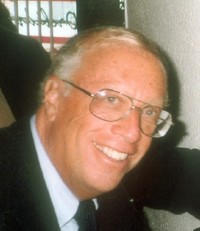
[caption id="attachment_119024" align="alignright" width="100"] Rabbi Israel Drazin[/caption]

Dr. Israel Drazin served for 31 years in the US military and attained the rank of Brigadier General. He has a PhD in Judaic Studies and a Masters Degree in psychology and a Masters Degree in Jewish Literature. He is an attorney and a rabbi.

He developed the legal strategy that saved the military chaplaincies when its constitutionality was attacked in court, and received the Legion of Merit for his service.

[showhide type=”pressrelease” more_text=”Show More” less_text=”Show Less”]

He was the scholar who recognized that the Aramaic translation Targum Onkelos took hundreds of items from the Tannaitic Midrashim, which were edited around 400 CE; therefore, the Targum must have been composed after that date, a period much later than had been widely accepted.

He is the author of more than 50 books, including a series of five volumes on the Aramaic translation of the Hebrew Bible, and a series of books on the twelfth century philosopher Moses Maimonides, a history of the legal case he handled, and dozens of books on the Bible.

His works, available on Amazon, include:
*A Rational Approach to Judaism and Torah Commentary
*Can’t Start Passover Without the Bread (Children’s Literature) ***
*For God and Country: The History of a Constitutional Challenge to the Army Chaplaincy
*Maimonides and the Biblical Prophets
*Maimonides: Reason Above All
*Maimonides: The Exceptional Mind
*Mysteries of Judaism (Maimonides and Rational)
*Mysteries of Judaism II: How the Rabbis and Others Changed Judaism
*Nachmanides: An Unusual Thinker
*Onkelos on the Torah Understanding the Bible Text (5 Volume Set)**
*Onkelos on the Torah (Book 1: Genesis) **
*Onkelos on the Torah (Book 2: Exodus) **
*Onkelos on the Torah (Book 3: Leviticus) **
*Onkelos on the Torah (Book 4: Numbers) **
*Onkelos on the Torah (Book 5: Deuteronomy) **
*Sailing on Moti’s Ark on Sukkoth (Children’s Literature) ***
*Stories that Teach the Truth: Ecclesiastes, Tobit, Susanna, and Other Stories.
*Studies in Onkelos (Hebrew edition)
*Targum Onkelos to Exodus [2]: An English Translation of the Text with Analysis and Commentary
*Targum Onkelos to Leviticus [3]: An English Translation of the Text with Analysis and Commentary
*Targum Onkelos to Numbers [4]: An English Translation of the Text with Analysis and Commentary
Targum Onkelos to Deuteronomy [5]: An English Translation of the Text with Analysis and Commentary
*The Authentic King Solomon
*The Tragedies of King David
*Understanding Onkelos
*Unusual Bible Interpretations: Five Books of Moses (Maimonides and Rational)
*Unusual Bible Interpretations: Hosea
*Unusual Bible Interpretations: Jonah and Amos
*Unusual Bible Interpretations: Joshua
*Unusual Bible Interpretations: Judges
*Unusual Bible Interpretations: Ruth, Esther, Judith
*What’s Beyond the Biblical Text? **
*Who Really Was the Biblical David?
*Who Was the Biblical Prophet Samuel?

** Co-Authored with Stanley Wagner
** Co-Authored with Leba Lieder
[/showhide]

Mapping the Bible, Correcting Misconceptions
The book Places in the Parasha is a very good book, with chapters for each of the more than fifty Torah readings in synagogues on the Shabbat as well as the special readings on holidays. It identifies the location of places mentioned in the portions and gives us information about these places. As a result, we learn more about what the Torah is saying and get a deeper understanding of the events that are mentioned. [Rabbi Dr. Israel Drazin]

Mapping the Bible, Correcting Misconceptions Read More »

Books, Poetry & Short Stories, Israel Drazin-Rabbi Dr., Jewish History, Jewish Religion
The Wisdom of Gersonides

 It is tragic even bizarre that most rabbis today sermonize by quoting Midrashim as if what the Midrash states, despite being contrary to nature, actually occurred. They also quote the views of mystics, but not rational thinkers such as Maimonides other than to quote a legal view of his that parallels those of mystics, leading congregants to think that the rabbi is teaching them what Judaism wants them to know. They do not tell congregants that Midrashim are parables, stories designed like Aesop’s fables to make us think. They do not encourage congregants to think. They are, in essence, anti-rational. In view of this tragic practice, it is a good idea to view the ideas of some rational Jewish thinkers such as Gersonides. He was not of the intellectual level as Maimonides, but he was a thinker and will prompt us to think as well. [Rabbi Dr. Israel Drazin]

The Wisdom of Gersonides Read More »

Israel Drazin-Rabbi Dr., Jewish Religion

A Radical View about ‘Truth’

I read some books and essays recently focusing on the “truths” that people of different religions have that differ with the “truths” held by people of other religions. The object of the books and essays is to find how we can improve interfaith relations when the lives of different people are based on ideas that they find hard to give up despite others refusing or unable to accept what they believe. Examples include the “truth” held by many Christians that there is a trinity of three gods, that of many Jewish mystics that God was composed of ten parts that came apart, and that of Muslims who “know” that Mohamed received the Koran from God. [Rabbi Dr. Israel Drazin]

A Radical View about ‘Truth’ Read More »

Israel Drazin-Rabbi Dr., Jewish Religion

Examining Jesus as a human

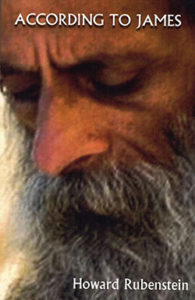
According to James is an interesting and thoughtful book. Whether readers are Christians, Jews, Muslims, or something else, and even if they strongly disagree with the story Howard Rubenstein tells about James, an older brother of Jesus, they will find that the story prompts them to think about many aspects of religion. The story is fiction. But it is based on the views of many scholars. [Rabbi Dr. Israel Drazin]

Examining Jesus as a human Read More »

Books, Poetry & Short Stories, Israel Drazin-Rabbi Dr., Jewish Religion

Humor, song lyrics, and Jewish practice

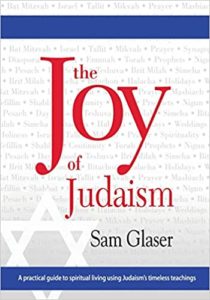
Sam Glaser’s The Joy of Judaism contains 407 pages of very interesting insights into Jewish practices offered to readers by a very accomplished communicator in a clear, often humorous, always insightful and inspiring way. Glaser’s book covers virtually all aspects of Judaism. He shows readers how they can enjoy Jewish practices. [Rabbi Dr. Israel Drazin]

Humor, song lyrics, and Jewish practice Read More »

Books, Poetry & Short Stories, Israel Drazin-Rabbi Dr., Jewish Religion

A book filled with knowledge

Rabbi Lord Jonathan Sacks is a world-wide respected religious leader, the former chief rabbi of the English Commonwealth, the author of more than thirty books, and the winner of numerous prizes. His new book Judaism’s Life-Changing Ideas,” with a Foreword ‘”The Secret of Our Staying Power” by Bari Weiss, the award-winning author and op-ed editor and writer of the New York Times, introduces readers to a life-changing Jewish idea from each of the more than fifty weekly biblical portions. [Rabbi Dr. Israel Drazin]

A book filled with knowledge Read More »

Books, Poetry & Short Stories, Israel Drazin-Rabbi Dr., Jewish Religion

Obscure Biblical Statements Explained

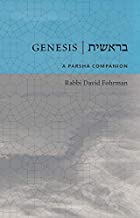
Rabbi David Fohrman published a book called Genesis: A Parsha Companion. In his book, he points out obscure and questionable matters in each of the twelve portions in Genesis and offers his view of what the lesson is that underlies the verse or event. The interpretations are usually based on his own ideas or ancient Midrashim and classical Bible commentaries such as Rashi and Nachmanides which he accepts as capturing the true intent of the Torah. Whether a reader agrees with his interpretation or not, the identification of obscure items and his interpretations and discussions about them make us think. [Rabbi Dr. Israel Drazin]

Obscure Biblical Statements Explained Read More »

Israel Drazin-Rabbi Dr., Jewish Religion

Superstitious believed the shofar could scare Satan

It is absolutely certain that both the spiritual leaders of Jewry and the masses of uneducated Jews (or at least the majority of these) before, during and after the talmudic period believed that the shofar, the ram’s horn, was blown on the holiday of Rosh Hashanah in order to scare Satan and his demonic cohorts. The widely held belief was that the blowing of the shofar would stop Satan from approaching God at a crucial moment, keeping him from indicting Jews for past sins in a heavenly judicial proceeding in which God decides the future of each Jew. [Rabbi Dr. Israel Drazin]

Superstitious believed the shofar could scare Satan Read More »

Israel Drazin-Rabbi Dr., Jewish Religion