Israel Drazin-Rabbi Dr.

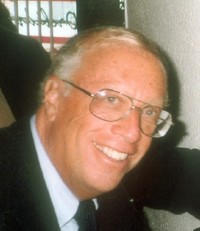
[caption id="attachment_119024" align="alignright" width="100"] Rabbi Israel Drazin[/caption]

Dr. Israel Drazin served for 31 years in the US military and attained the rank of Brigadier General. He has a PhD in Judaic Studies and a Masters Degree in psychology and a Masters Degree in Jewish Literature. He is an attorney and a rabbi.

He developed the legal strategy that saved the military chaplaincies when its constitutionality was attacked in court, and received the Legion of Merit for his service.

[showhide type=”pressrelease” more_text=”Show More” less_text=”Show Less”]

He was the scholar who recognized that the Aramaic translation Targum Onkelos took hundreds of items from the Tannaitic Midrashim, which were edited around 400 CE; therefore, the Targum must have been composed after that date, a period much later than had been widely accepted.

He is the author of more than 50 books, including a series of five volumes on the Aramaic translation of the Hebrew Bible, and a series of books on the twelfth century philosopher Moses Maimonides, a history of the legal case he handled, and dozens of books on the Bible.

His works, available on Amazon, include:
*A Rational Approach to Judaism and Torah Commentary
*Can’t Start Passover Without the Bread (Children’s Literature) ***
*For God and Country: The History of a Constitutional Challenge to the Army Chaplaincy
*Maimonides and the Biblical Prophets
*Maimonides: Reason Above All
*Maimonides: The Exceptional Mind
*Mysteries of Judaism (Maimonides and Rational)
*Mysteries of Judaism II: How the Rabbis and Others Changed Judaism
*Nachmanides: An Unusual Thinker
*Onkelos on the Torah Understanding the Bible Text (5 Volume Set)**
*Onkelos on the Torah (Book 1: Genesis) **
*Onkelos on the Torah (Book 2: Exodus) **
*Onkelos on the Torah (Book 3: Leviticus) **
*Onkelos on the Torah (Book 4: Numbers) **
*Onkelos on the Torah (Book 5: Deuteronomy) **
*Sailing on Moti’s Ark on Sukkoth (Children’s Literature) ***
*Stories that Teach the Truth: Ecclesiastes, Tobit, Susanna, and Other Stories.
*Studies in Onkelos (Hebrew edition)
*Targum Onkelos to Exodus [2]: An English Translation of the Text with Analysis and Commentary
*Targum Onkelos to Leviticus [3]: An English Translation of the Text with Analysis and Commentary
*Targum Onkelos to Numbers [4]: An English Translation of the Text with Analysis and Commentary
Targum Onkelos to Deuteronomy [5]: An English Translation of the Text with Analysis and Commentary
*The Authentic King Solomon
*The Tragedies of King David
*Understanding Onkelos
*Unusual Bible Interpretations: Five Books of Moses (Maimonides and Rational)
*Unusual Bible Interpretations: Hosea
*Unusual Bible Interpretations: Jonah and Amos
*Unusual Bible Interpretations: Joshua
*Unusual Bible Interpretations: Judges
*Unusual Bible Interpretations: Ruth, Esther, Judith
*What’s Beyond the Biblical Text? **
*Who Really Was the Biblical David?
*Who Was the Biblical Prophet Samuel?

** Co-Authored with Stanley Wagner
** Co-Authored with Leba Lieder
[/showhide]

King Solomon the not so wise
History repeats itself mostly because people fail to learn from the terrible consequences that occurred following the foolish acts of the past. The Bible tells us about the supposed wisdom of King Solomon. In my book The Authentic King Solomon, I show that actually, scripture is demonstrating that the king was not as smart as he and we think he was. In every chapter where Solomon is shown to have performed an act, it also shows, without exception, that he also acted foolishly. [Rabbi Dr. Israel Drazin]

King Solomon the not so wise Read More »

International, Israel Drazin-Rabbi Dr., Jewish History, Middle East

Rosh Chodesh not observed as Torah commands

Like all other biblical holidays, Rosh Chodesh is not observed today as required by biblical law. This is because of changed social circumstances and because the principle element of the biblical worship was animal sacrifices, which was discontinued after the Romans destroyed the Jewish Second Temple in 70 CE. Additionally, the name of the celebration was changed from “Chodesh” to “Rosh Chodesh,” which in the Torah did not mean “New Moon,” but “First Month” and referred to the month now called Nissan when Passover occurs.

Rosh Chodesh not observed as Torah commands Read More »

Israel Drazin-Rabbi Dr., Jewish Religion

Difficulties, explanations regarding Kohelet

Tradition mandates that Jews should read the biblical book Kohelet, also spelt Koheleth and Qohelet, called Ecclesiastes in English, during the holiday of Sukkot. Both the Hebrew and English names mean “collector” or “collection.” We do not know why this mandate was made. Some say that since Sukkot is a very happy holiday, we need the sober thoughts of Kohelet to modify our joy and make it more reasonable. The book was considered heretical by many ancient rabbis who wanted to exclude it from the Bible.

Difficulties, explanations regarding Kohelet Read More »

Israel Drazin-Rabbi Dr., Jewish Religion

Origins of the Sukkot holiday

Leviticus 23:40 states that the Israelites should take four species on the first day and “rejoice before the Lord your God seven days.” While the Hebrew words used for the four species are obscure, the Jewish Publication Society’s 1960 translation defines them as “the fruit of goodly trees, branches of palm trees, and boughs of thick trees, and willows of the brook.” An apparently separate command in verse 42 states, “Ye shall dwell in booths seven days.” The first biblical description of the implementation of this command is in the biblical book Nehemiah. It is entirely different than the way the holiday is celebrated today. (To read more, please click on the headline.)

Origins of the Sukkot holiday Read More »

Israel Drazin-Rabbi Dr., Jewish Religion

Two rabbinic leaders disputed Torah in ancient times

Two Talmudic sages lived around 130 CE and disagreed on how to interpret the Bible. Rabbi Akiva won out, and Rashi, Nachmanides, and most ancient Bible commentators as well as most Midrashim follow his view. Others, such as Rashi’s grandson Rashbam, Abraham ibn Ezra, and Maimonides interpret the Torah as Rabbi Ishmael did. (To read more, please click on the headline.)

Two rabbinic leaders disputed Torah in ancient times Read More »

Israel Drazin-Rabbi Dr., Jewish History, Jewish Religion

Yom Kippur and What the Romans Destroyed

Like Rosh Hashanah, Yom Kippur does not exist in the Bible. It replaces another day known as Yom Hakippurim. Yom Kippur is singular, “day of atonement,” while Yom Hakippurim is plural, “day of atonements.” The biblical Yom Hakippurim is mentioned in Leviticus 16:29–31, 23:27–32, and Numbers 29:7–11. No work was permitted on this day, special sacrifices were offered, and the Israelites were obliged to te’anu et nafshoteikhem. This  is improperly translated as “you must afflict your souls.” (To read more, please click on the headline.)

Yom Kippur and What the Romans Destroyed Read More »

Israel Drazin-Rabbi Dr., Jewish Religion

Actual year of Hebrew calendar quite debatable

Many people, secular and religious, of different cultures and worldviews, have attempted to calculate the age of the world. There is no agreement between them, simply because it is an impossible task. Christians, Muslims, and Jews have tried to do the calculation based on a literal reading of the Bible and have come up with different times. The following shows the impossibility by focusing on the widely used Jewish version.

Actual year of Hebrew calendar quite debatable Read More »

Israel Drazin-Rabbi Dr., Jewish Religion

Rabbi Phillips authors tome on Jewish philosophy and theology

By Rabbi Dr. Israel Drazin JERUSALEM — Judaism Reclaimed: Philosophy and Theology in the Torah by Shmuel Phillips, a rabbi and lawyer with a law degree from the University of London, is a book filled with interesting information inspired by his understanding of the views of Maimonides and Rabbi Samson Raphael Hirsch. The book has

Rabbi Phillips authors tome on Jewish philosophy and theology Read More »

Books, Poetry & Short Stories, Israel Drazin-Rabbi Dr., Jewish Religion

‘Methuselah’ offers some humorous corrections to the Bible

Excerpt: When God dictated the Bible to Moses, it was perfect – every word and every letter was flawless. But a so-called scholar Laumentenkup recopied the Bible and made many mistakes. He couldn’t see the dirt under his fingernails and drank too much fermented grape juice. Methuselah wants to correct as many errors as he can. The following are some of his corrections.

There was no snake in Eden. God created a toothless tortoise as a companion for man so he wouldn’t be lonely. When this didn’t work, God put Adam asleep and created a woman from his third tonsil and ever since then women have spoken a great deal. (Please click headline to read full story)

‘Methuselah’ offers some humorous corrections to the Bible Read More »

Books, Poetry & Short Stories, Israel Drazin-Rabbi Dr., Jewish Religion

Contrasting Christian and Jewish ideas of repentance

Repentance doesn’t magically absolve people of wrongs they committed. It’s not abracadabra. Jewish repentance practices such as saying prayers and giving charity are designed to remind people to take practical measures to correct their behavior. It is a mistake to believe that Jews go to the synagogue during Rosh Hashanah and Yom Kippur and say prayers because many of these prayers will cause God to wipe out the wrongs we committed. Prayers do not do this. The purpose of the prayers is to prompt us to correct the wrongs we did in the past and change our future behavior. It is we who do the change.

Contrasting Christian and Jewish ideas of repentance Read More »

Israel Drazin-Rabbi Dr.

Was the biblical command to destroy nations cruel?

God commanded the Israelites through Moses to completely blot out the memory of the nation of Amalek. The command is repeated by the prophet Samuel in I Samuel 15. The only voice speaking against this apparent genocide is that of the first Jewish king Saul, who was strongly criticized by Samuel for not killing all of the Amalekite people and who lost his monarchy because of his apparently reasonable behavior.

Philo sidesteps the difficulty of the slaughter of an entire people by interpreting the entire report allegorically. Amalek is not a nation, but a symbol of the impassioned coward who strikes anyone he sees standing in his way. He hides until his enemy has passed him by, no longer looking at him. Then he rises and assaults what he perceives is his opponent’s weakest point. Philo was thus the first to introduce the idea that it is not the people that should be eradicated, but the nefarious self-destructive quality of Amalek that an individual must obliterate from his personality.

Was the biblical command to destroy nations cruel? Read More »

Israel Drazin-Rabbi Dr., Jewish Religion