Avoiding the Clonal Effect

What is the clonal effect? It is the tendency of individuals, groups, and organizations to replicate themselves or others that are familiar to them wherever they have an opportunity to do so. The dictionary defines a clone as “a person or thing that duplicates, imitates, or closely resembles another in appearance.” [Natasha Josefowitz, ACSW; Ph.D]

Avoiding the Clonal Effect Read More »

Lifestyles, Natasha Josefowitz

Torah for children: Correcting bad behavior

This week’s Parshah is Nitzavim. That means “you stand” as in “you stand before God.” It begins as many of the Parashot in this part of the Torah, with warnings from God about what will happen if the people turn away and break their agreement with God. But, in this Parashah, there is almost the assumption that, once Moses dies, many people will, indeed, start breaking the laws. [Marcia Berneger]

Torah for children: Correcting bad behavior Read More »

Jewish Religion, Marcia Berneger

Serbia-Kosovo Agreement Falls Far Short

The recent agreement between Kosovo and Serbia, brokered by the US, to normalize economic relations between the two countries fell short of the needed reconciliation process that would lead to full recognition of Kosovo’s independence by Serbia. Some elements of the economic normalization agreement are positive, including operationalizing the peace highway and the rail link between Pristina and Merdare, sharing Gazivode/Ujmani Lake and exploring its use as a reliable water and energy supply, and receiving financial support from the US International Development Finance Corporation and Export-Import Bank of the United States (EXIM) for the above. These and other projects will create job opportunities for several thousand Kosovars and alleviate some of the economic hardship in the country. [Alon ben-Meir, Ph.D]

Serbia-Kosovo Agreement Falls Far Short Read More »

Alon Ben-Meir, International, Middle East, USA

Biblical and ancient ‘chemistry’ and spirituality

Nitzavim/ Va-Yelekh (Deuteronomy 29:9-31:30) — From this double parasha, I chose three passages for comparison, from the internet, with ancient Israel’s neighbors. These were difficult passages on which to inquire of the internet, since they are literary figures of speech more than concepts of action. [Irv Jacobs, M.D.]

Biblical and ancient ‘chemistry’ and spirituality Read More »

International, Irv Jacobs, MD, Jewish Religion, Middle East

A time of return to good spiritual health

he parashiyot of Nitzavim–Vayelech are often read on the Shabbat preceding Rosh Hashanah. For good reason. Especially this year with synagogues closed, shortened services, reduced attendance, Zoom classes, with a never far off apprehension about health for those who do attend religious gatherings, many have wandered from observance, from Hashem, from mitzvot.  [Michael R. Mantell, Ph.D]

A time of return to good spiritual health Read More »

Jewish Religion, Michael Mantell

SWU webcast illustrates diverse support for Israel

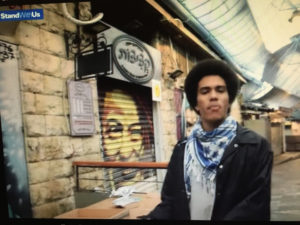
StandWithUs on Wednesday evening presented a packed webcast, nearly an hour long, demonstrating the diversity of people who support Israel and the urgency that support has for Jewish and pro-Israel students attending high schools, colleges, and universities in North America and around the world. [Donald H. Harrison]

SWU webcast illustrates diverse support for Israel Read More »

Donald H. Harrison, International, Music, Dance, and Visual Arts, Science, Medicine, & Education, Theatre, Film & Broadcast, USA

Becoming a Yenta

As spring turned to summer, more Jewish activities began to emerge. It was almost as if the collective Hebrew community was dipping its toe in the water of social gatherings. Outdoors and with everyone at least six feet apart, I attended shul for the first time in months. In the midst of the swaying and chanting that so often accompanied davening, I felt some sense of normalcy return. While there was no kiddush after services, some people lingered around to chit chat. [Teresa Konopka]

Becoming a Yenta Read More »

Jewish Religion, Lifestyles, San Diego County, Teresa_Konopka

Seacrest Village may be answer for isolated Jewish seniors

Jewish seniors isolated during the coronavirus pandemic may be better off both physically and mentally by moving to the Independent Living section of Seacrest Village Retirement Communities, its president and CEO Pam Ferris says. [Donald H. Harrison, “Our Shtetl San Diego County column]

Seacrest Village may be answer for isolated Jewish seniors Read More »

Donald H. Harrison, Jewish Religion, Obituaries & memorials, San Diego County, USA

Your Mindset is Your Compass

“It is not primarily our physical selves that limit us but rather our mindset about our physical limits.” — Ellen Langer, Ph.D. in Counterclockwise: Mindful Health and the Power of Possibilities. “What? But my world is upside down! I mean, I’m financially stretched way too thin, my waist is getting way too large, my relationship at home is disintegrating, and she’s saying it’s all in my mind?!” [Michael R. Mantell, Ph.D]

Your Mindset is Your Compass Read More »

Lifestyles, Michael Mantell

Superstitious believed the shofar could scare Satan

It is absolutely certain that both the spiritual leaders of Jewry and the masses of uneducated Jews (or at least the majority of these) before, during and after the talmudic period believed that the shofar, the ram’s horn, was blown on the holiday of Rosh Hashanah in order to scare Satan and his demonic cohorts. The widely held belief was that the blowing of the shofar would stop Satan from approaching God at a crucial moment, keeping him from indicting Jews for past sins in a heavenly judicial proceeding in which God decides the future of each Jew. [Rabbi Dr. Israel Drazin]

Superstitious believed the shofar could scare Satan Read More »

Israel Drazin-Rabbi Dr., Jewish Religion