Judaism

Wishes for the New Year
In a short while, we will be wishing one another Shanah Tova (have a good year), the Hebrew equivalent of Happy New Year. But the beginning of the Hebrew year is not only a time of joy. First and foremost, it is a time of reflection. This year, it seems especially pertinent to reflect on where we are, where we are going, and what we can do to make this year, and the years to follow, safer, happier, and better for ourselves, for our loved ones, and for all of humanity. [Michael Laitman, Ph.D]

Wishes for the New Year Read More »

Jewish History, Jewish Religion
Israel-Bahrain peacemaking draws applause

On a day that the world mourns the 2001 terror attack that felled the World Trade Center in New York City, damaged the Pentagon in Washington D.C., and took the lives of passengers aboard four hijacked airliners, there was some hopeful news as well. Peace in the Middle East is becoming contagious. Encouraged by the United States government, Bahrain and Israel have announced that they — like Israel and the United Arab Emirates previously — will sign a peace pact. [Donald H. Harrison]

Israel-Bahrain peacemaking draws applause Read More »

Donald H. Harrison, Jewish Religion, Middle East, Music, Dance, and Visual Arts, Science, Medicine, & Education, Travel and Food

A Word of Torah: Secular vs. Spiritual Success

Those who are viewed as the top of the heap are not necessarily so in the World of Truth. A person may engage in manual, even menial labor in this world. He may be very poor. But because one is poor in material wealth does not mean that he is poor in spiritual wealth. In fact, this world is upside down. In this crass material world our values are confused. We hold as precious things that are not precious and we, G-d forbid, undervalue or neglect to value altogether those things that truly are precious. [Rabbi Yeruchem Eilfort]

A Word of Torah: Secular vs. Spiritual Success Read More »

Jewish Religion, Yeruchem Eilfort-Rabbi

Torah for children: Correcting bad behavior

This week’s Parshah is Nitzavim. That means “you stand” as in “you stand before God.” It begins as many of the Parashot in this part of the Torah, with warnings from God about what will happen if the people turn away and break their agreement with God. But, in this Parashah, there is almost the assumption that, once Moses dies, many people will, indeed, start breaking the laws. [Marcia Berneger]

Torah for children: Correcting bad behavior Read More »

Jewish Religion, Marcia Berneger

Biblical and ancient ‘chemistry’ and spirituality

Nitzavim/ Va-Yelekh (Deuteronomy 29:9-31:30) — From this double parasha, I chose three passages for comparison, from the internet, with ancient Israel’s neighbors. These were difficult passages on which to inquire of the internet, since they are literary figures of speech more than concepts of action. [Irv Jacobs, M.D.]

Biblical and ancient ‘chemistry’ and spirituality Read More »

International, Irv Jacobs, MD, Jewish Religion, Middle East

A time of return to good spiritual health

he parashiyot of Nitzavim–Vayelech are often read on the Shabbat preceding Rosh Hashanah. For good reason. Especially this year with synagogues closed, shortened services, reduced attendance, Zoom classes, with a never far off apprehension about health for those who do attend religious gatherings, many have wandered from observance, from Hashem, from mitzvot.  [Michael R. Mantell, Ph.D]

A time of return to good spiritual health Read More »

Jewish Religion, Michael Mantell

Becoming a Yenta

As spring turned to summer, more Jewish activities began to emerge. It was almost as if the collective Hebrew community was dipping its toe in the water of social gatherings. Outdoors and with everyone at least six feet apart, I attended shul for the first time in months. In the midst of the swaying and chanting that so often accompanied davening, I felt some sense of normalcy return. While there was no kiddush after services, some people lingered around to chit chat. [Teresa Konopka]

Becoming a Yenta Read More »

Jewish Religion, Lifestyles, San Diego County, Teresa_Konopka

Seacrest Village may be answer for isolated Jewish seniors

Jewish seniors isolated during the coronavirus pandemic may be better off both physically and mentally by moving to the Independent Living section of Seacrest Village Retirement Communities, its president and CEO Pam Ferris says. [Donald H. Harrison, “Our Shtetl San Diego County column]

Seacrest Village may be answer for isolated Jewish seniors Read More »

Donald H. Harrison, Jewish Religion, Obituaries & memorials, San Diego County, USA

Superstitious believed the shofar could scare Satan

It is absolutely certain that both the spiritual leaders of Jewry and the masses of uneducated Jews (or at least the majority of these) before, during and after the talmudic period believed that the shofar, the ram’s horn, was blown on the holiday of Rosh Hashanah in order to scare Satan and his demonic cohorts. The widely held belief was that the blowing of the shofar would stop Satan from approaching God at a crucial moment, keeping him from indicting Jews for past sins in a heavenly judicial proceeding in which God decides the future of each Jew. [Rabbi Dr. Israel Drazin]

Superstitious believed the shofar could scare Satan Read More »

Israel Drazin-Rabbi Dr., Jewish Religion

Fiction: Jewish perspectives on Niue, Part 2

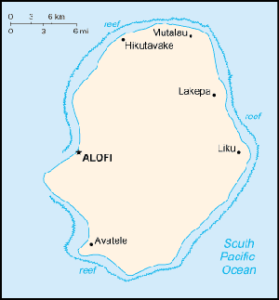
Editor’s Note: In this fictional piece, Esther and Noa, representing the San Diego-based Rabinove Foundation, go on a cruise around the South Pacific Island of Niue. In the previous segment, their guide Matafetu told them about the northern part of the island, occupied by the Motu people. In this part, he guides them around the southern part, the land of the Tafiti people. [Donald H. Harrison]

Fiction: Jewish perspectives on Niue, Part 2 Read More »

Donald H. Harrison, Jewish Fiction, Jewish Religion, Travel and Food

Fiction: Jewish perspectives on Niue

Boarding a comfortable but fast boat that would circumnavigate the South Pacific island of Niue, Noa and Esther were pleased with their earlier meeting with the country’s premier, who had promised his government’s cooperation as they explored the possibility of installing a desalination plant on the island.  However, he warned them that due to the atoll’s geography, rising as it did straight up from the Pacific Ocean, there were very few spaces for beaches or natural harbors. So, he said, finding a suitable location for a desalination plant might be very difficult indeed. [Donald H. Harrison]

Fiction: Jewish perspectives on Niue Read More »

Donald H. Harrison, International, Jewish Fiction, Jewish History, Middle East, San Diego County, Travel and Food, USA

We need a memorial for Jews who saved Jews and others

Yad Vashem Holocaust Museum in Jerusalem honors non-Jews who chose to save Jews, even at the risk of their own lives. Yad Vashem does not honor, document or recognize Jews who saved other Jews during the Holocaust, even at the risk of their own lives. Honoring Jews who saved Jews was and is not part of its mandate. Were not their life-risking efforts worthy of memorialization? There is no memorial to Jews who saved Jews and others, in Israel, or anywhere. [Jerry Klinger]

We need a memorial for Jews who saved Jews and others Read More »

Jerry Klinger, Jewish History, Jewish Religion, Middle East, Obituaries & memorials, USA